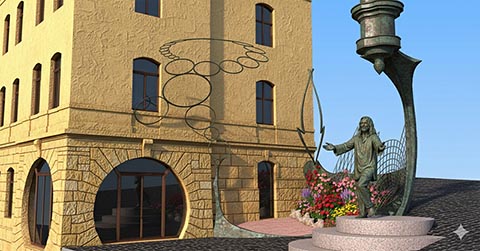
Istvanplatz in front of the Victor Dietel apartment building in Greiz — a Istvan Sky memorial project.

In the 1890s each floor of the building had a toilet. The waste pipe was a thick ceramic pipe (20 cm in diameter) running vertically from the attic through the floors and ending in a cesspit that had been dug partly under the building and partly outside it.
The former pit will be converted into a room for tanks used to collect and store rainwater. By using rainwater we protect nature and make the functional future of the house more sustainable.
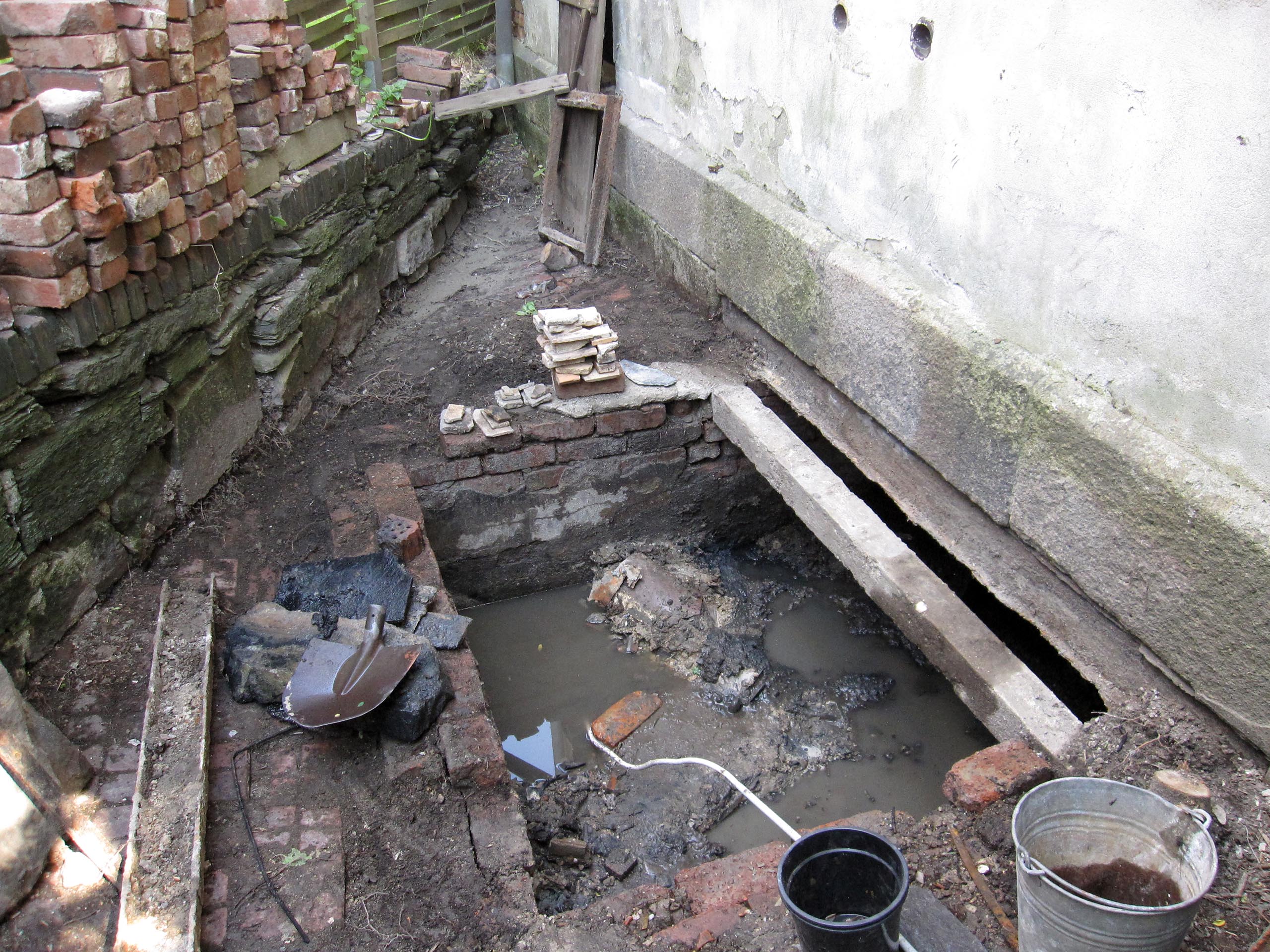
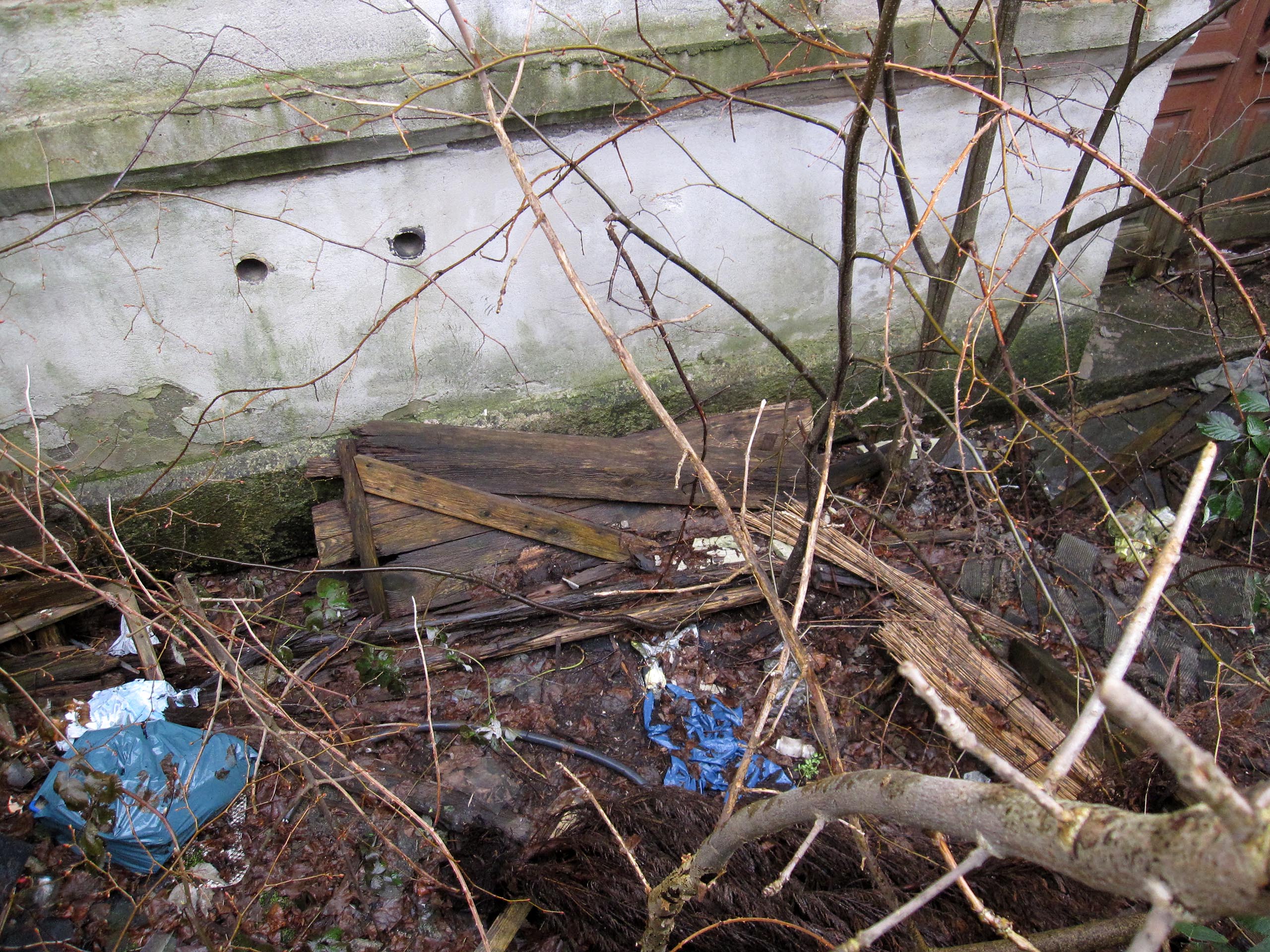
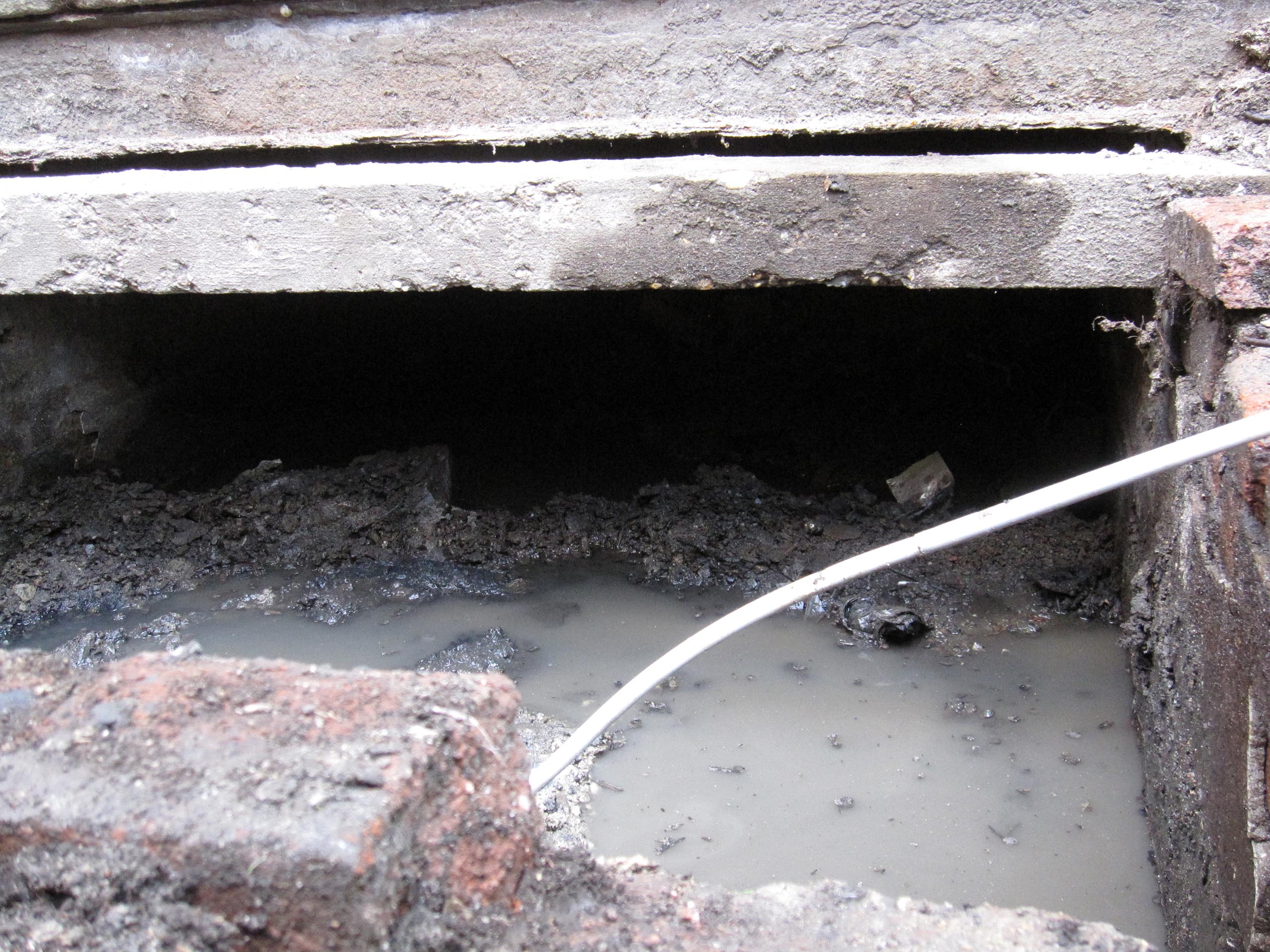
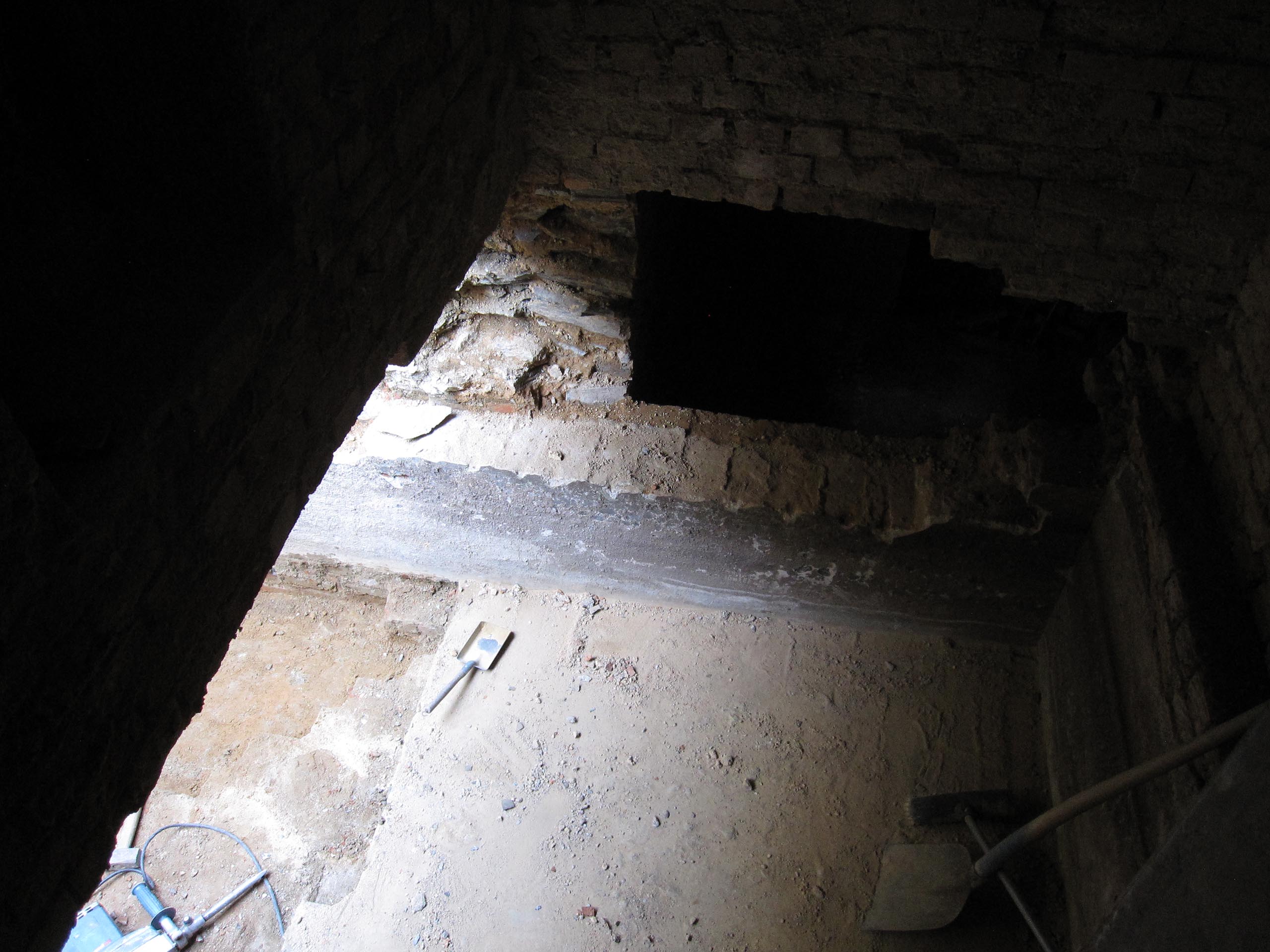
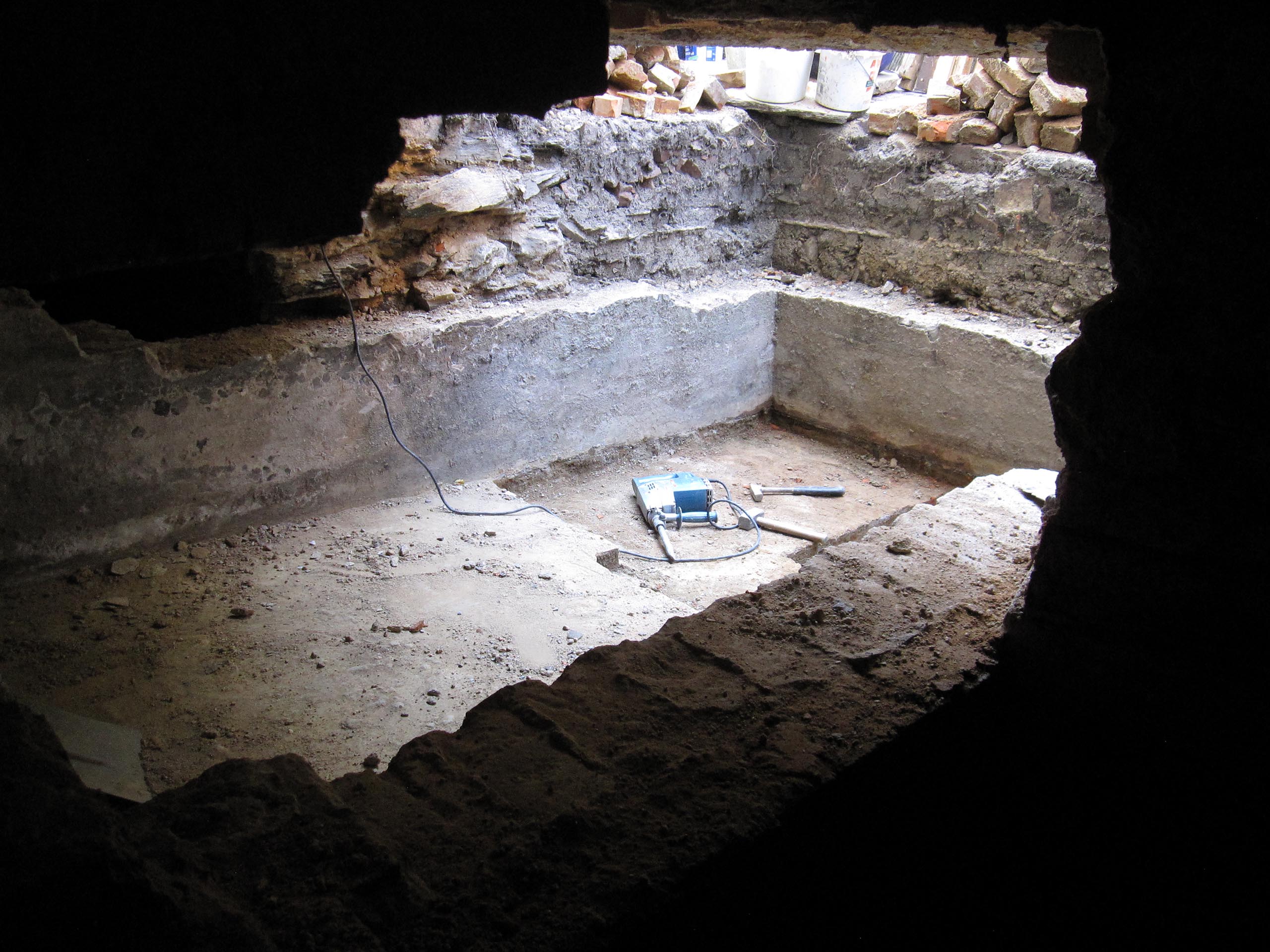
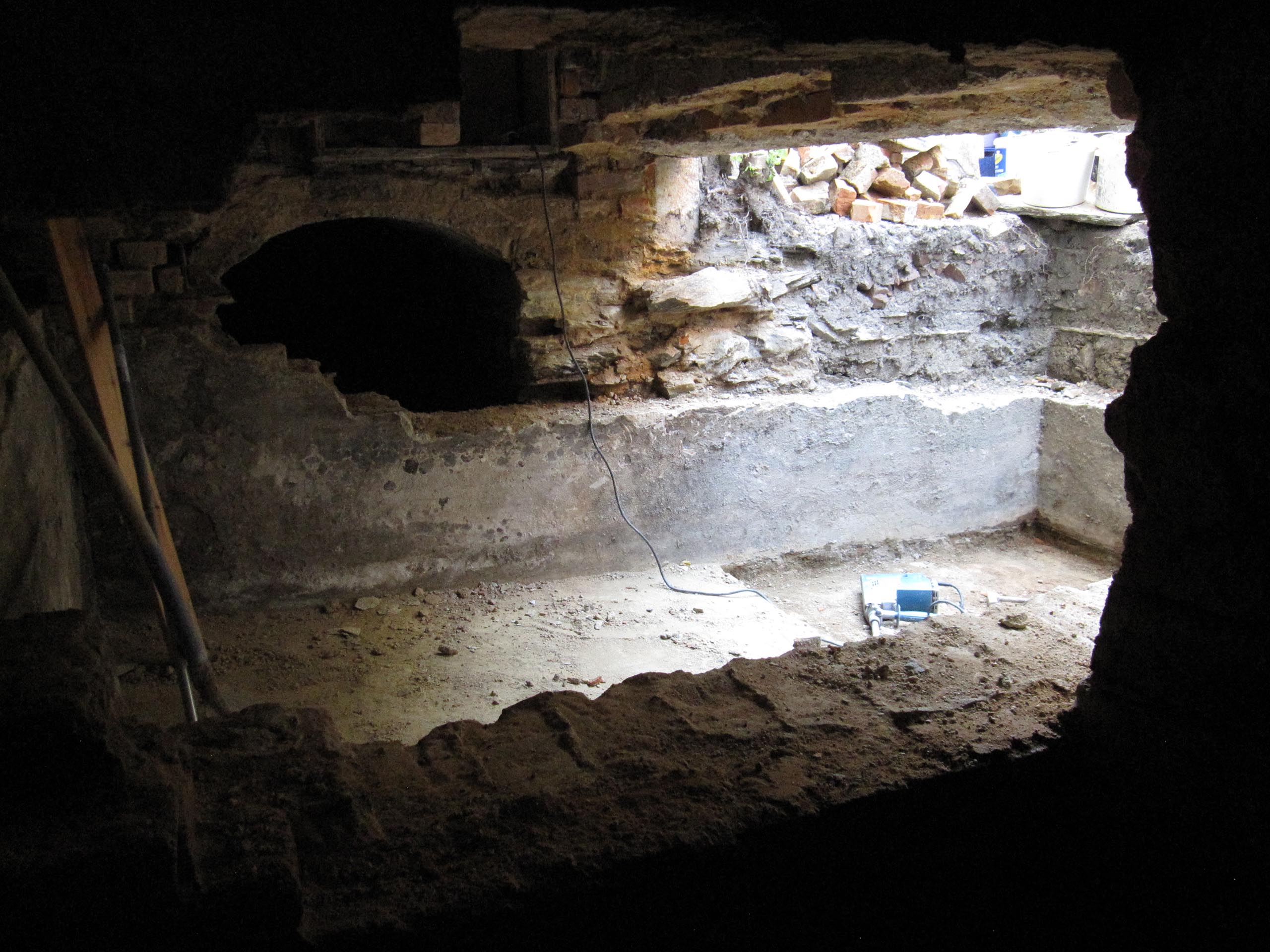
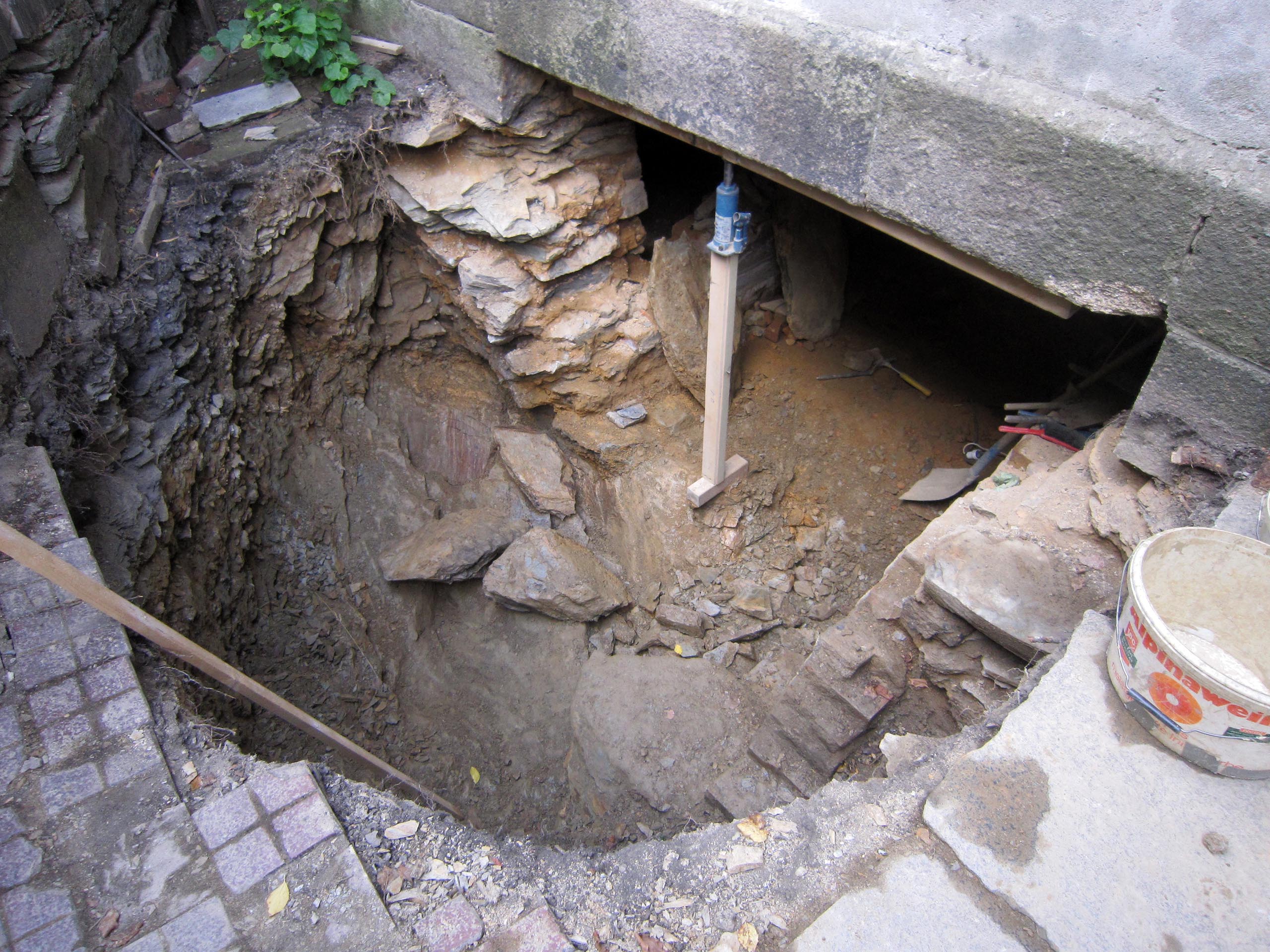
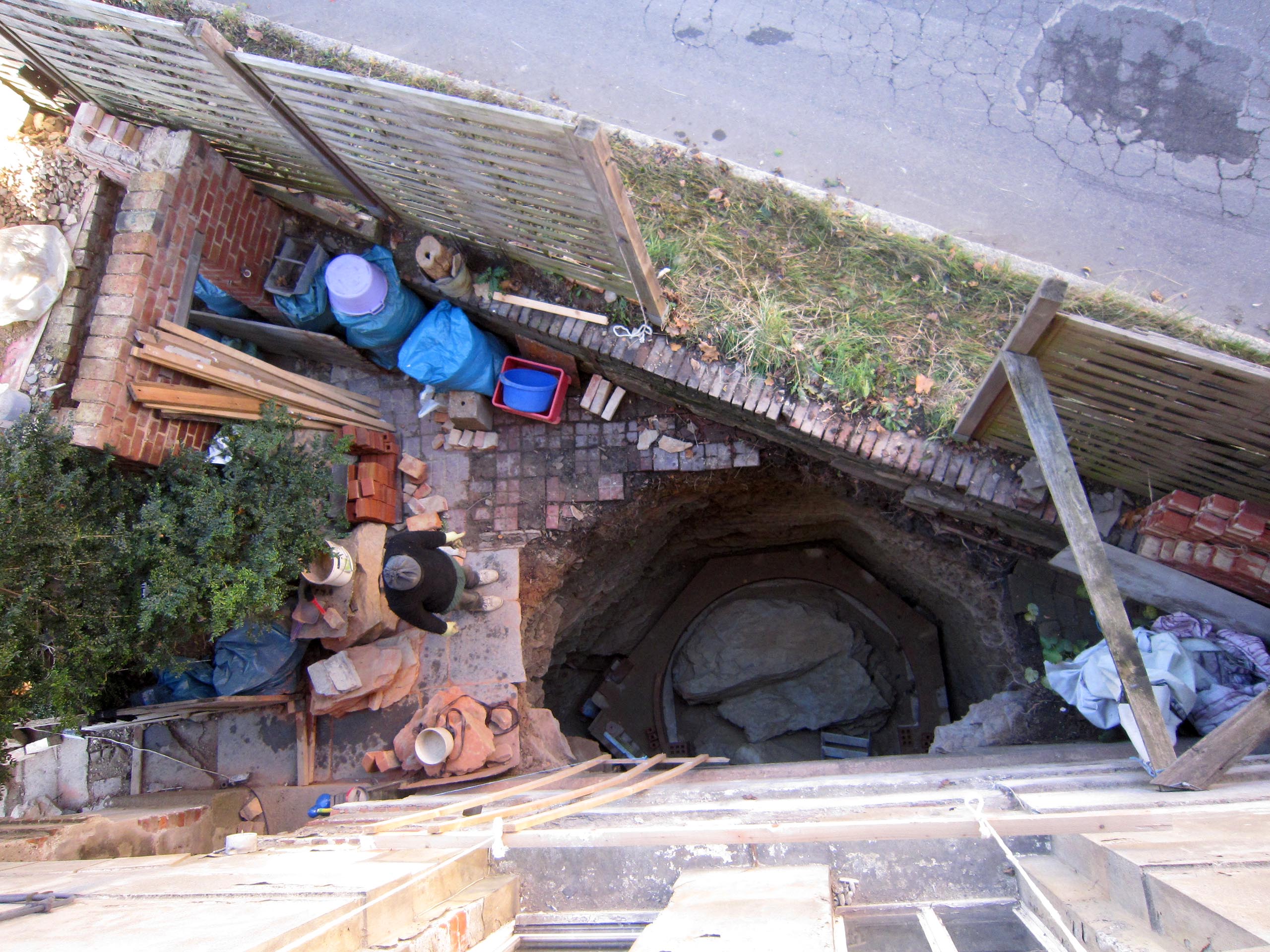
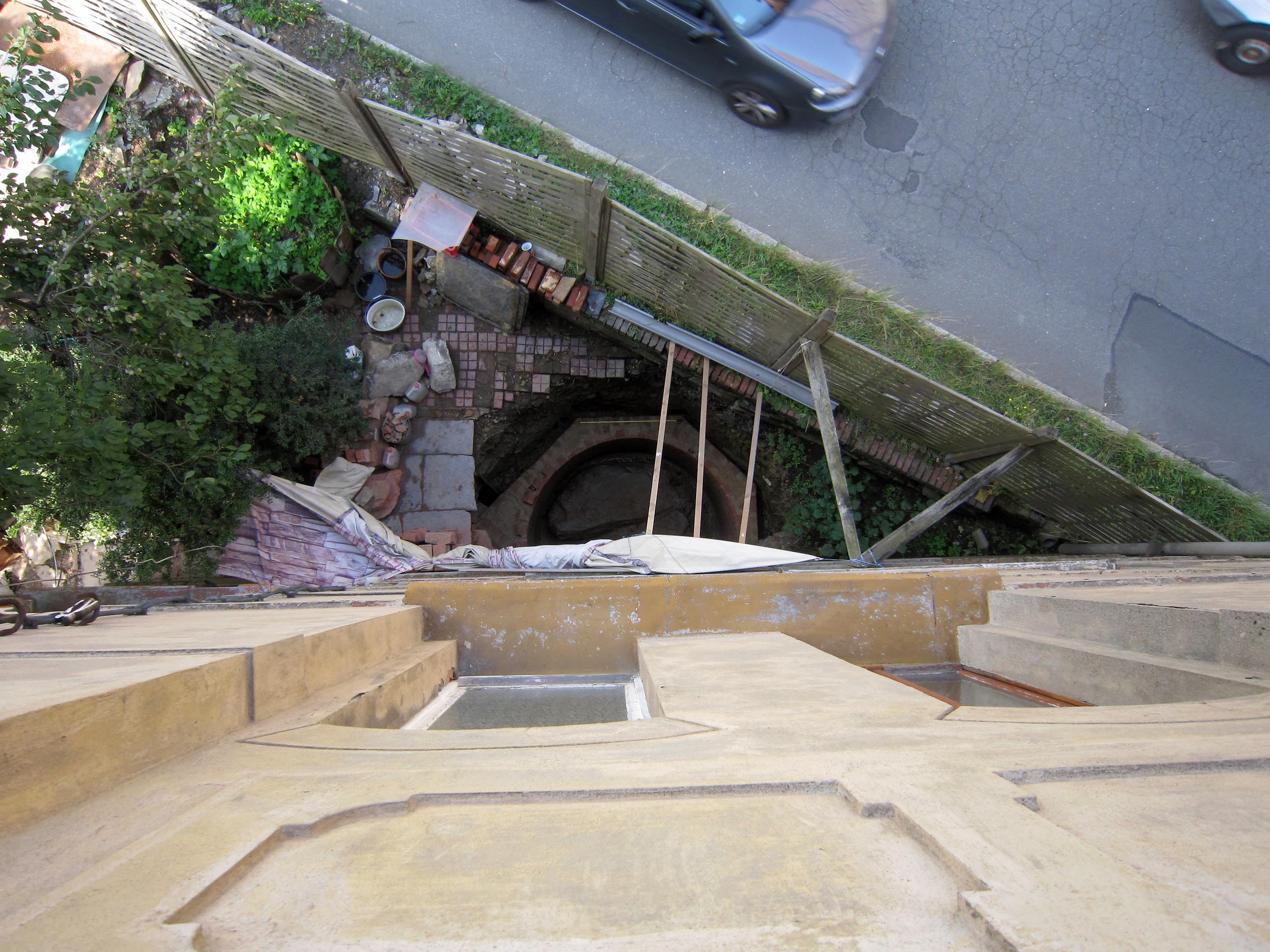
On the northern side of the house, beneath a pile of rubbish and soil and under the roots of trees that had grown there over fifteen years, a pit was discovered. Without a pickaxe and a shovel this would have been impossible.
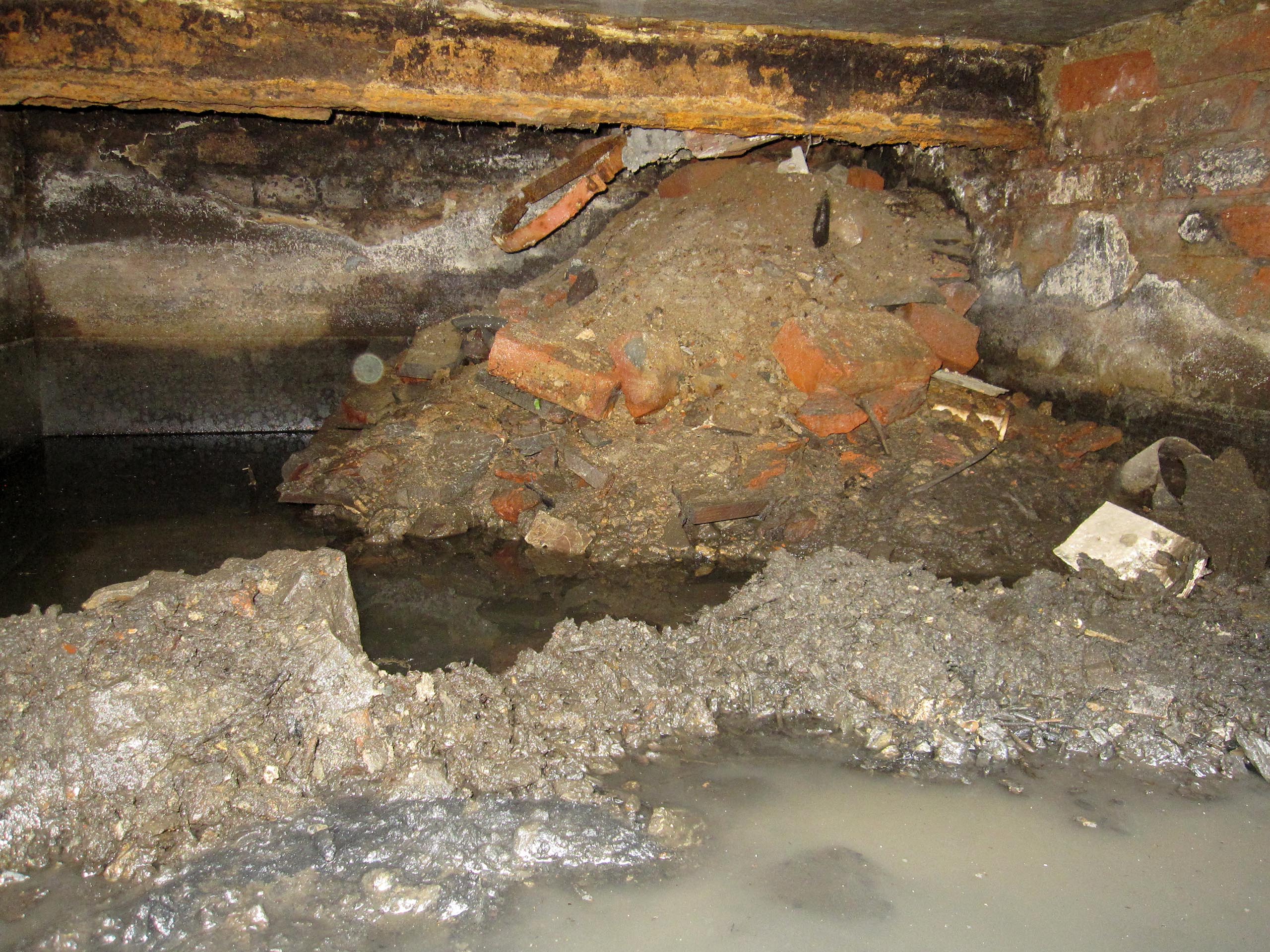
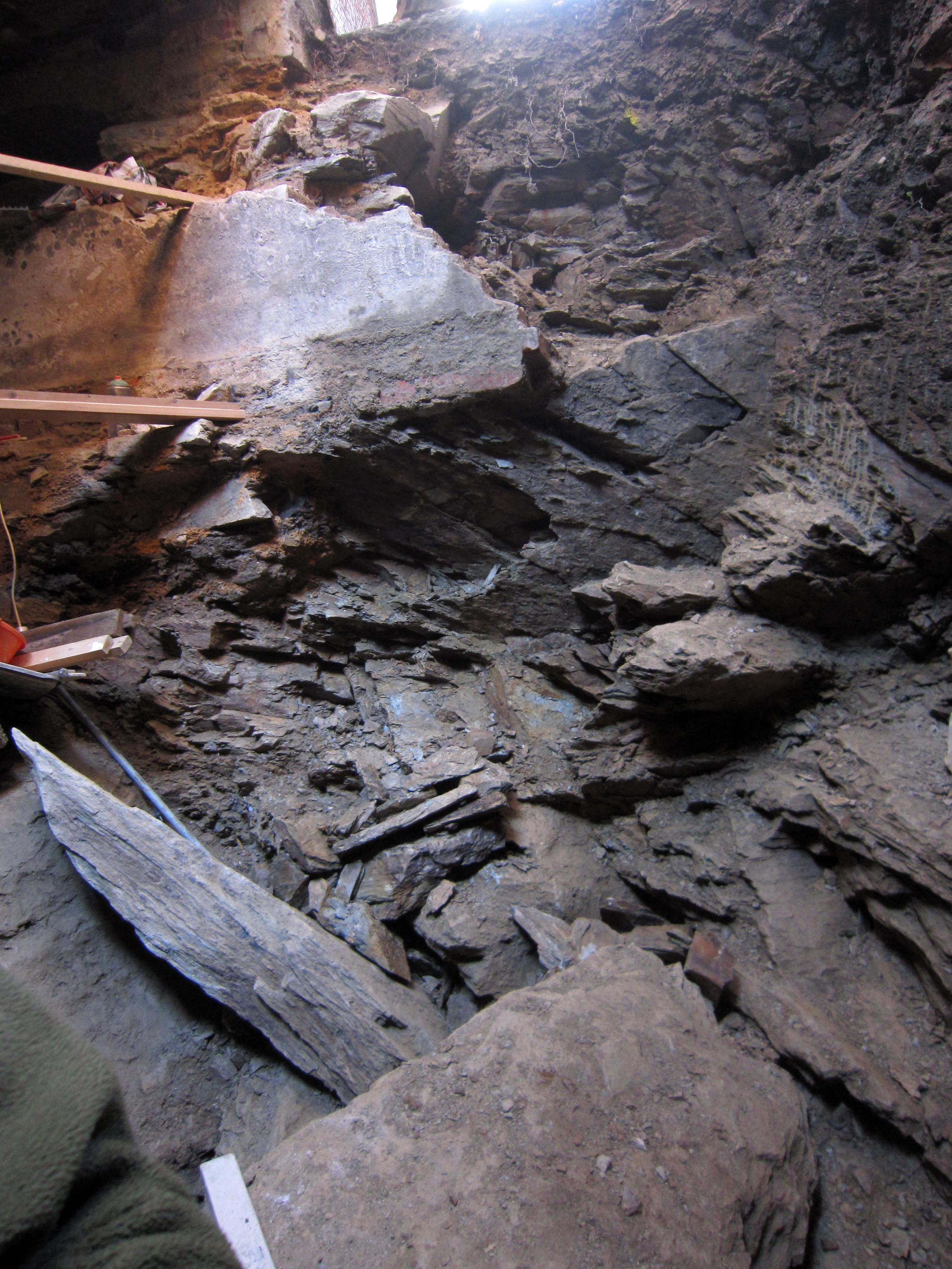
Without making any drainage holes in the bottom, the sealed pit had simply been filled with construction debris. 10.6 m³ were filled with broken bricks, mortar remains, sand, fragments of ceramic pipes, pieces of iron and other rubbish. Even a pair of dentures turned up — though without a skull.
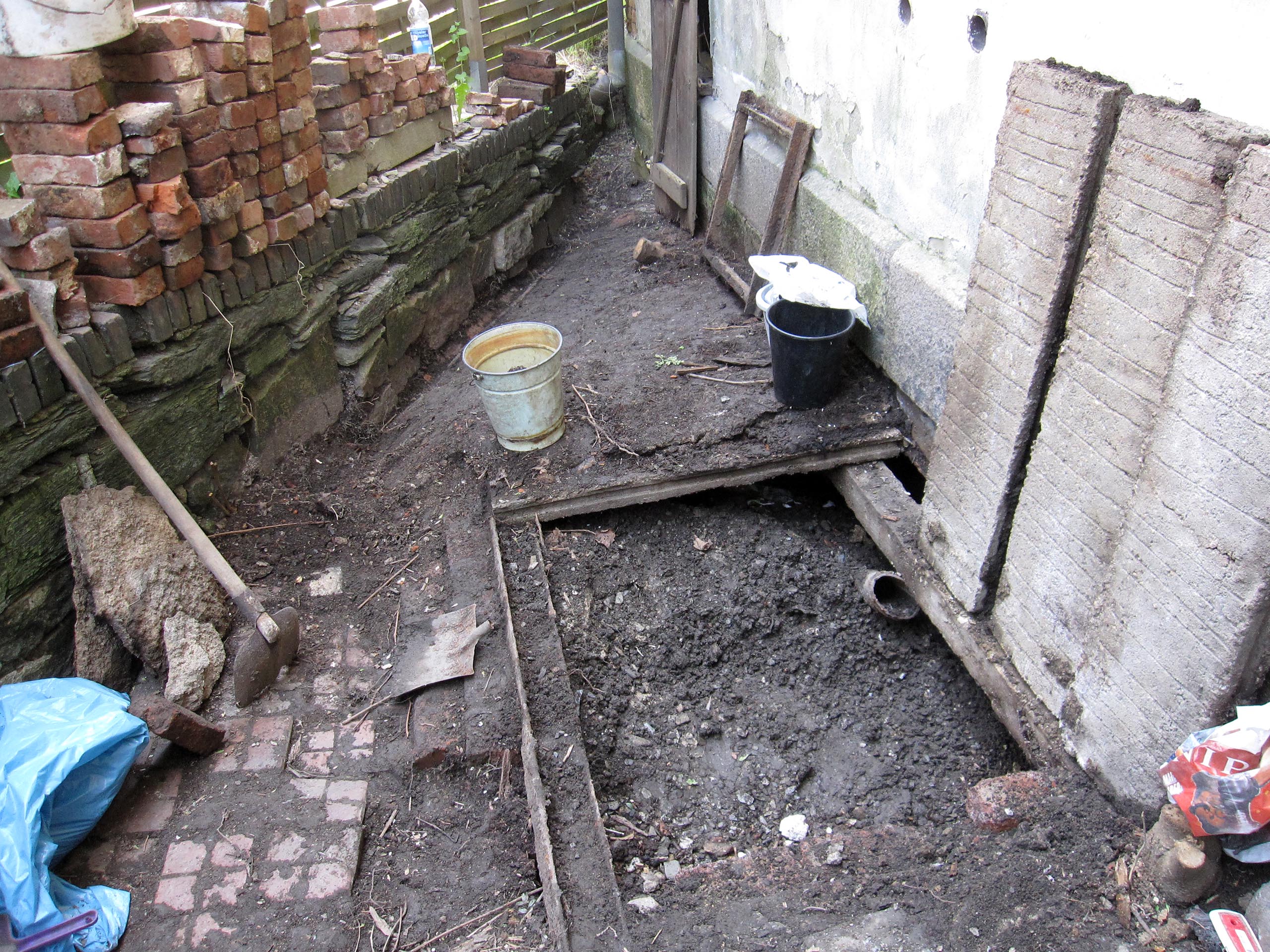
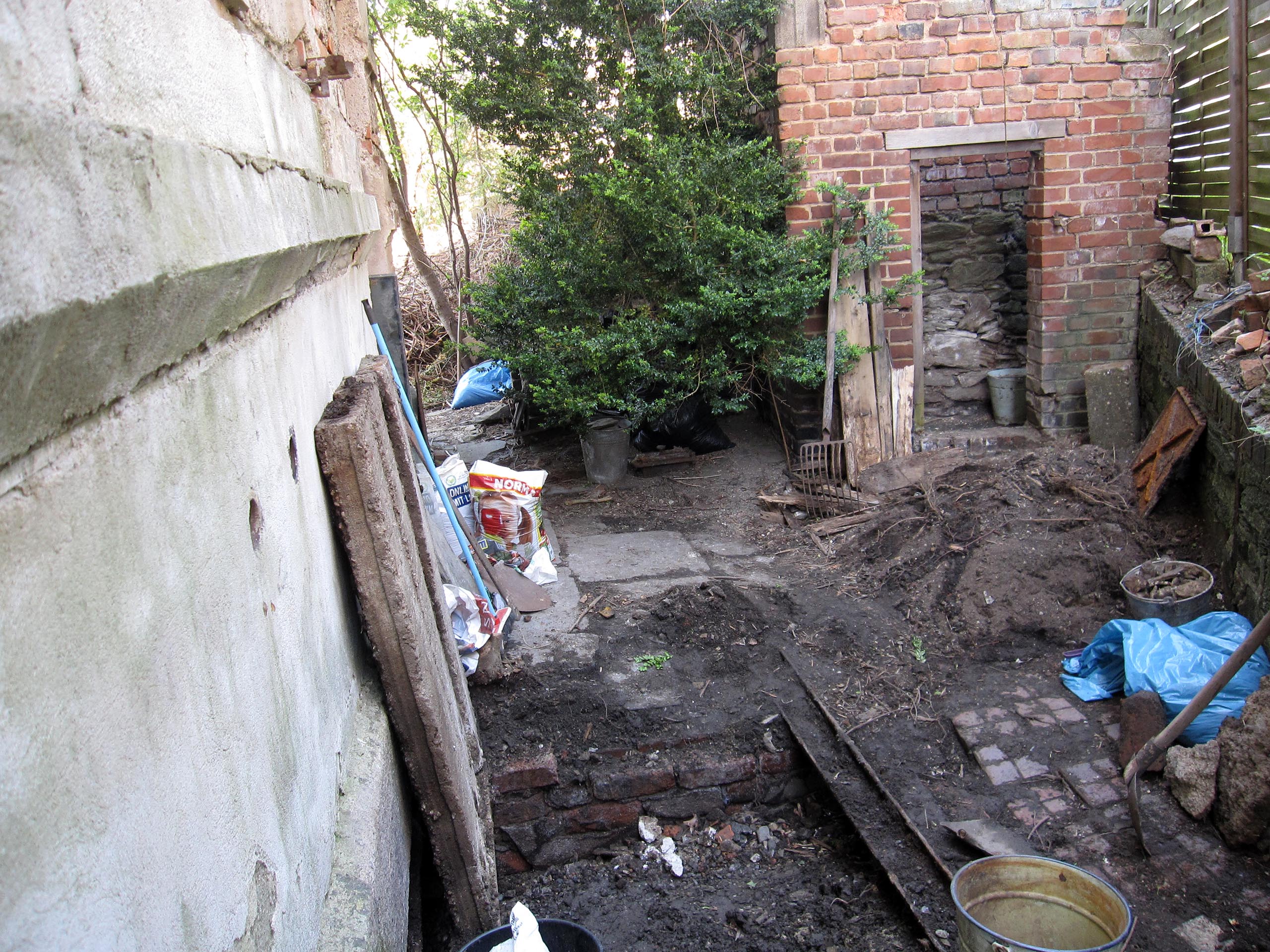
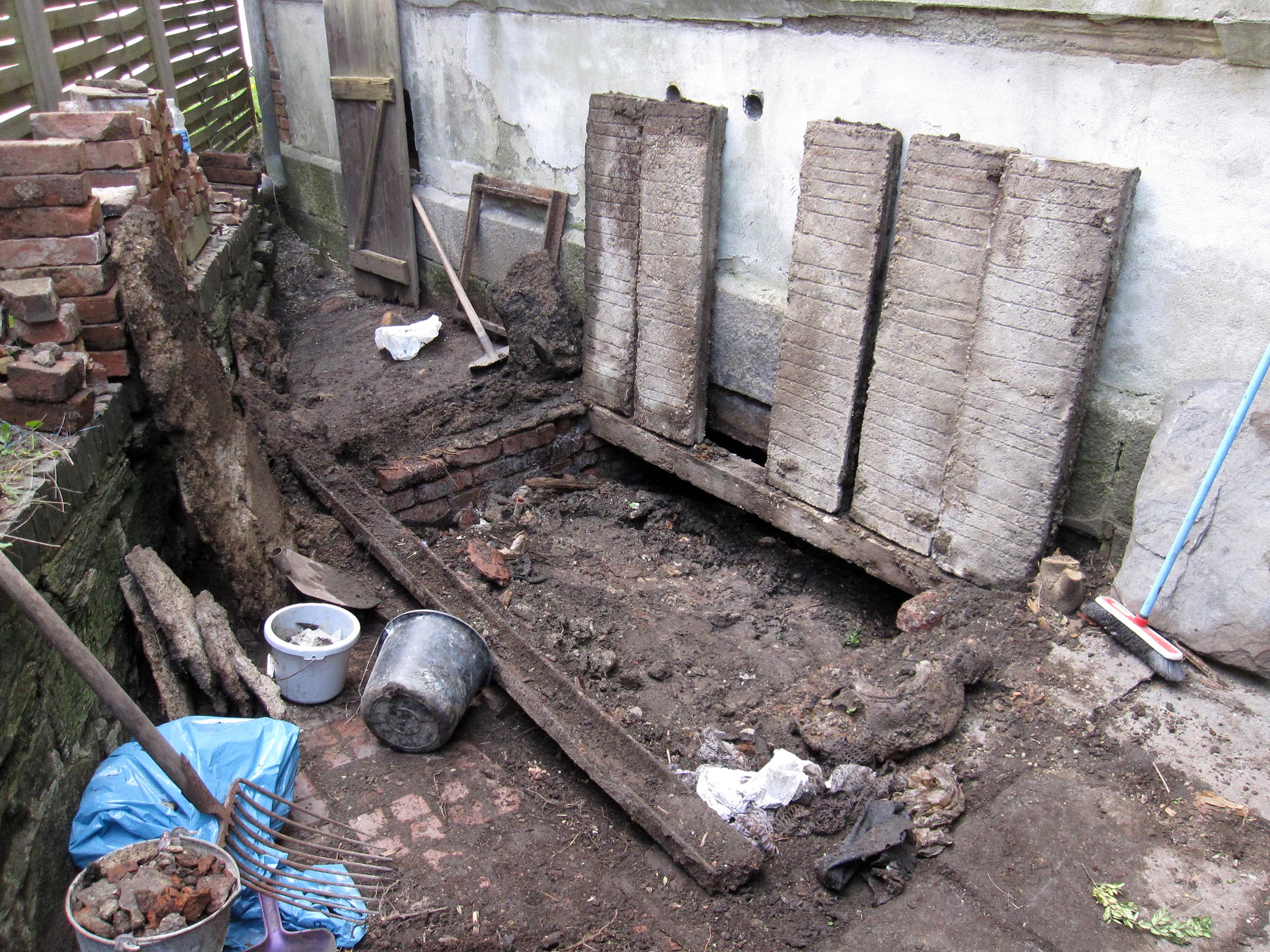
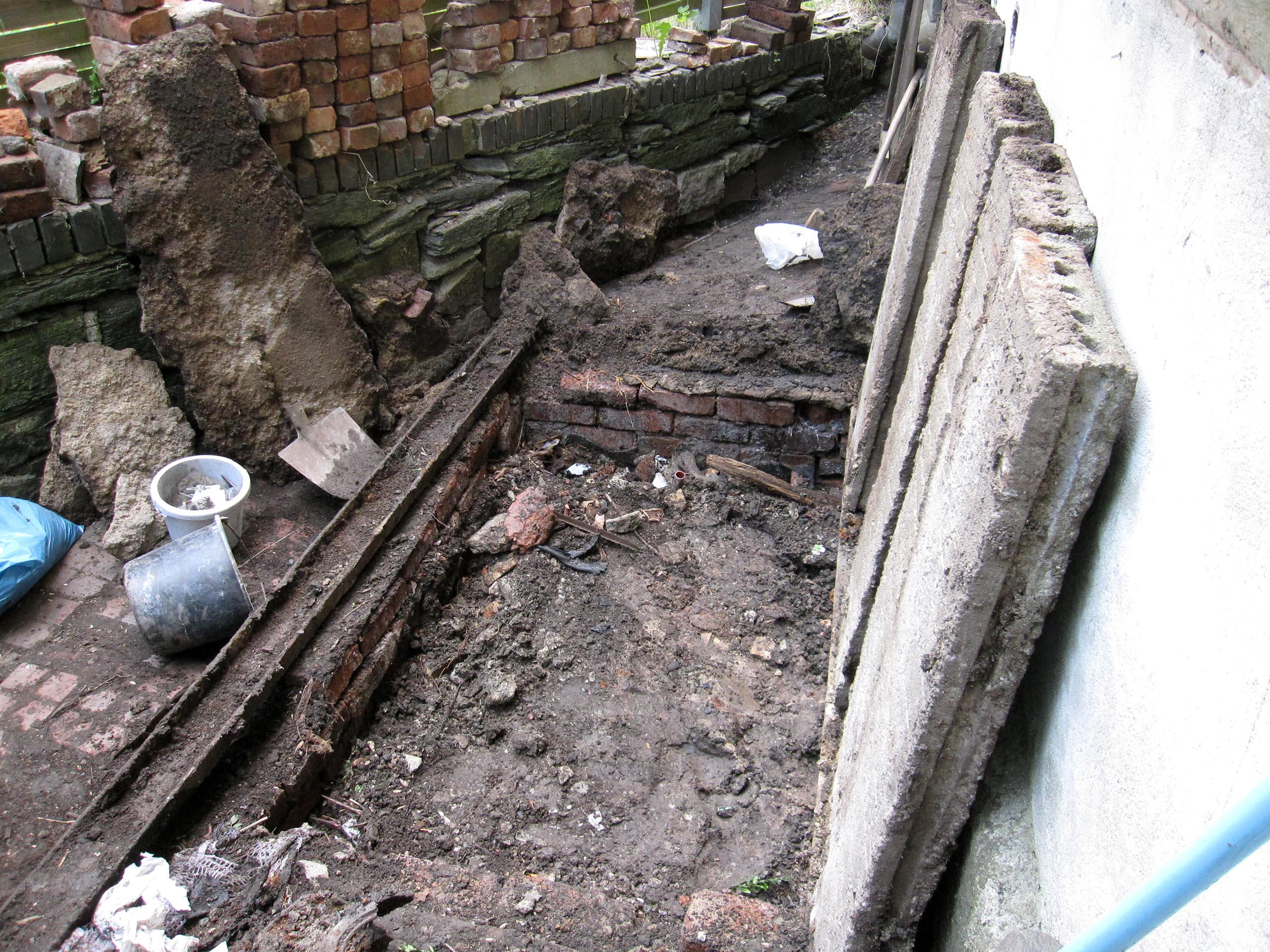
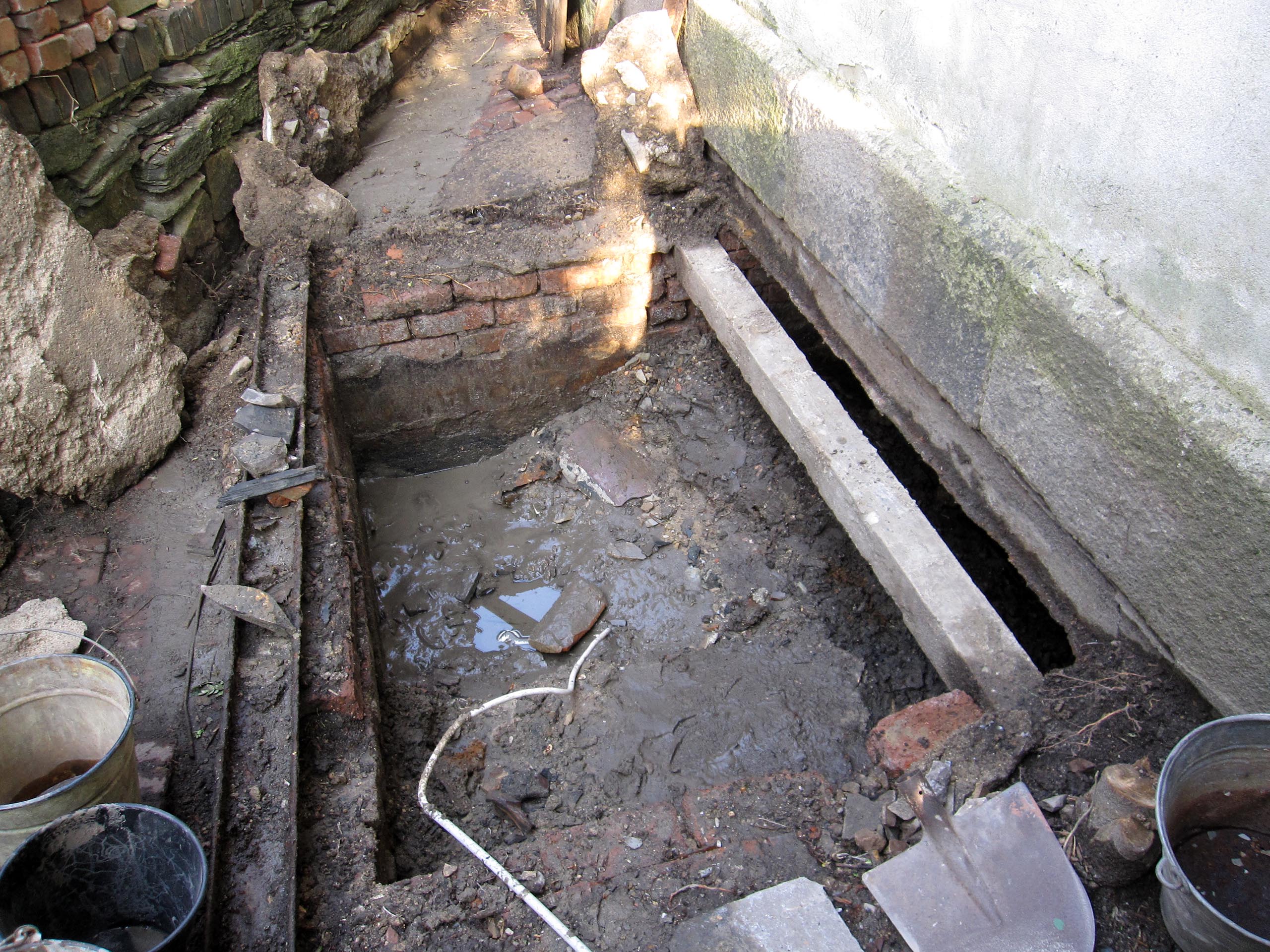
This brick reservoir is 1.6 m deep, 1.8 m wide (excluding wall thickness), extends 1.5 m from the edge of the house and 2.2 m underneath it. Water was always standing inside.
The foundation and the first one and a half floors above constantly absorbed moisture and therefore remained damp. We pumped out the water and removed the debris entirely by hand.
After examining the material removed from the pit, we estimated that it had been filled in during the 1980s when the toilets were modernized.
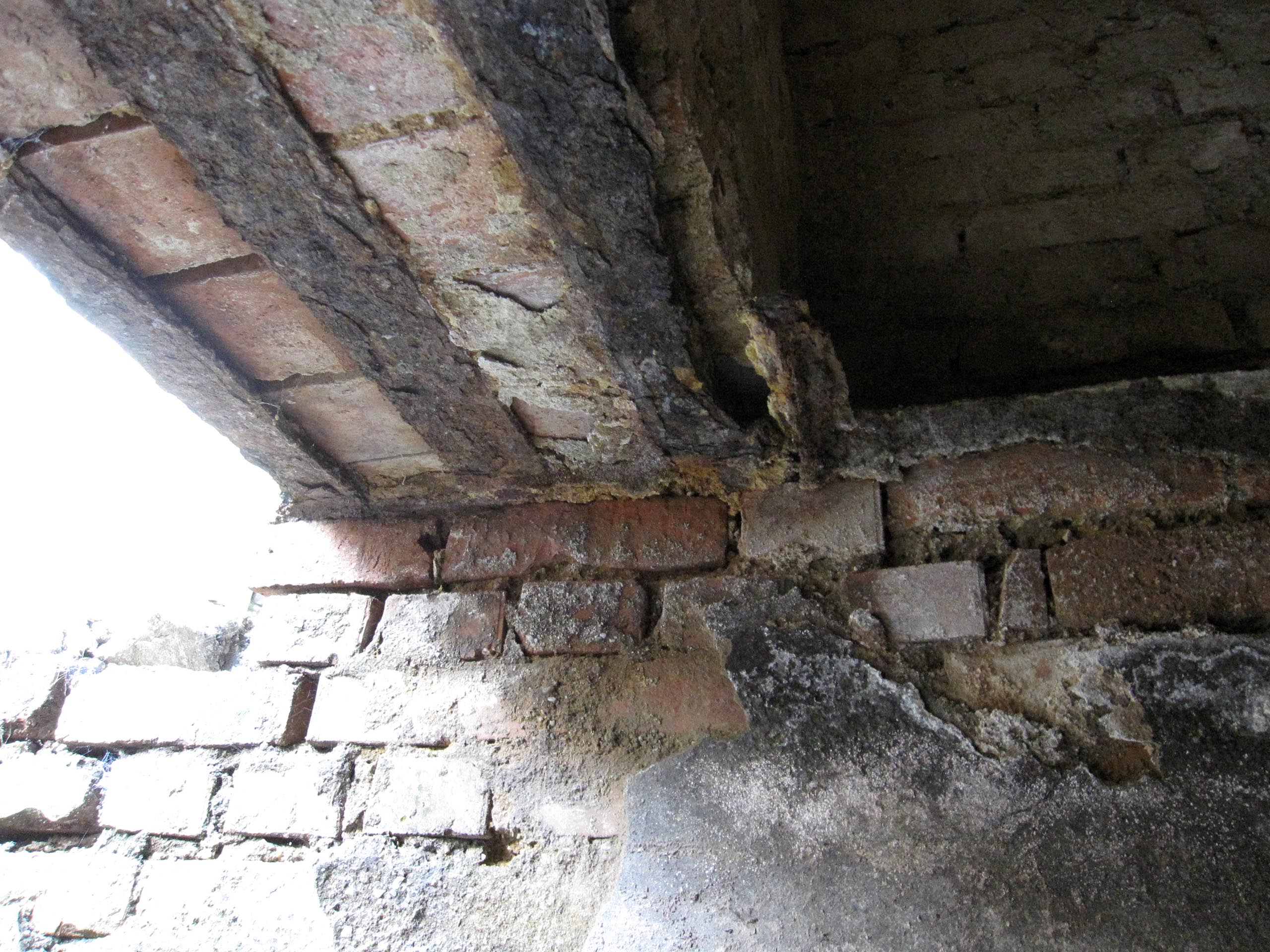
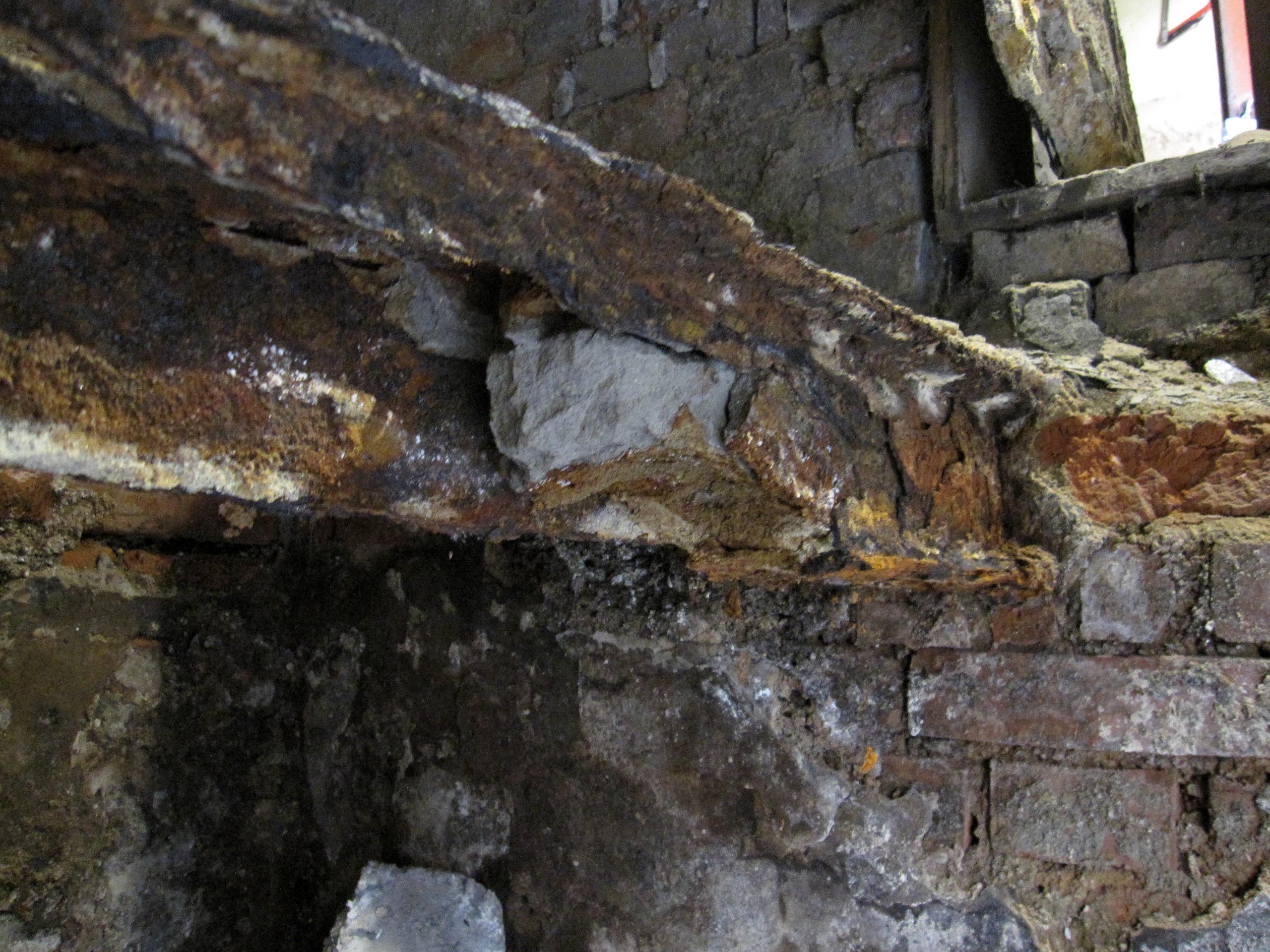
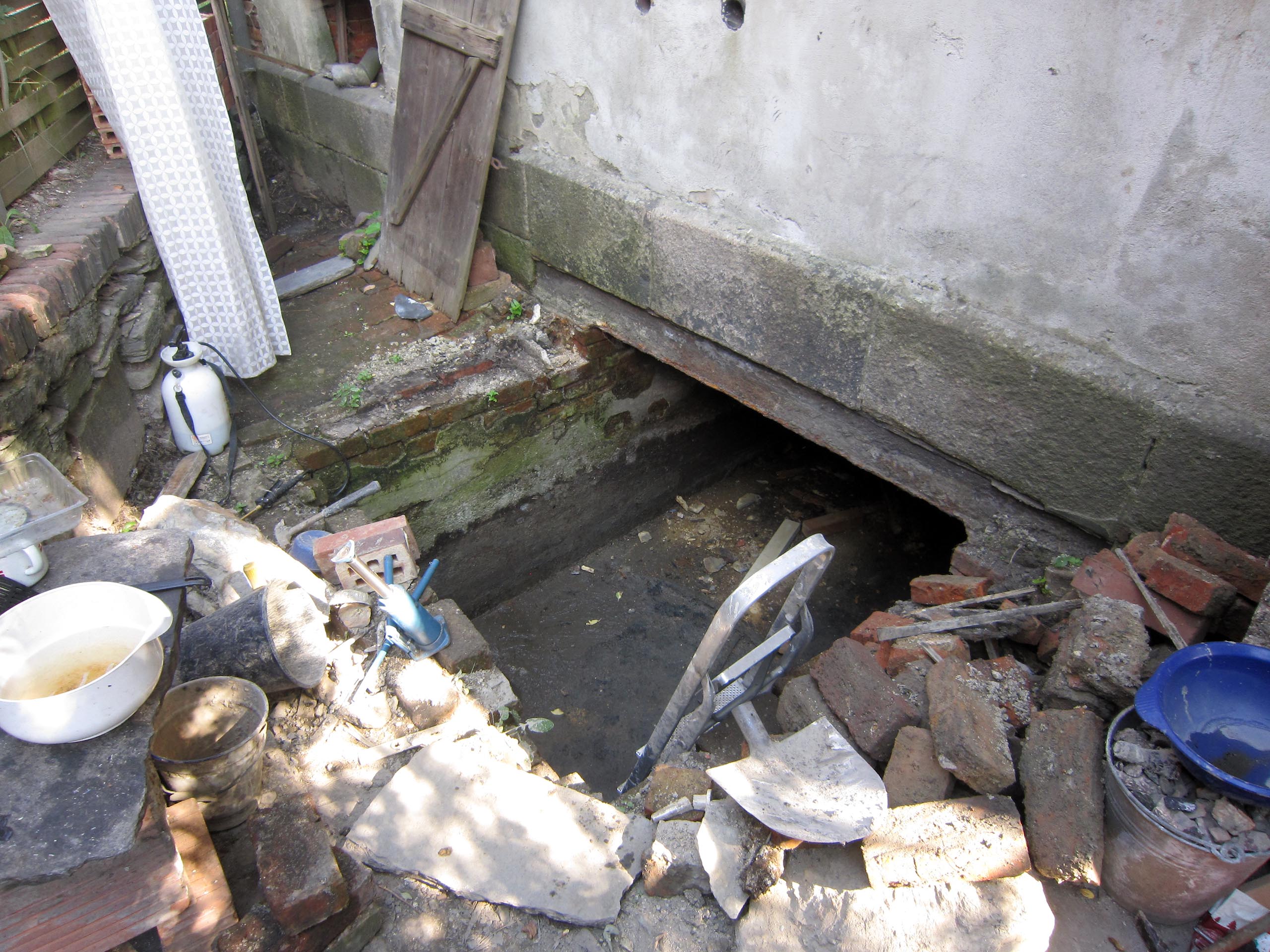
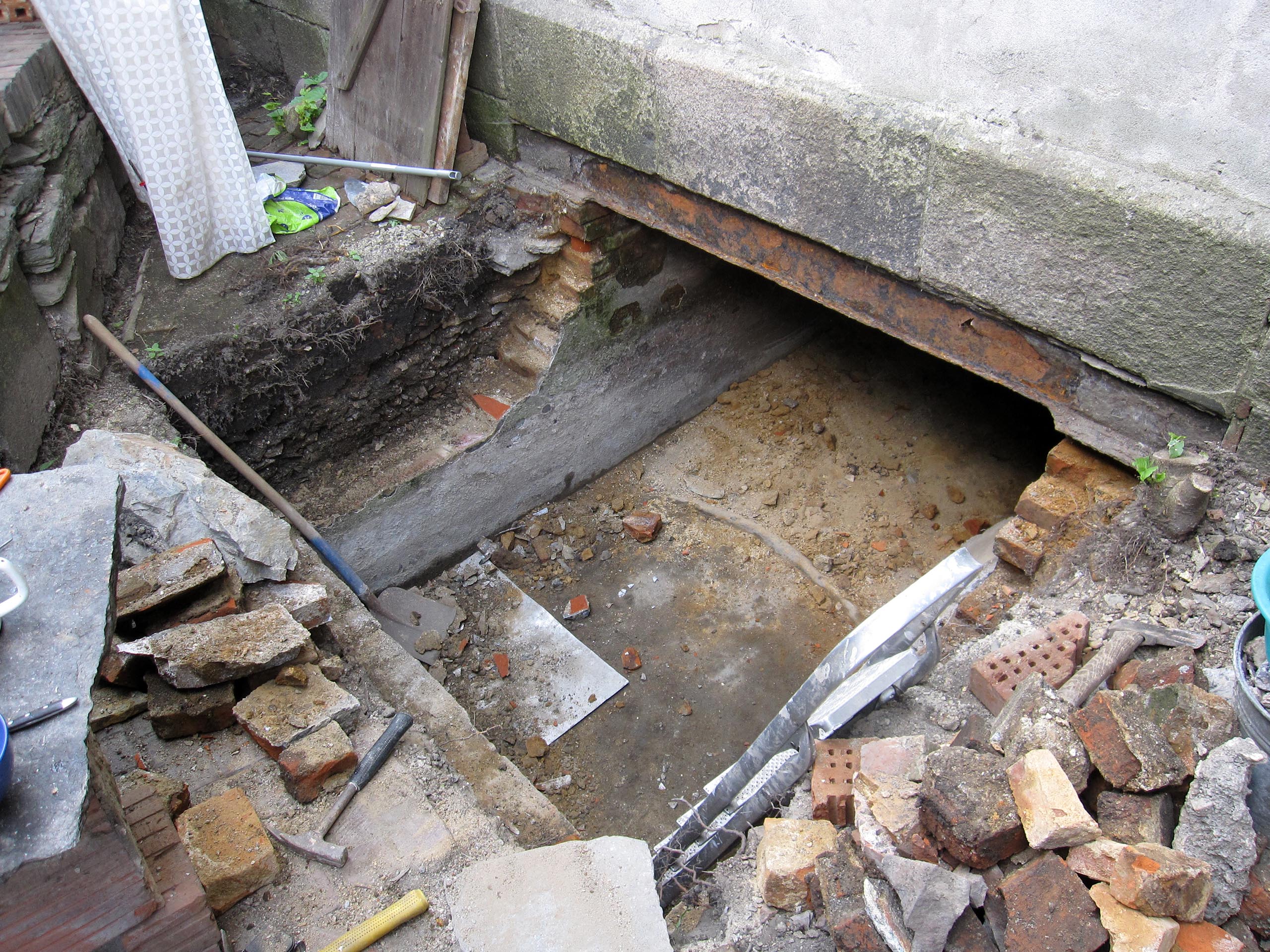
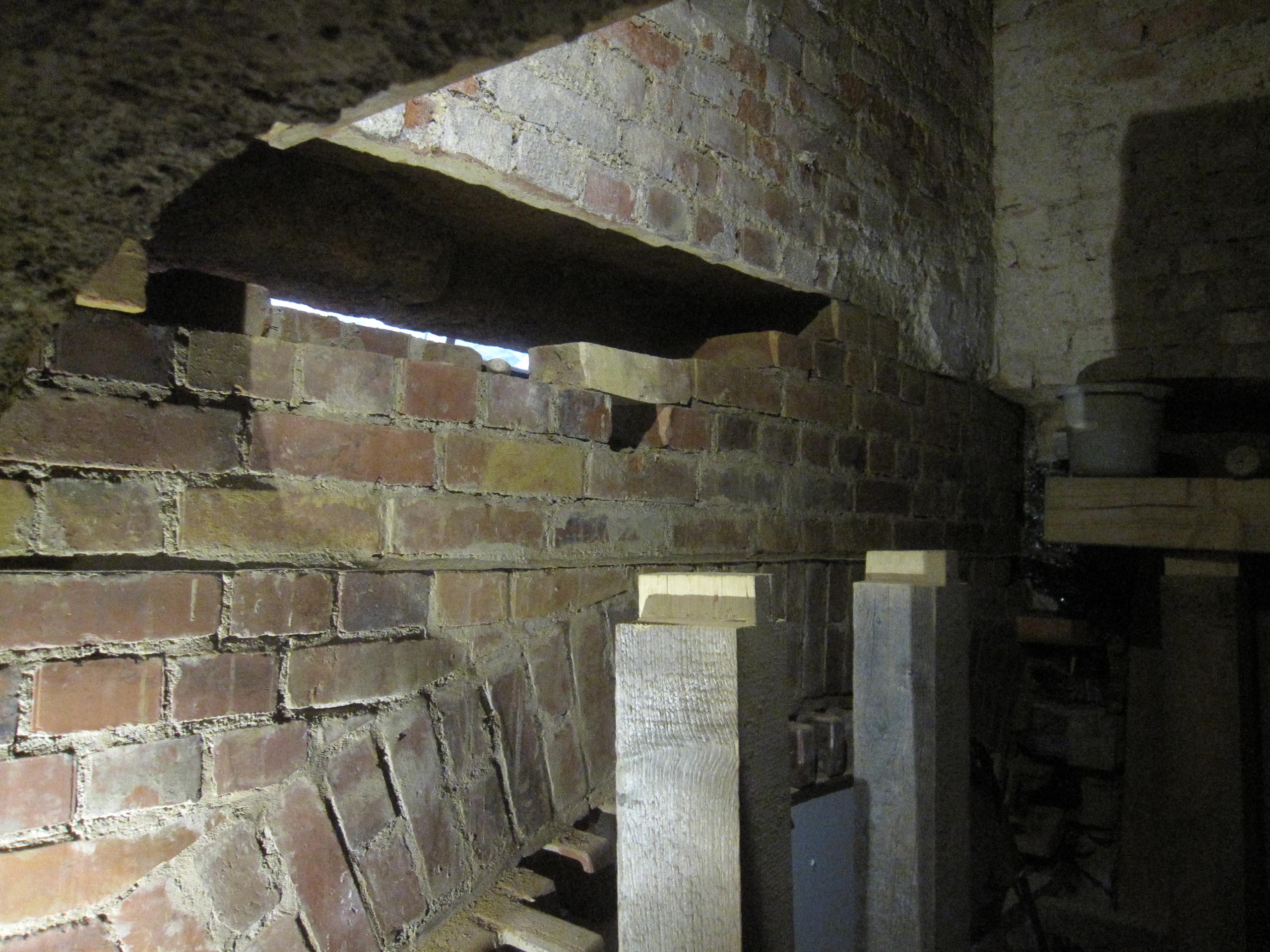
The steel supports that carried the façade wall had rusted through and most likely no longer fulfilled their function. We removed this scrap metal using a crowbar and a jack.
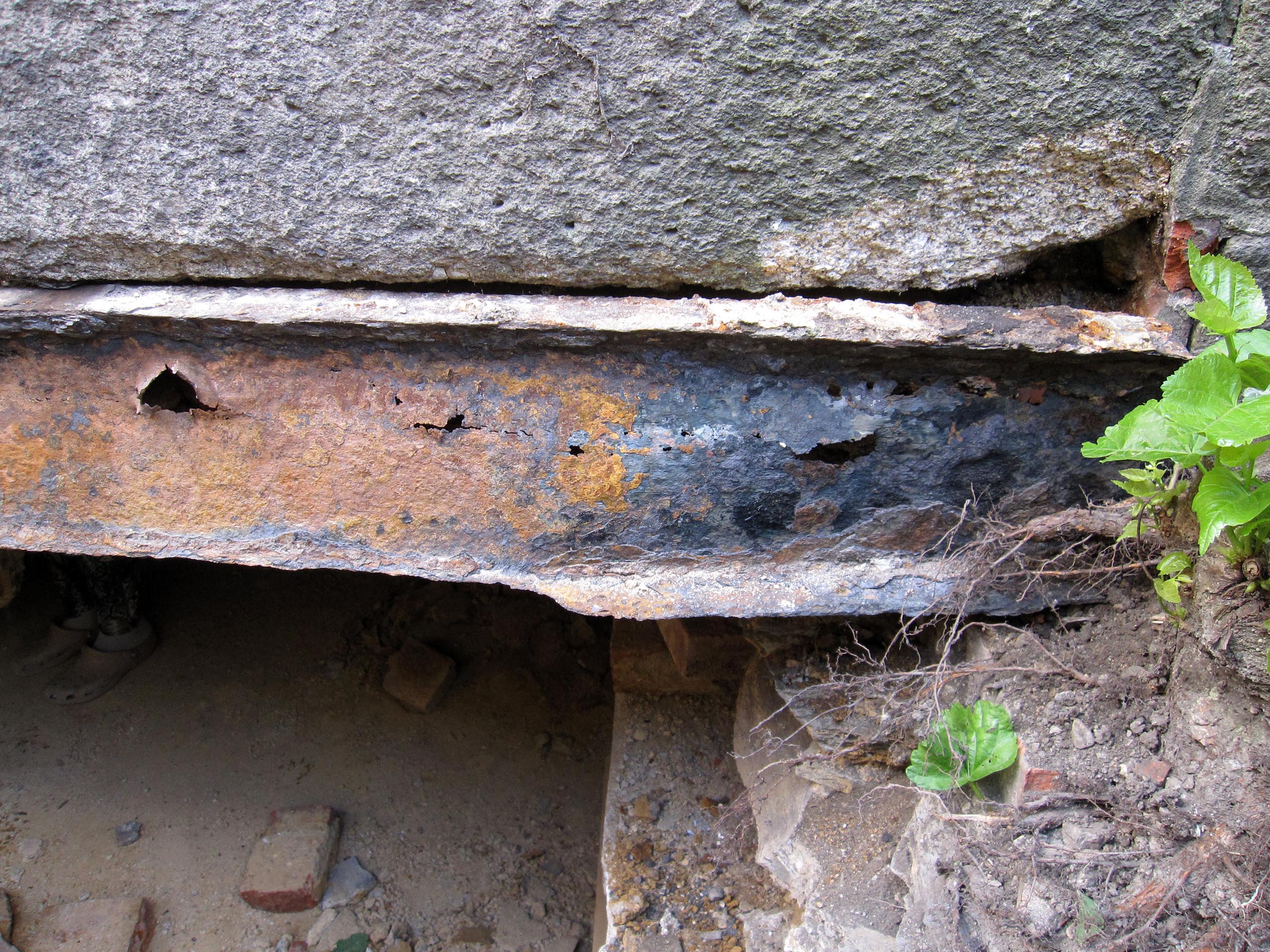
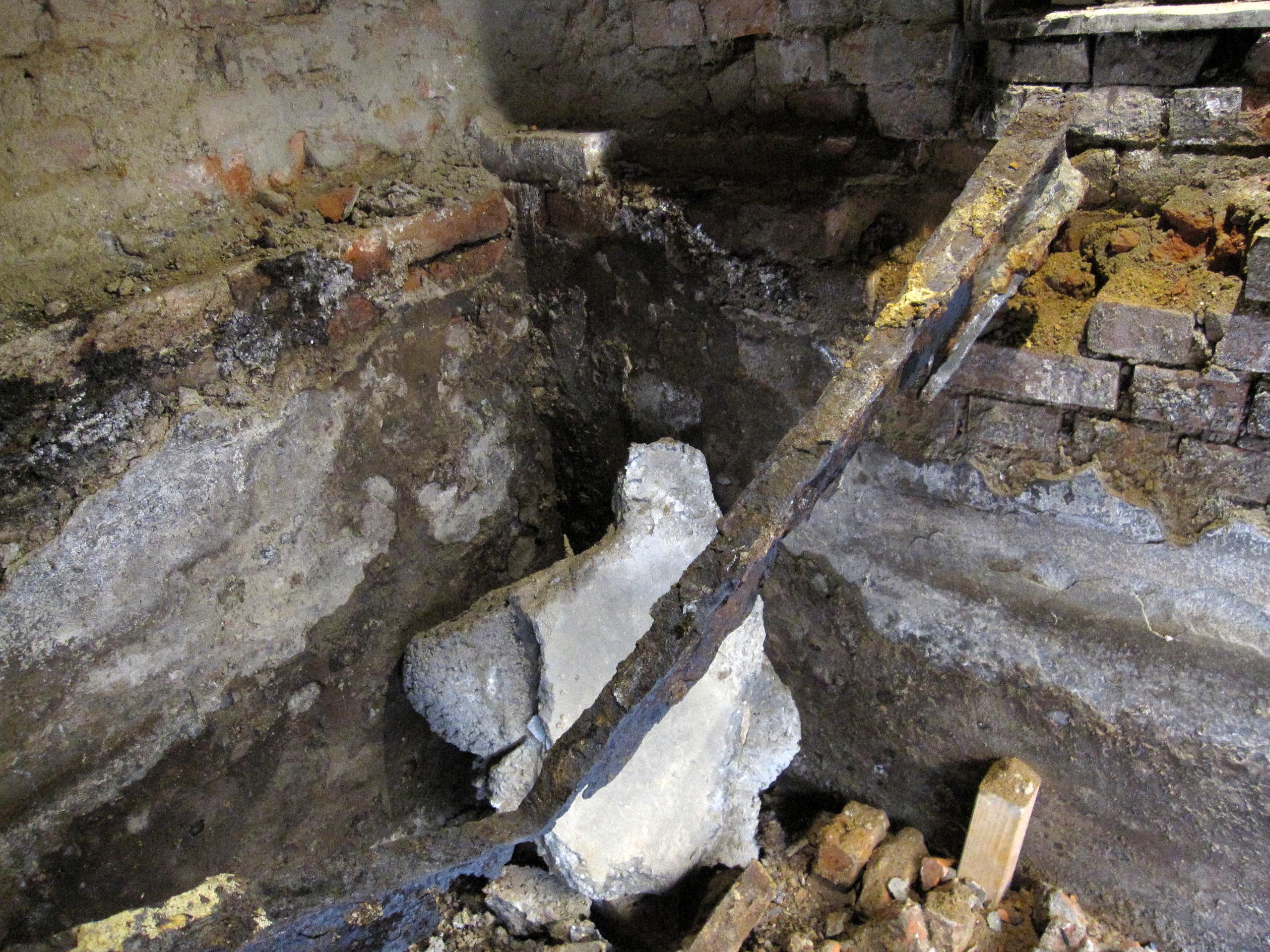
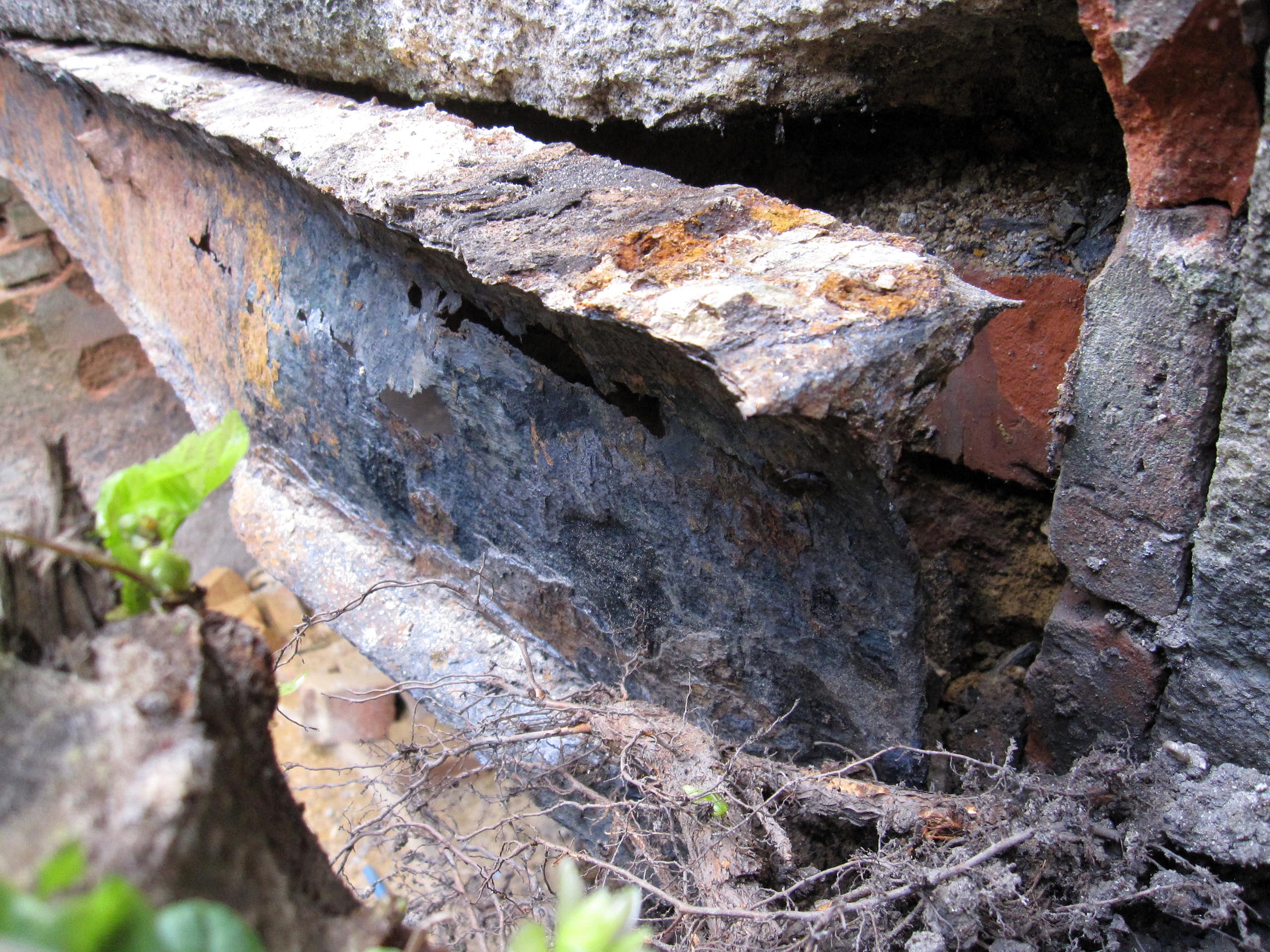
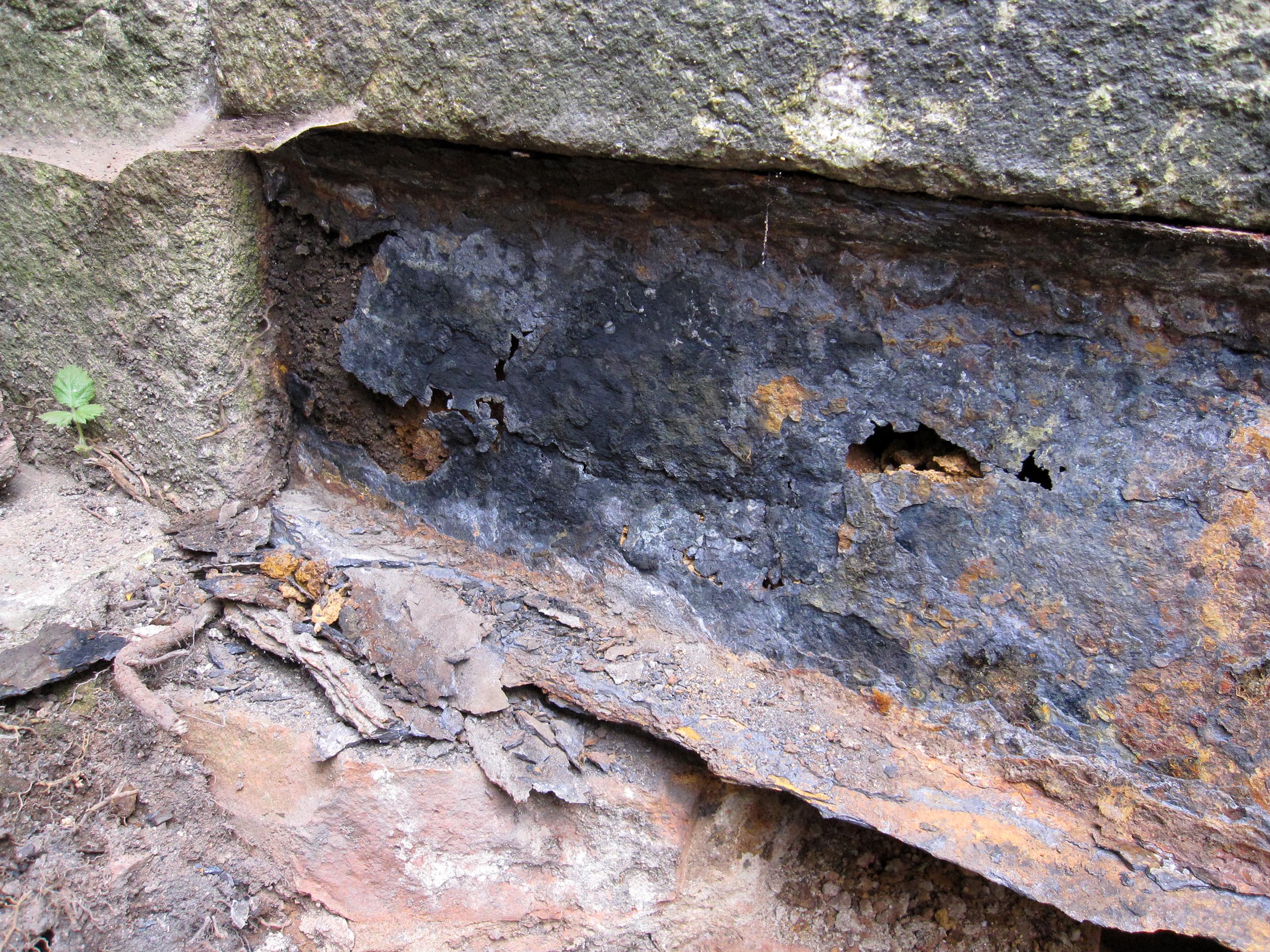
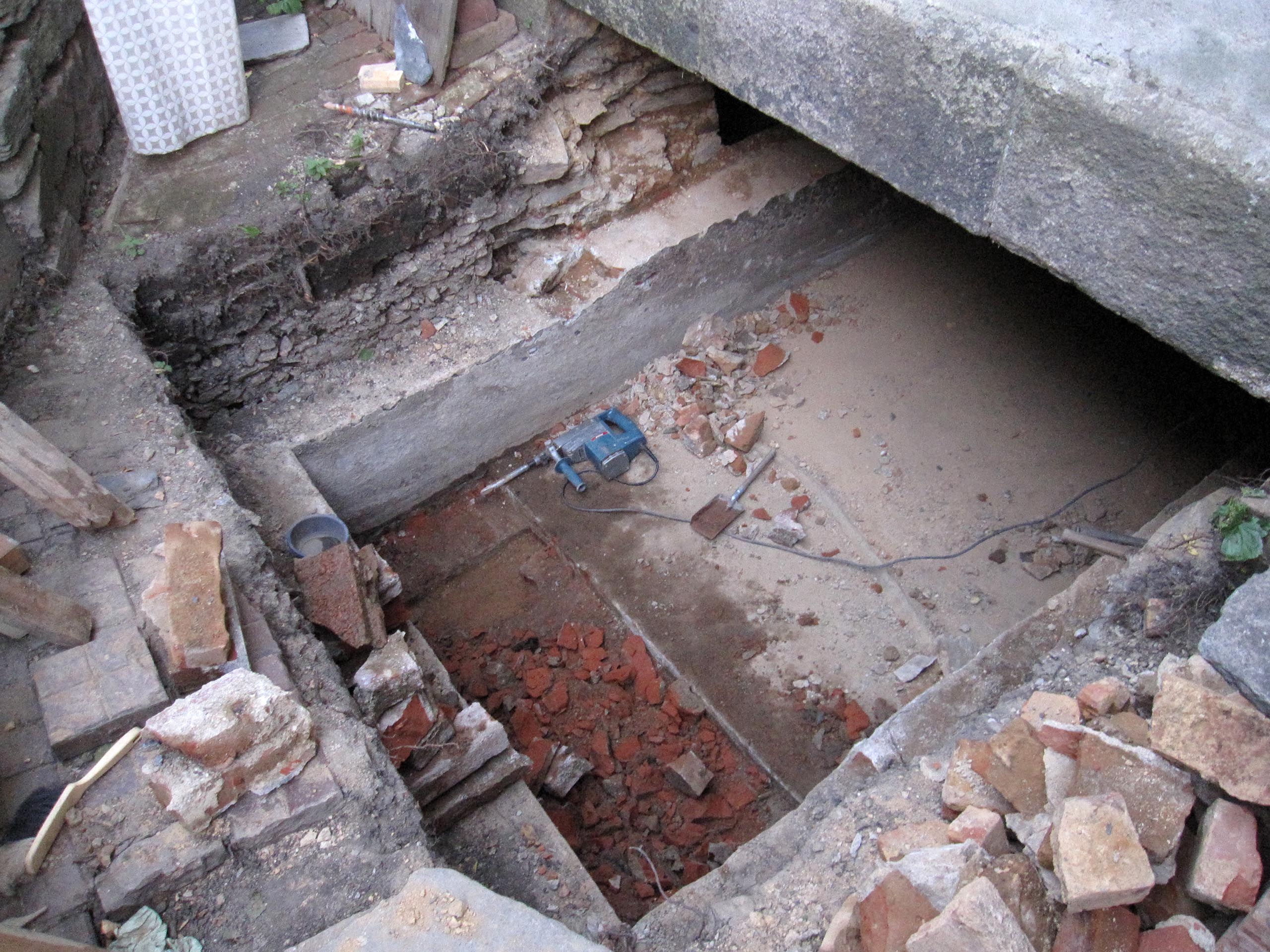
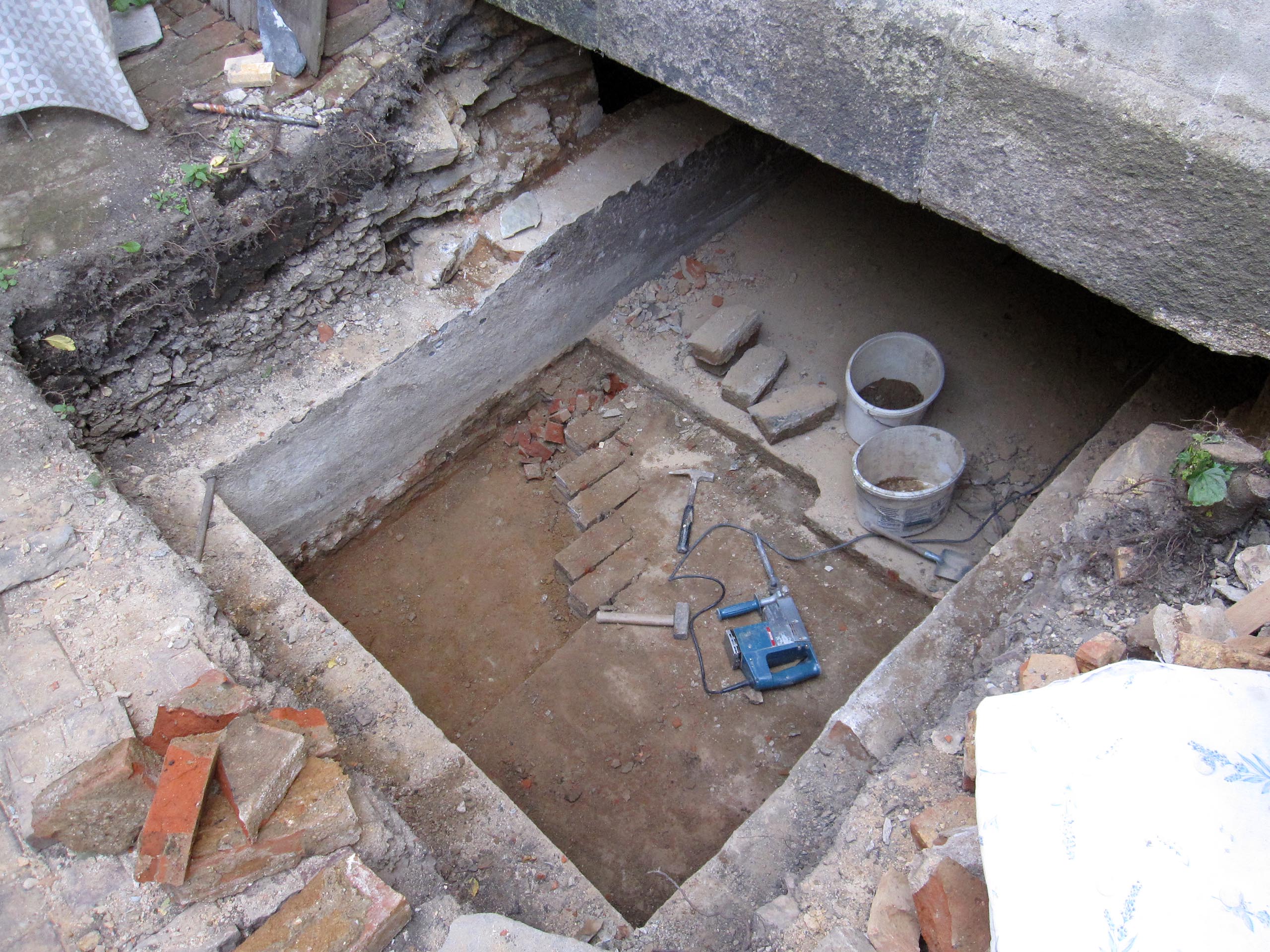
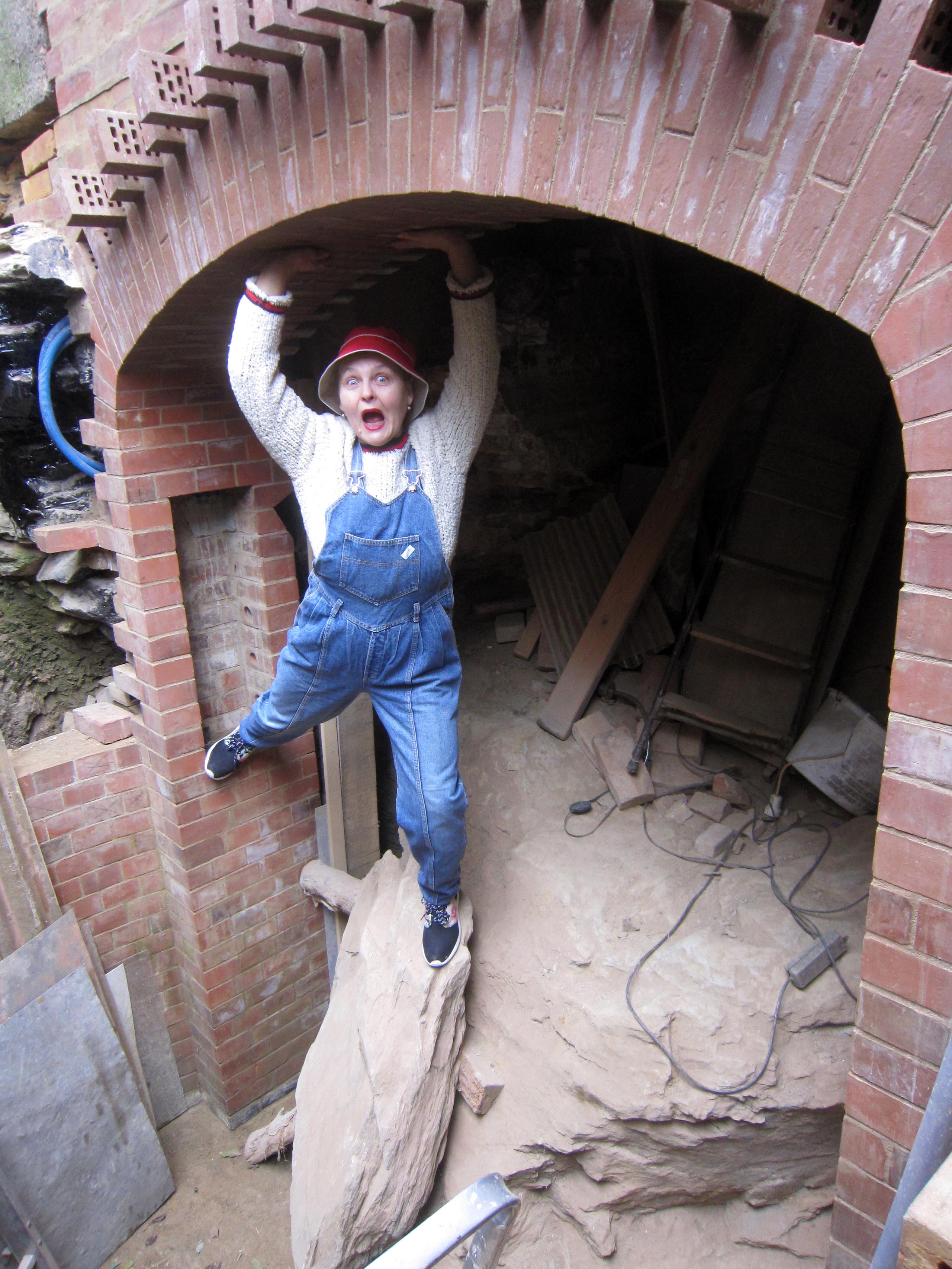
As a result, for a span of 2.3 meters under the basement wall clad with granite slabs, there was nothing but air. There were no cracks in the wall, and everything held together solely by the strength of the century-old mortar. I had to work under these extreme conditions. The granite slabs hung over my head like the sword of Damocles.
In June 2018 a brick house built around 1900 opposite our building was demolished. From there we brought as many facing and frost-resistant bricks as we could carry.
The bricks were then cleaned, washed and sorted. In total we collected a couple of thousand pieces of historic bricks more than a hundred years old.
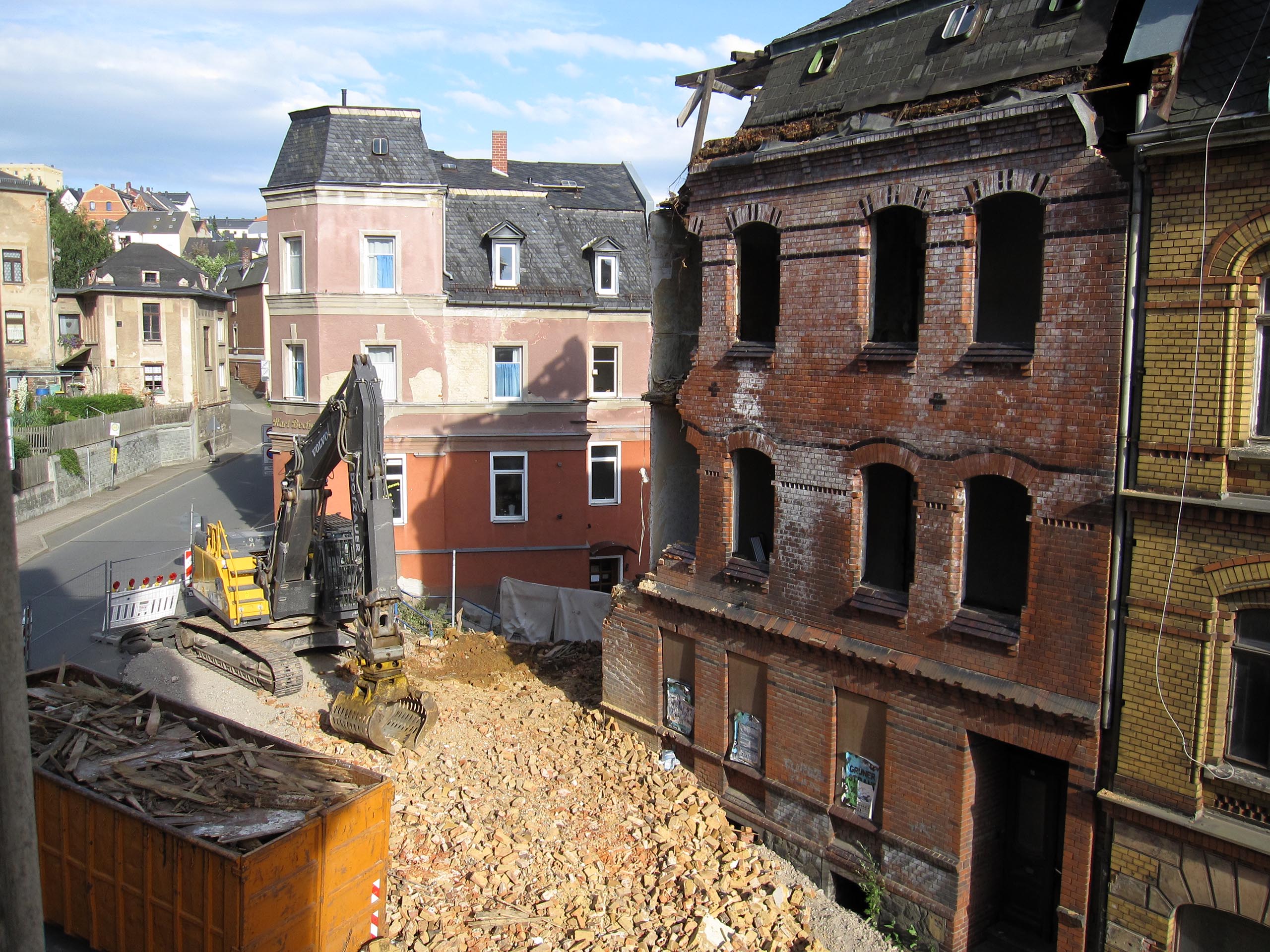
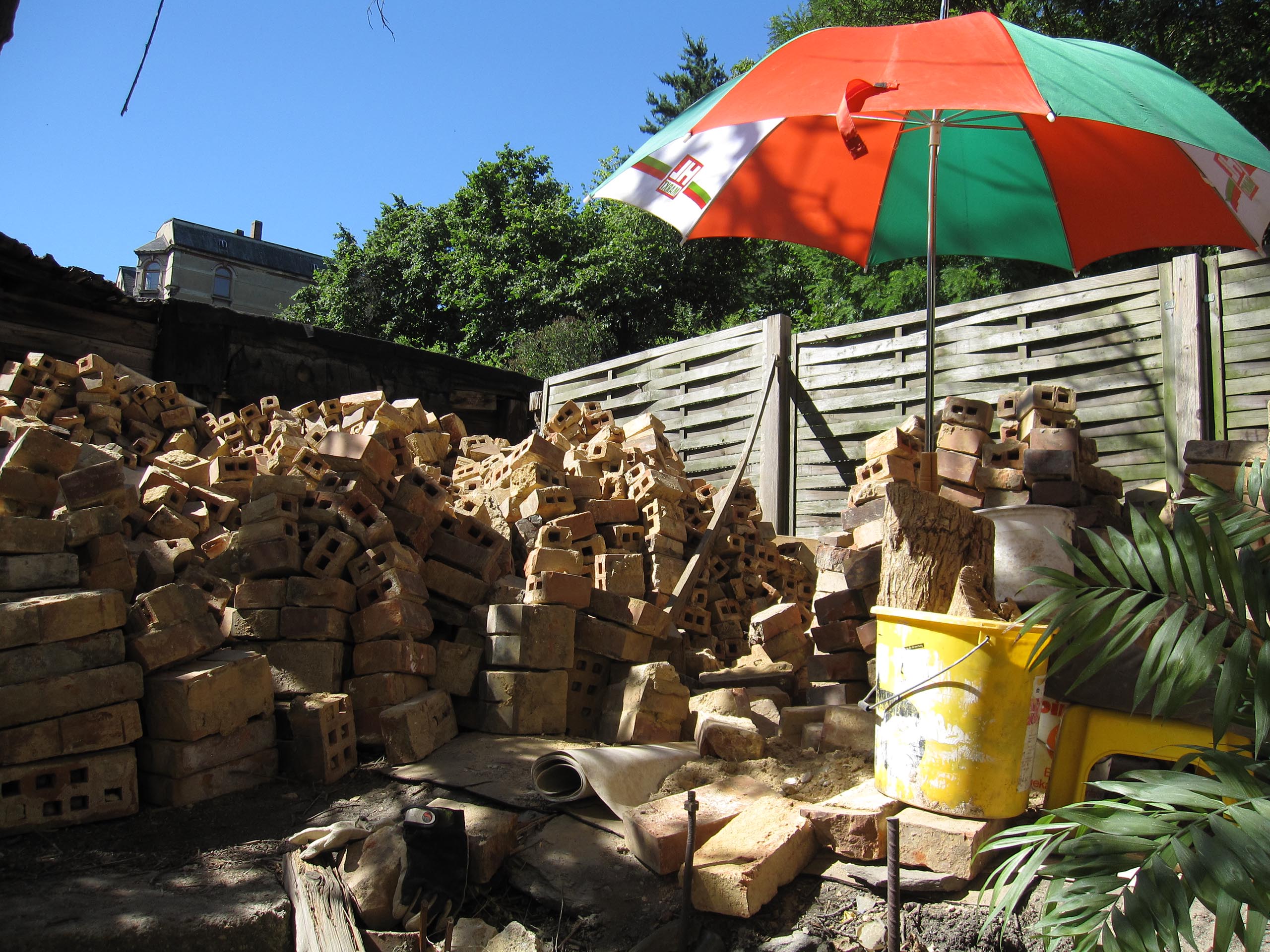
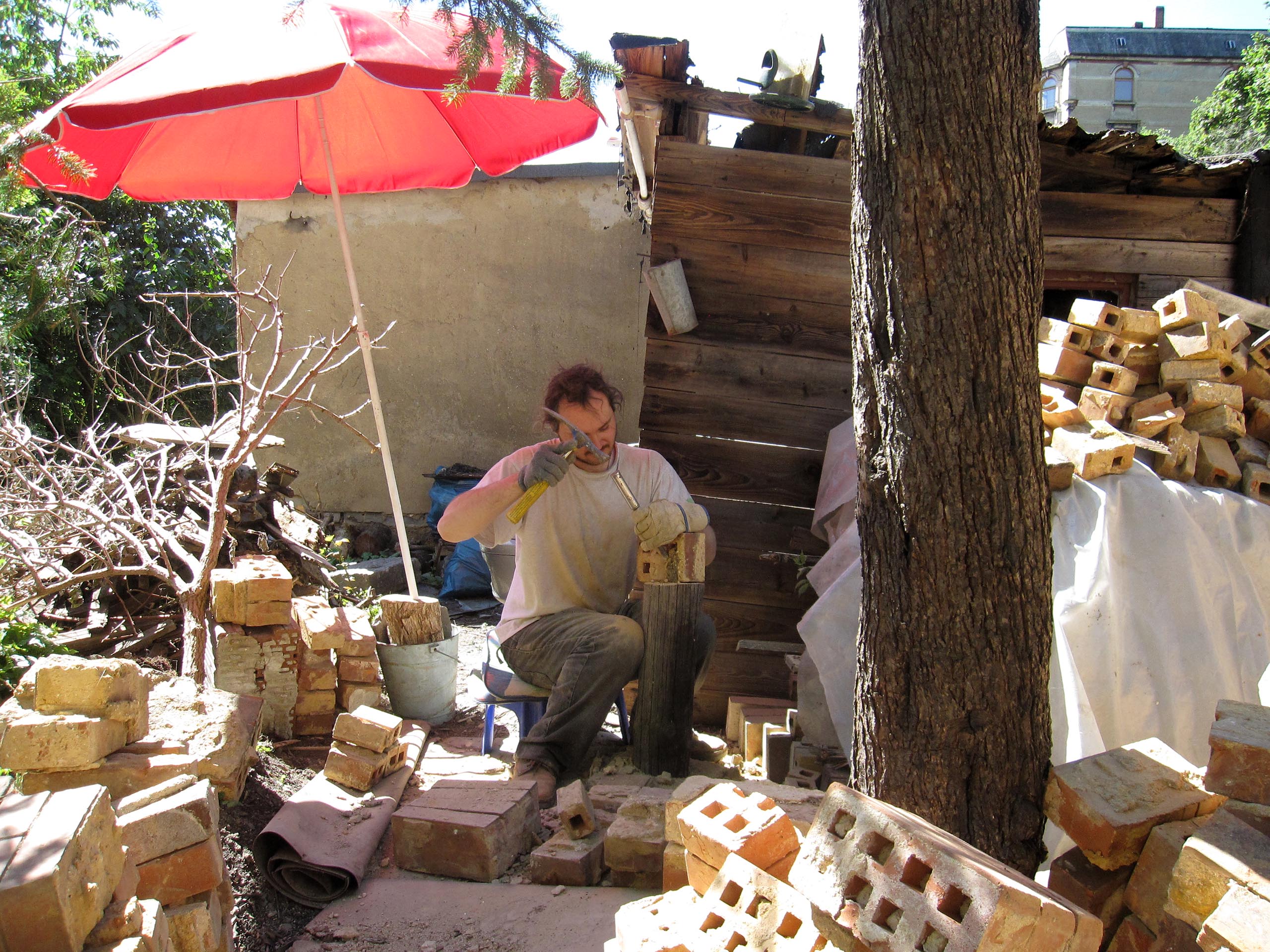
In September 2019 another historic building in Greiz was demolished. From there we collected another thousand bricks.
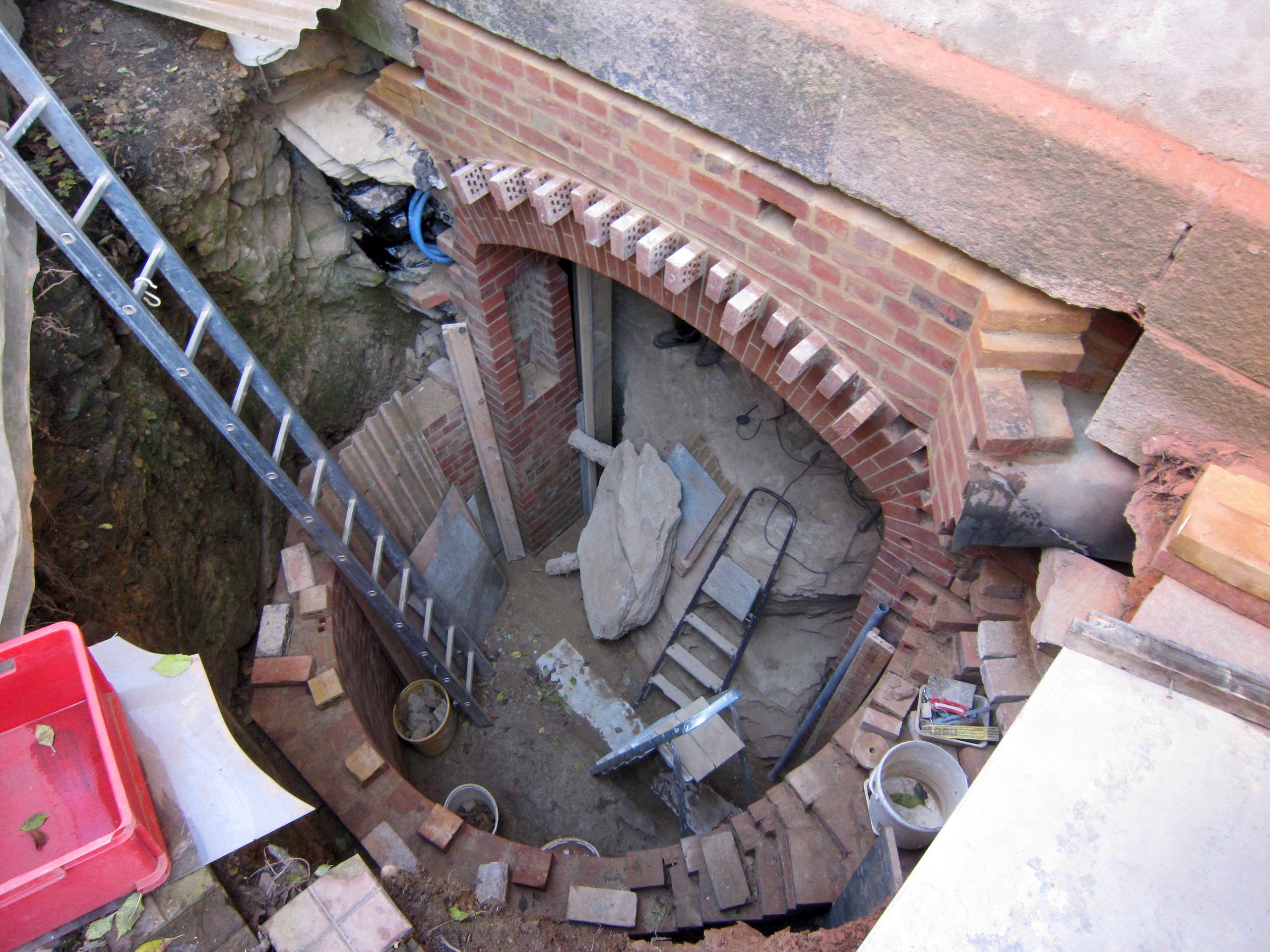
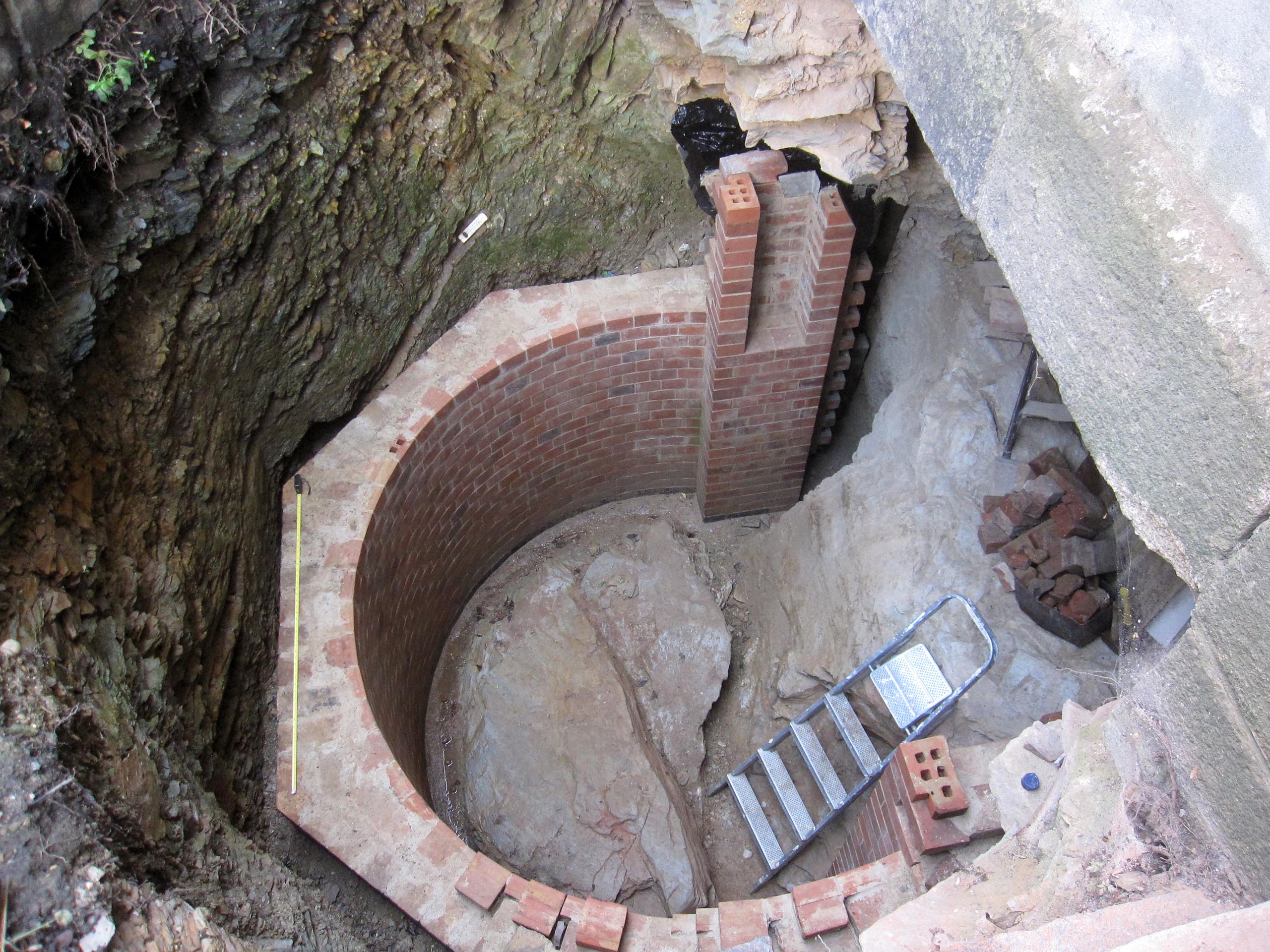
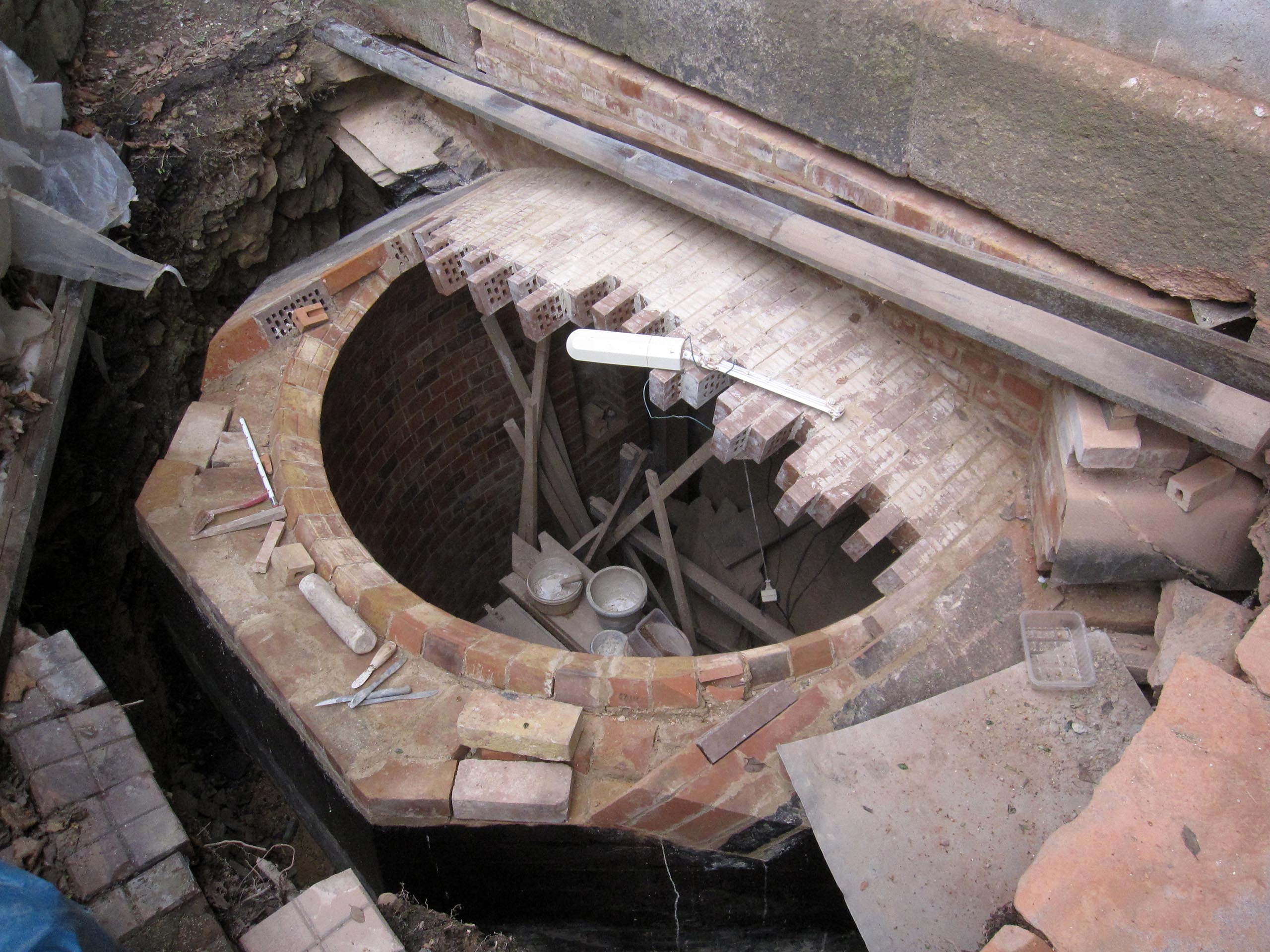
The cesspit was cleared to a depth of 3.5 metres. In its place a technical room made of facing brick will be built. Since the room is located entirely underground in the frost-free zone, the load on the masonry can be expected to be reduced. Nevertheless, only strong frost-resistant historic bricks should be used.
As the site was cleared, the plans for this room were adjusted.
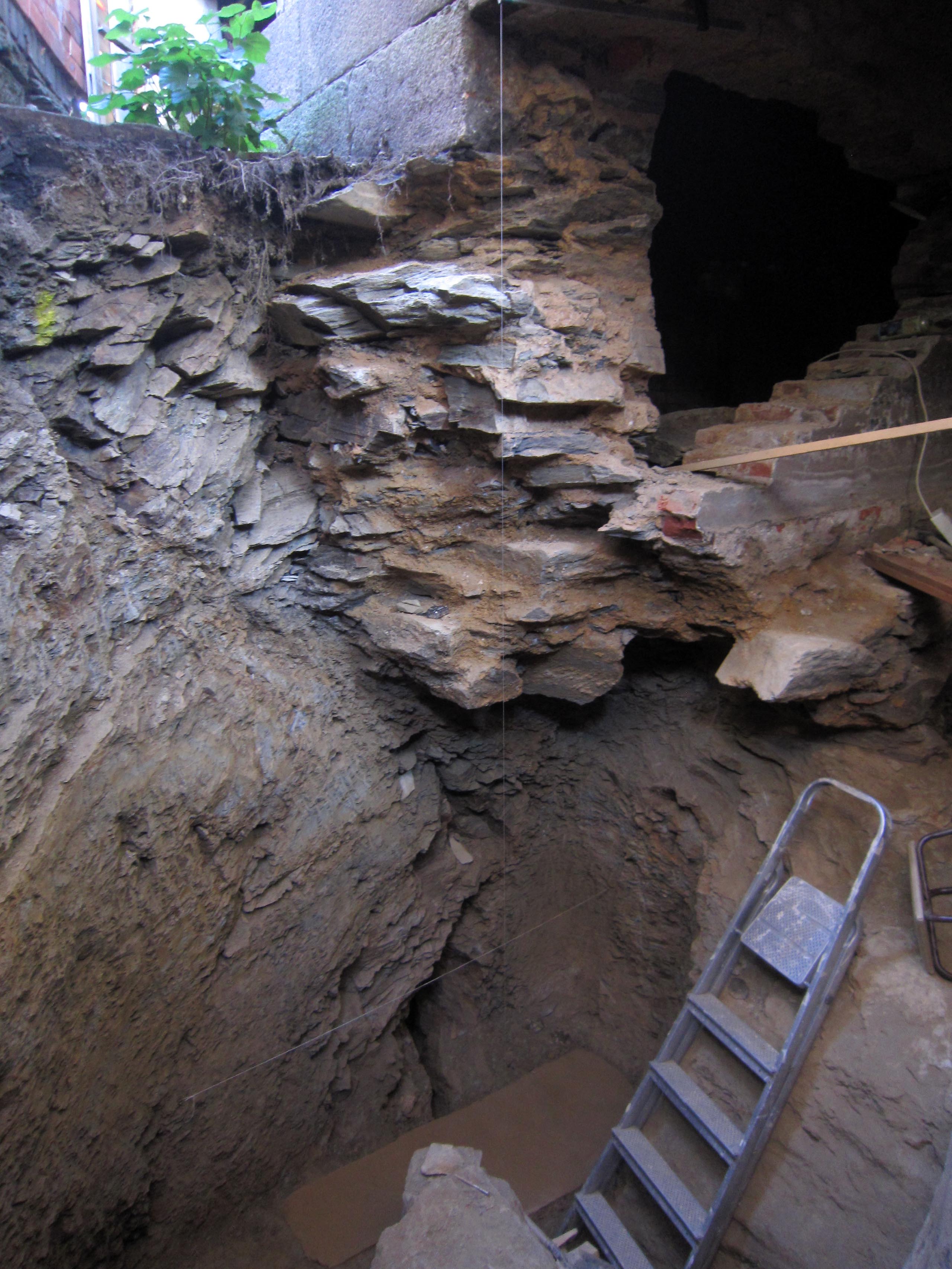
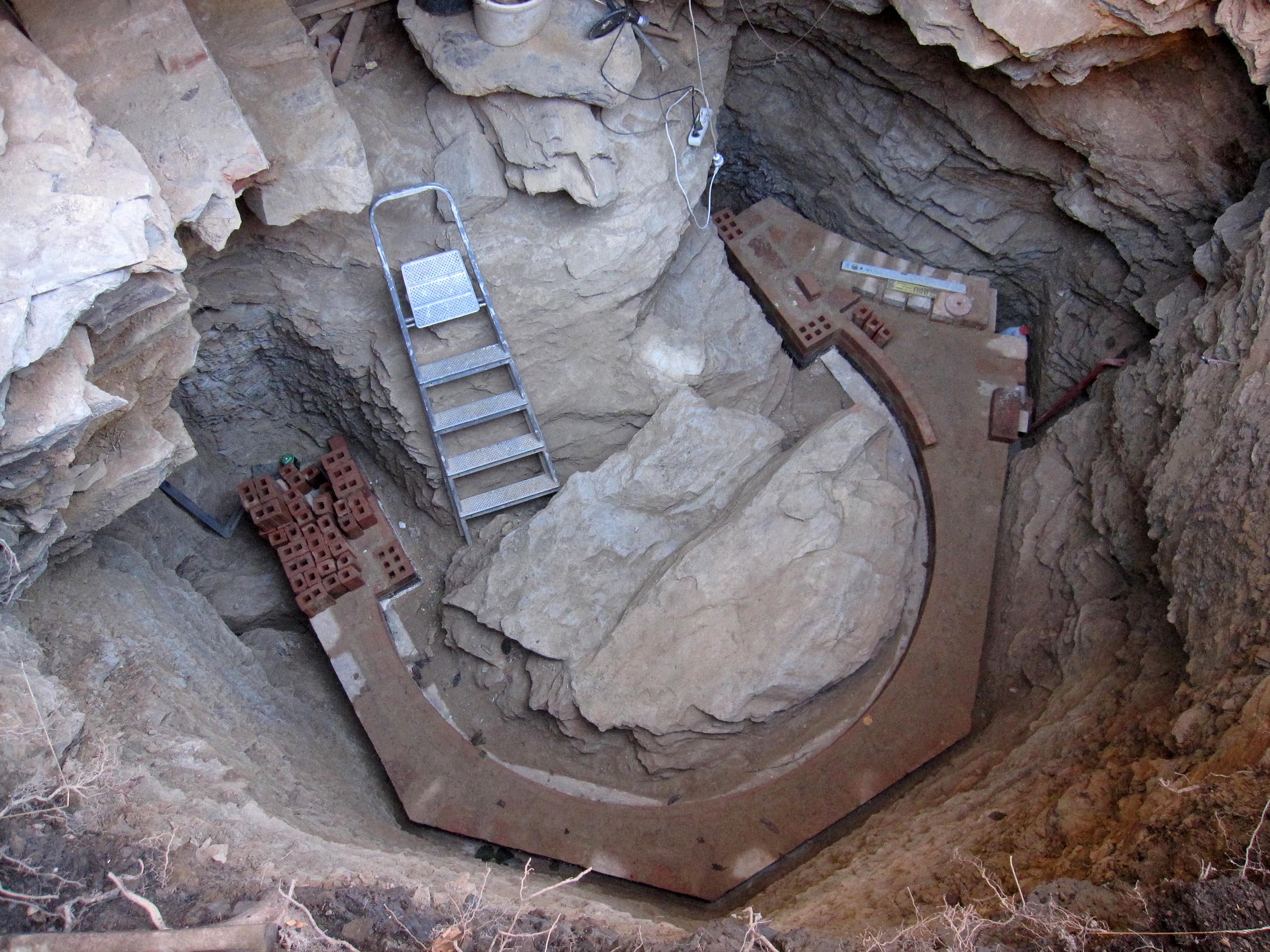
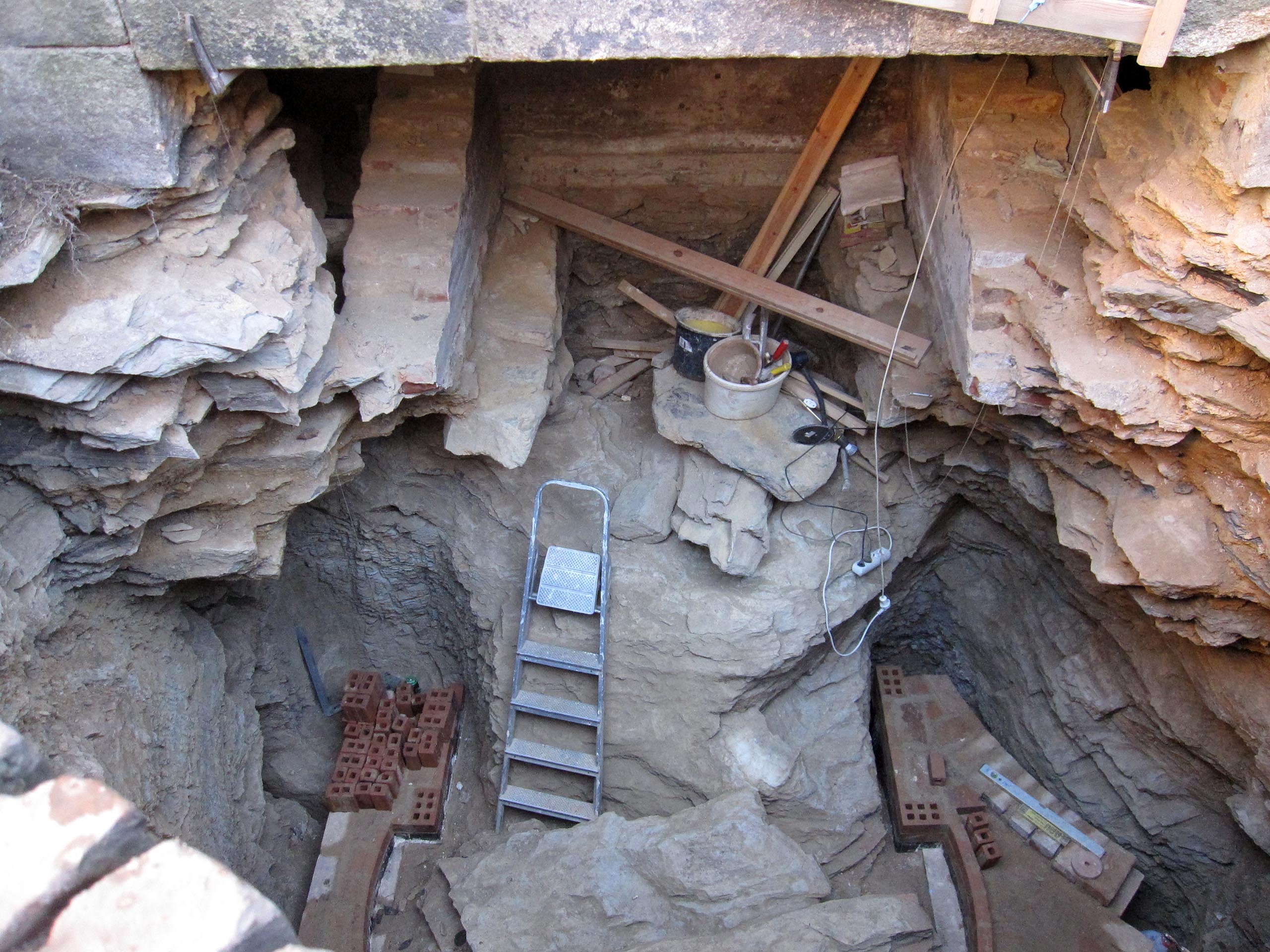
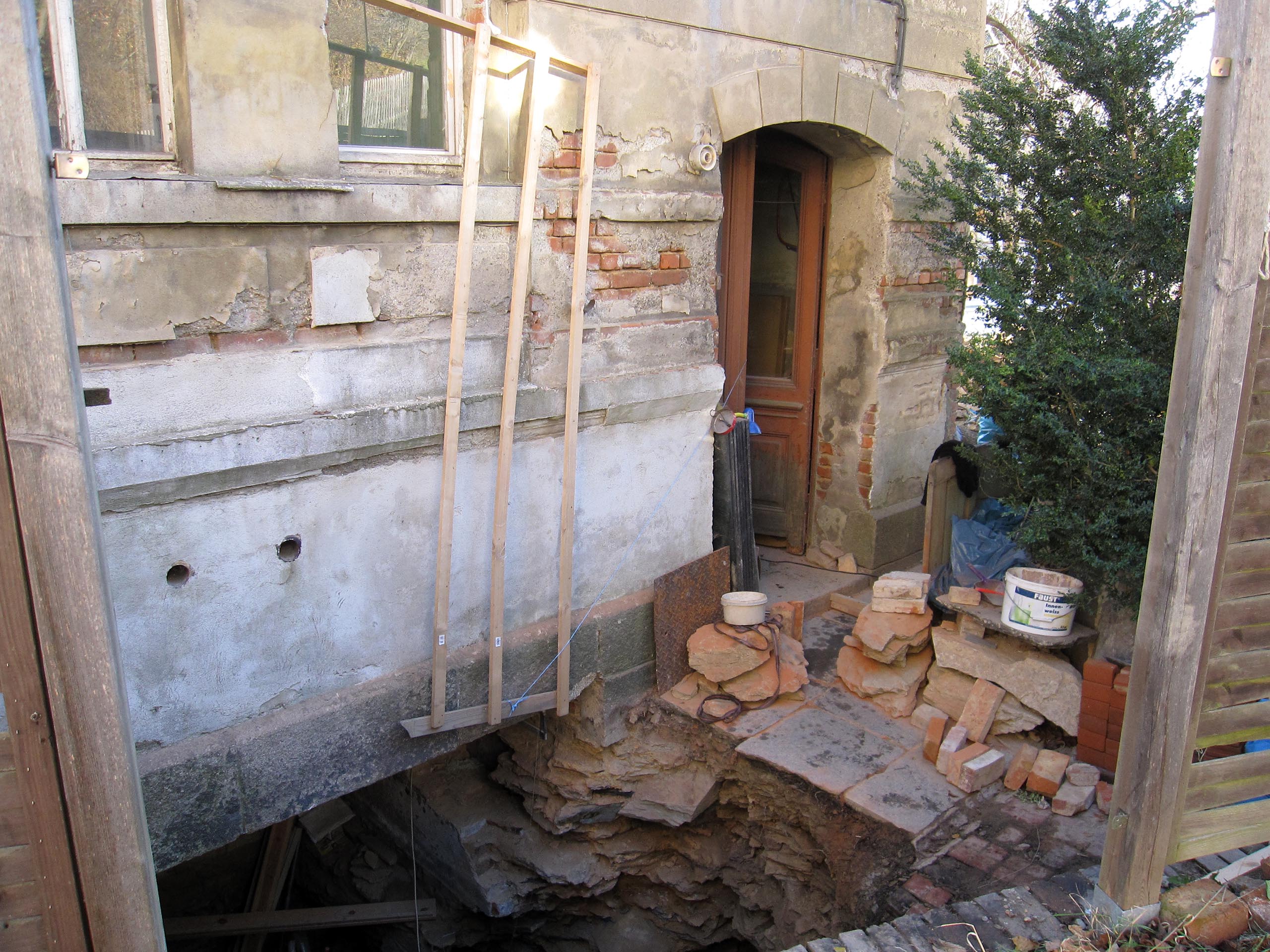
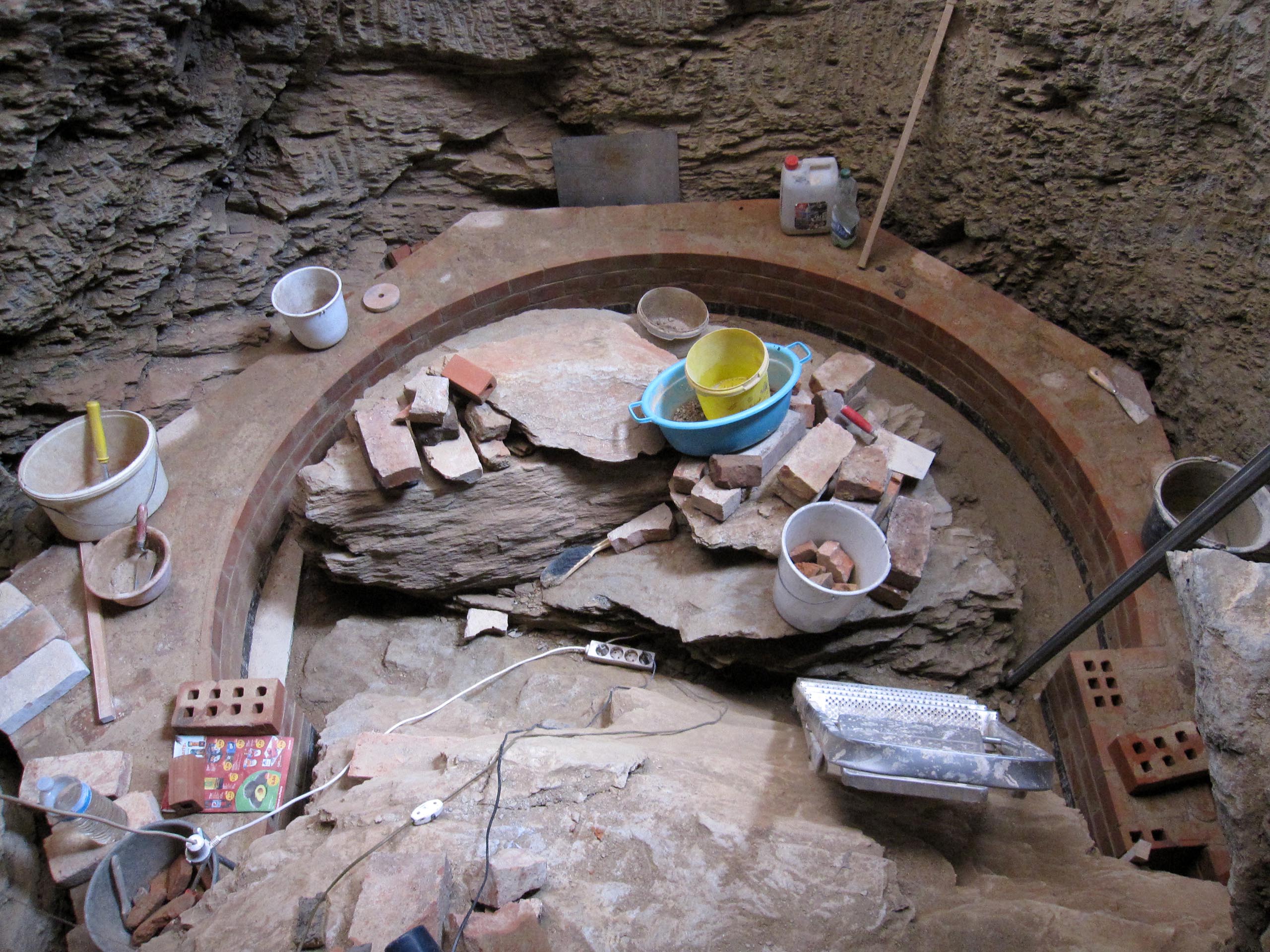
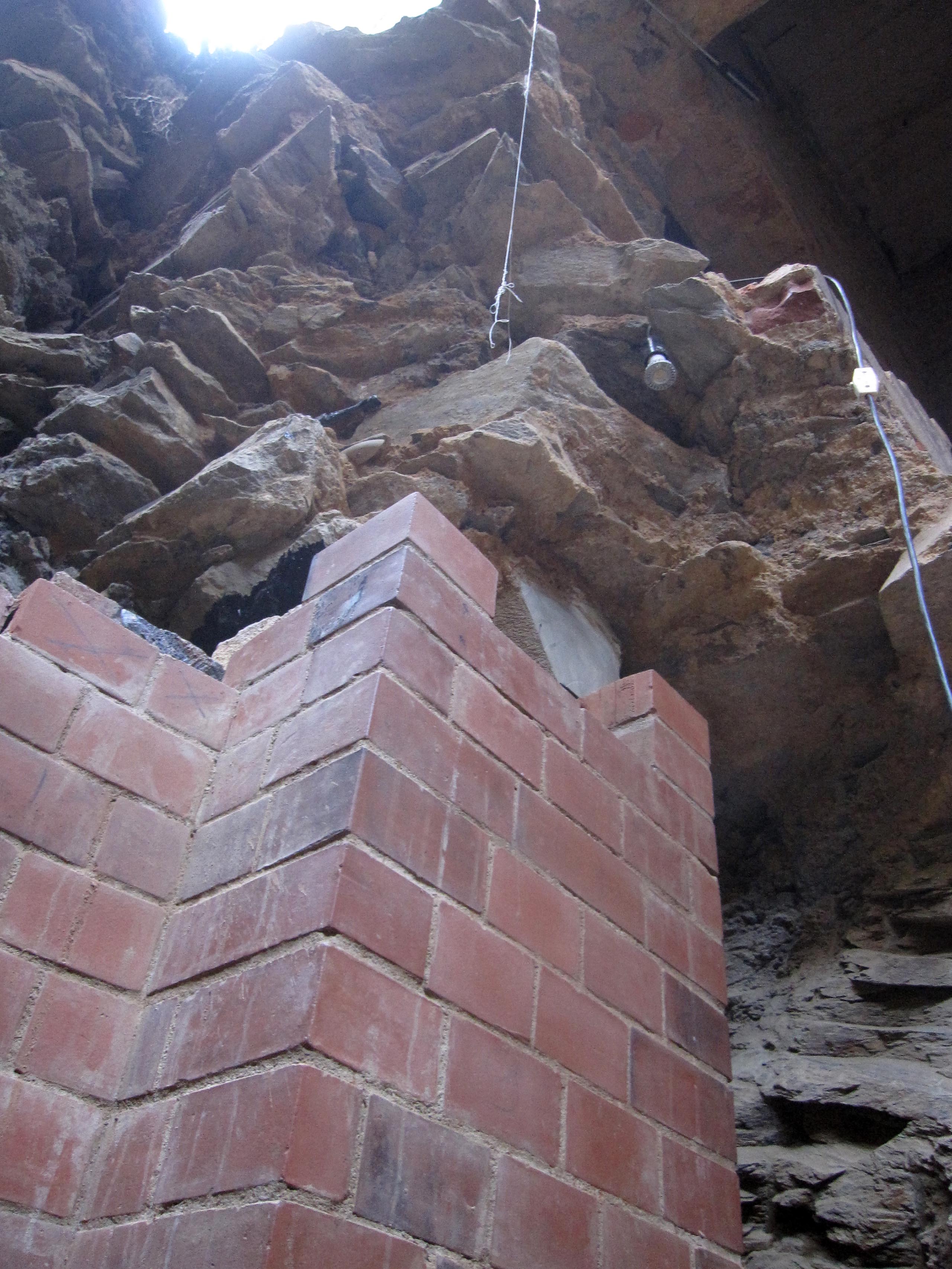
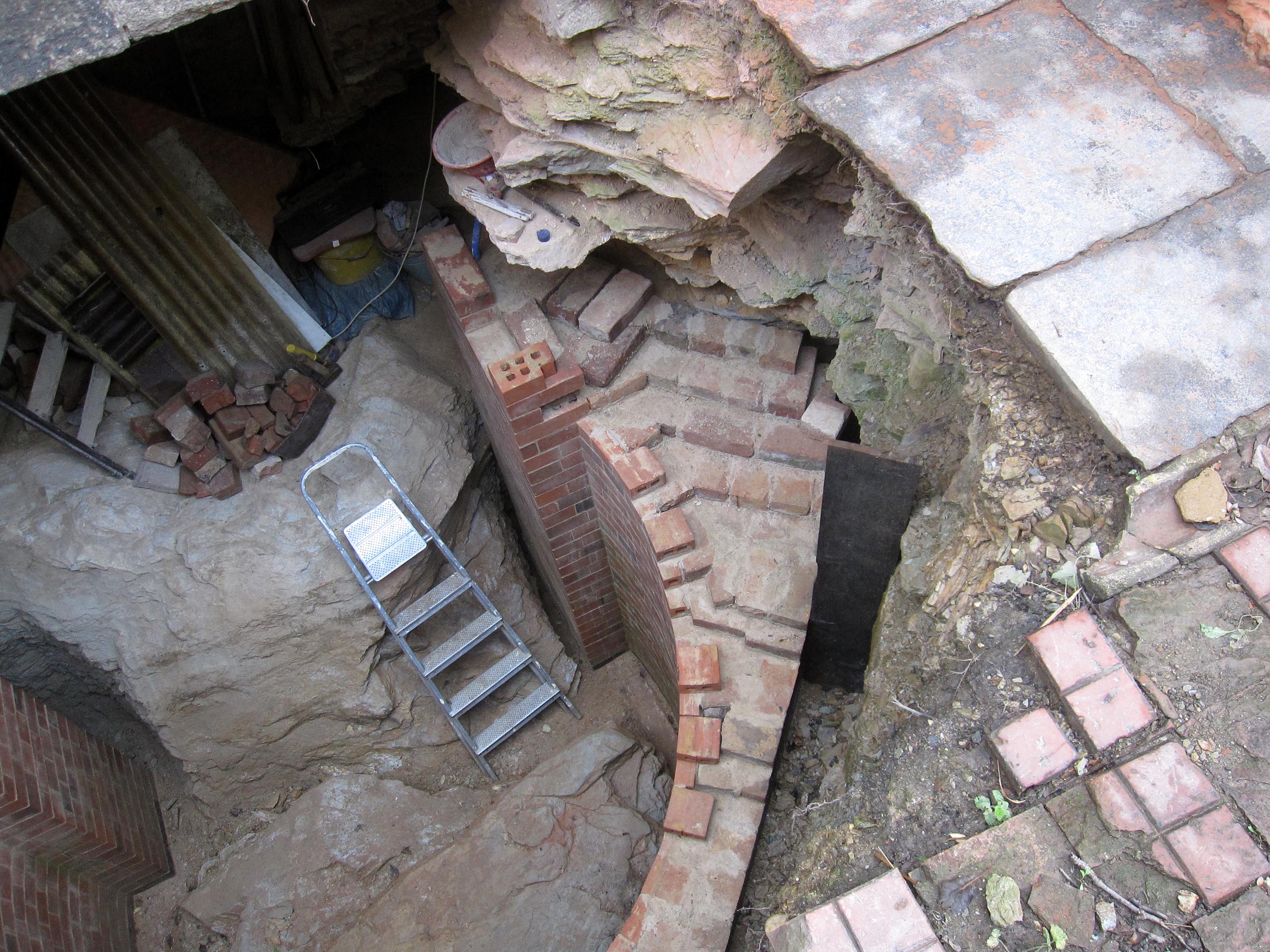
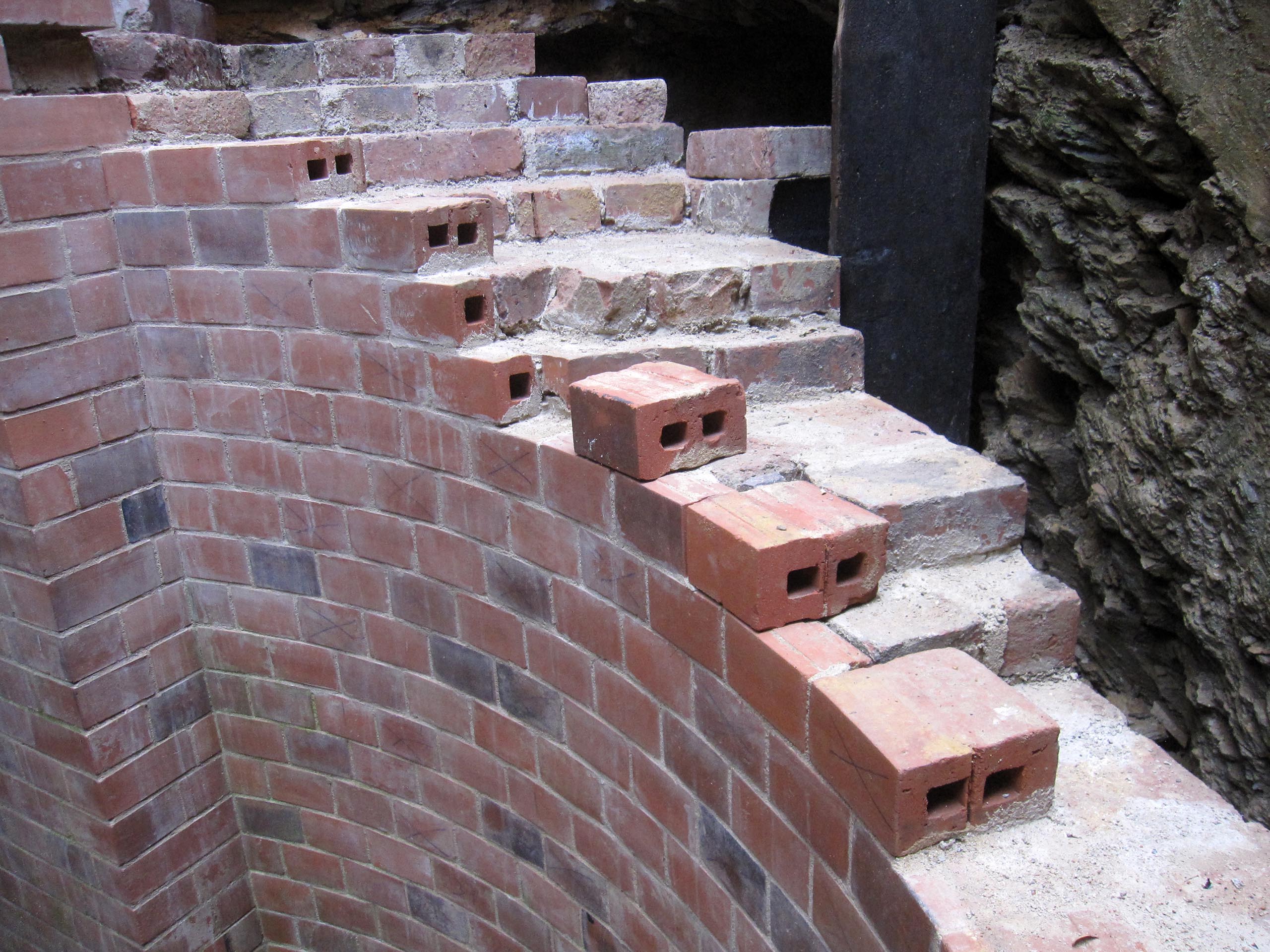
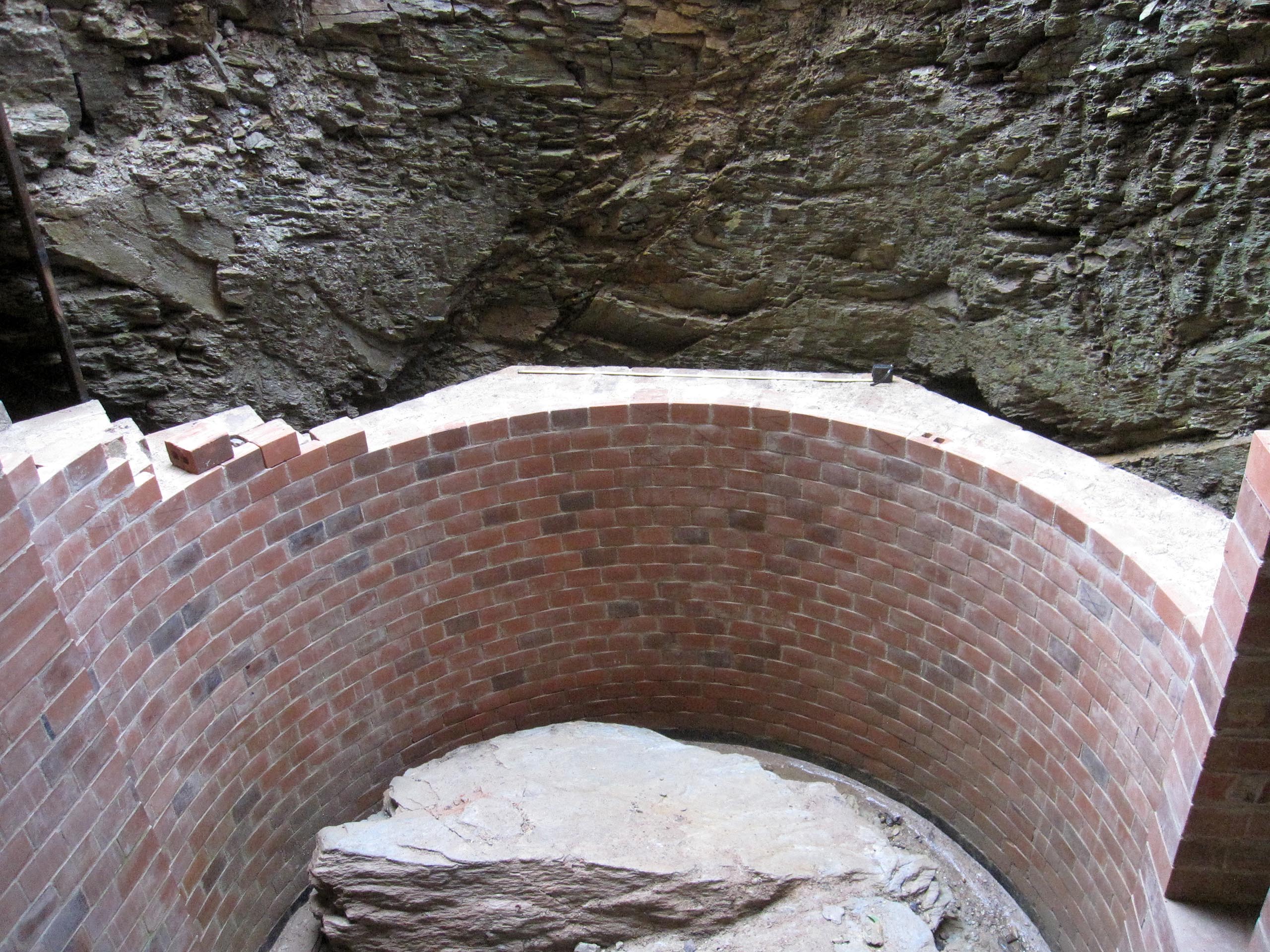
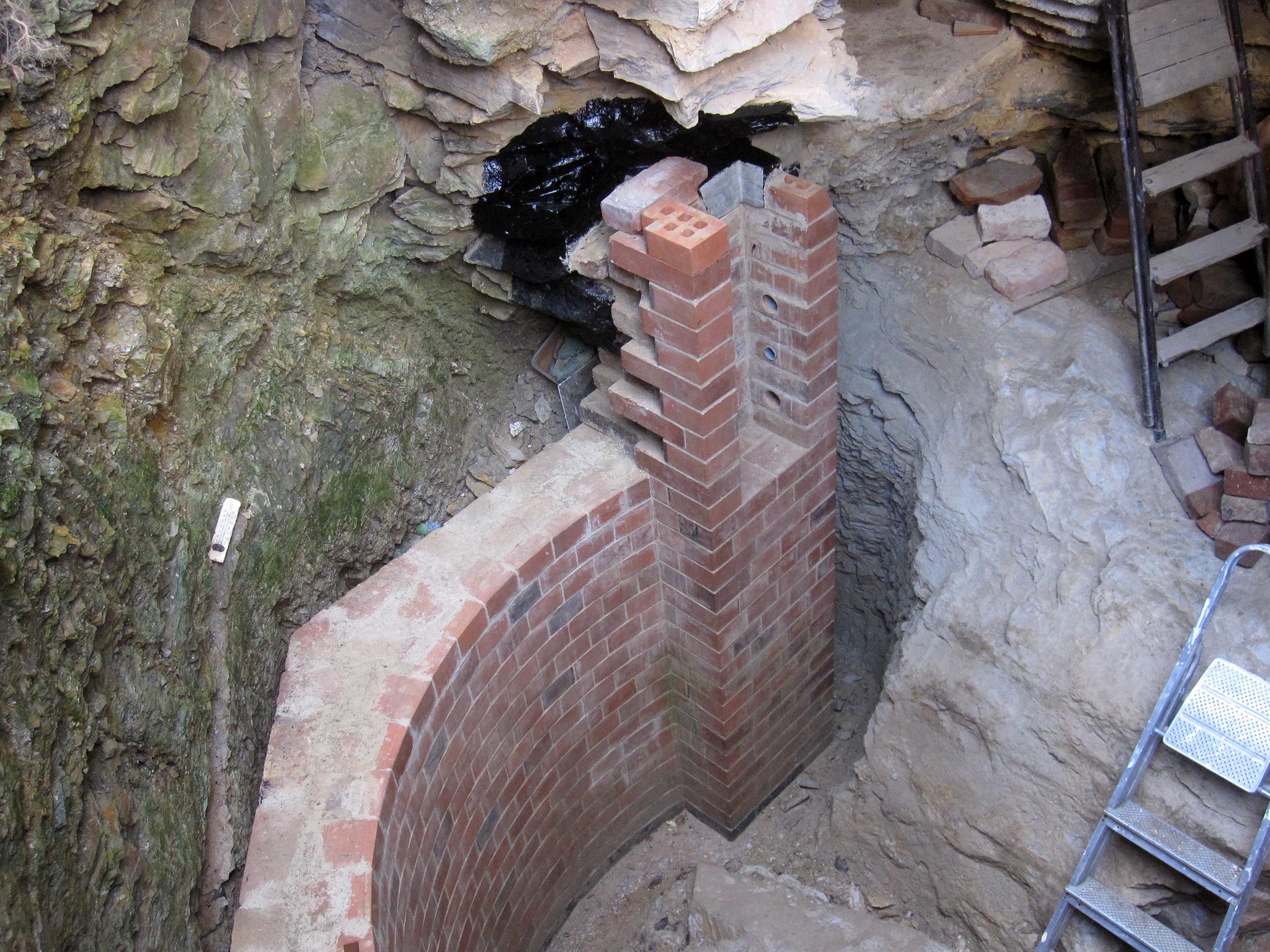
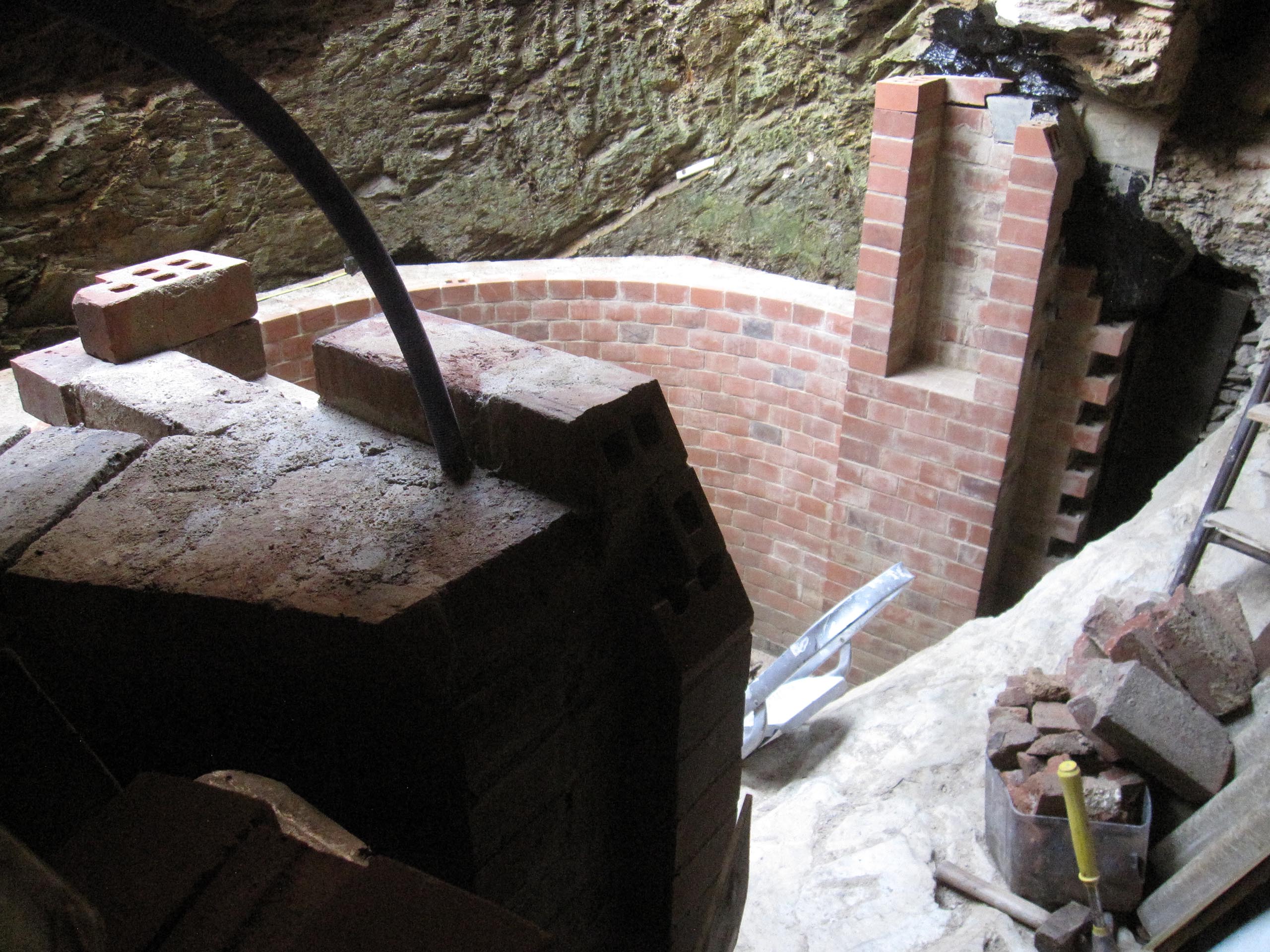
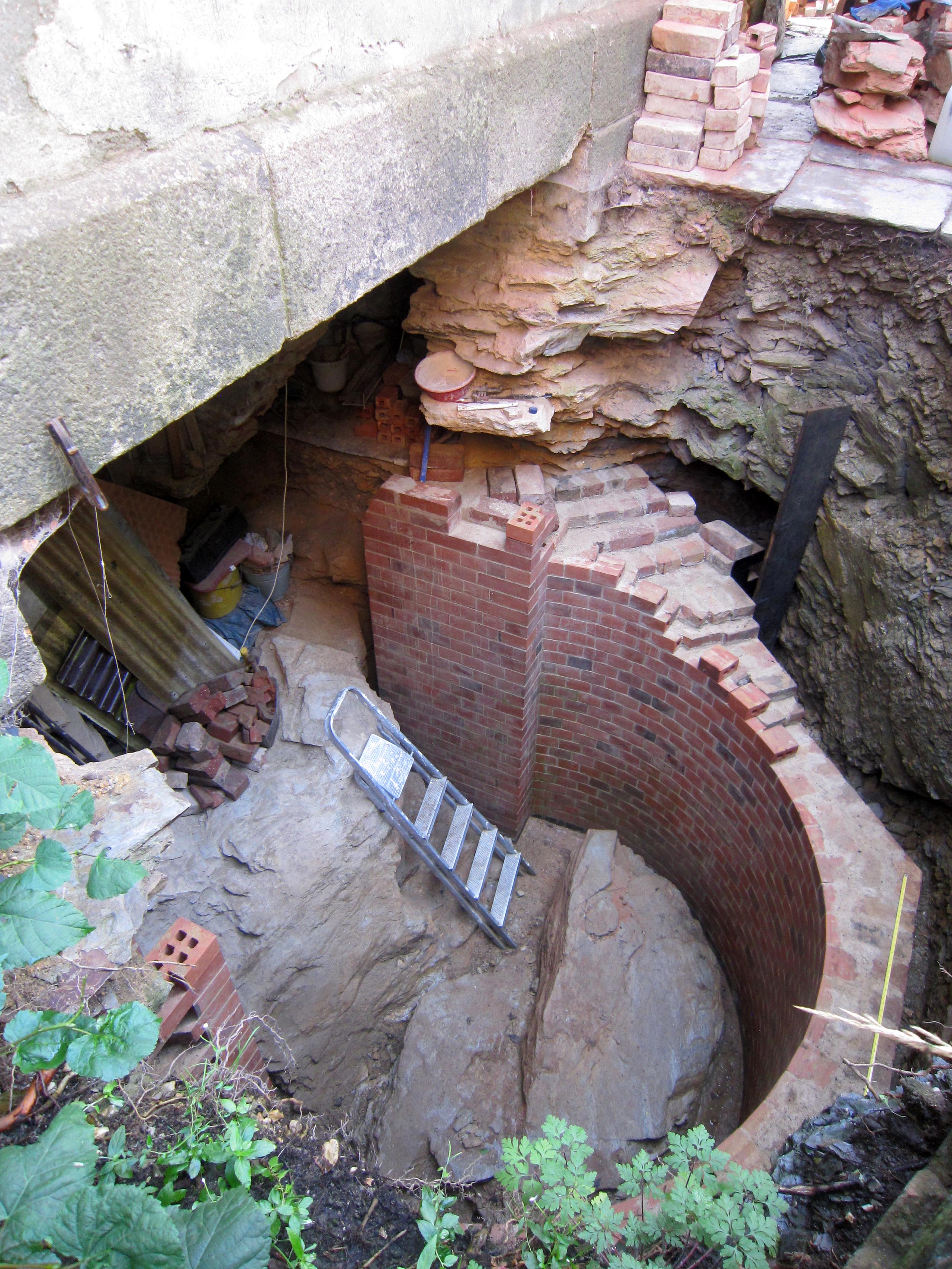
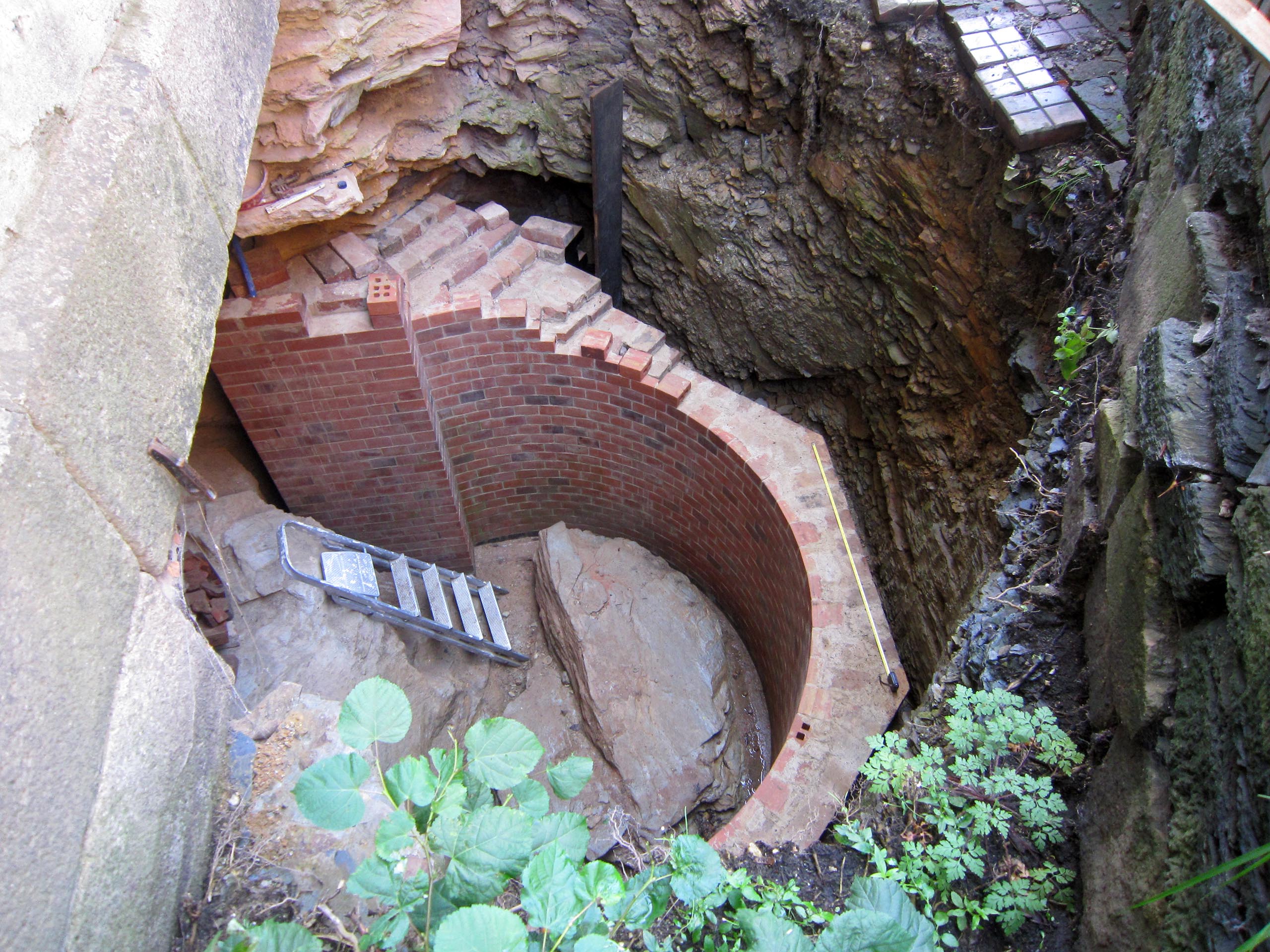
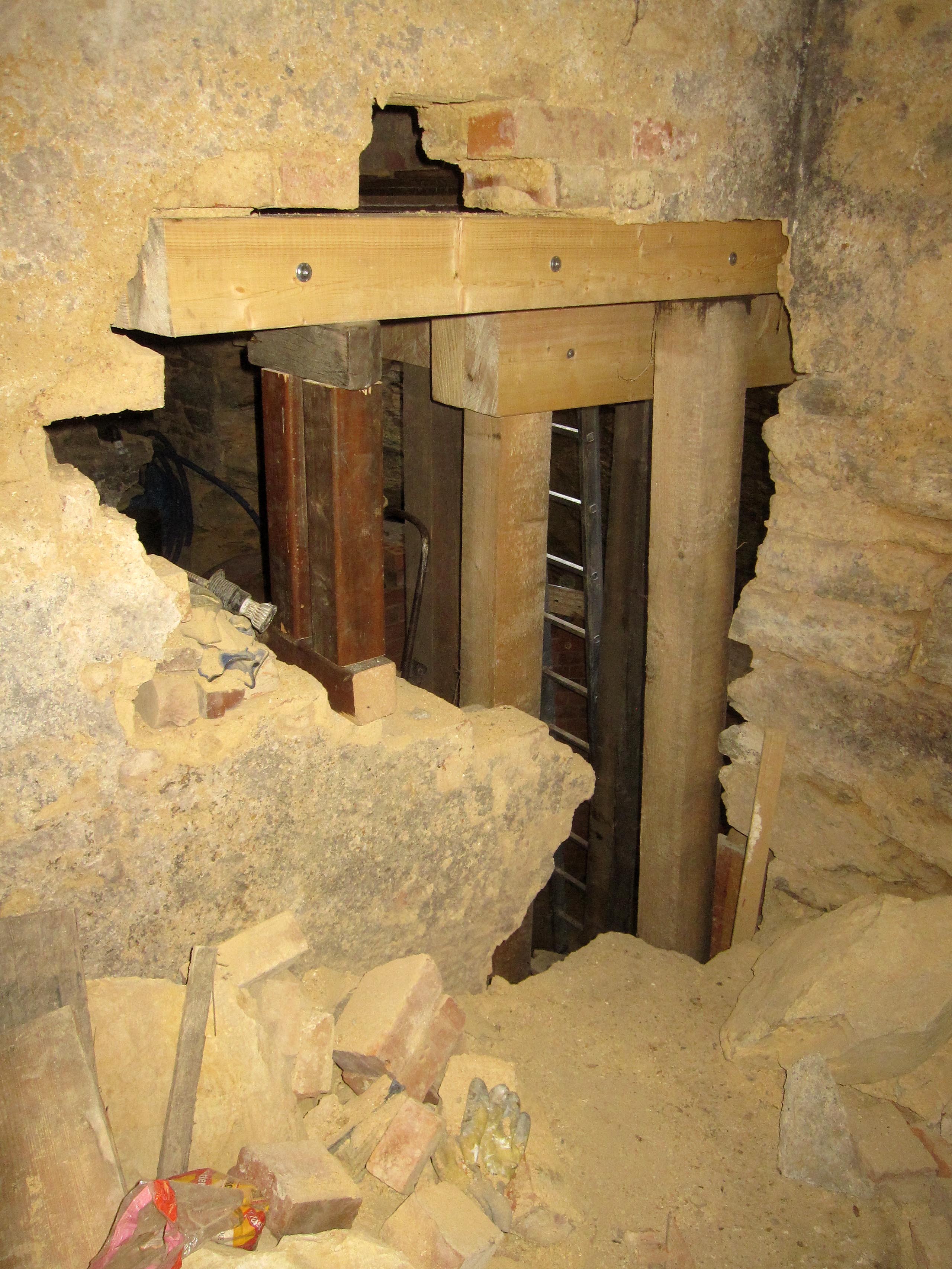
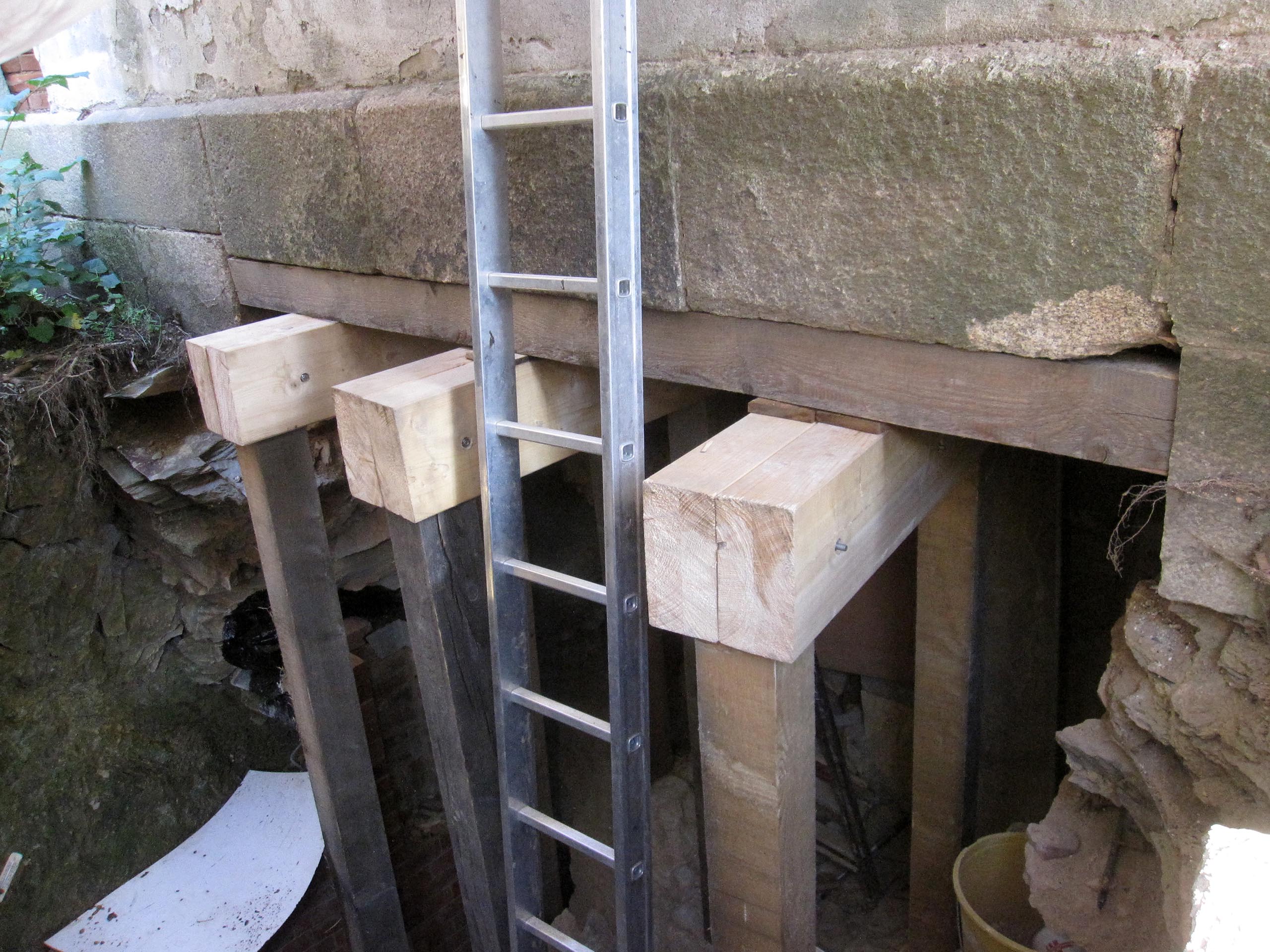
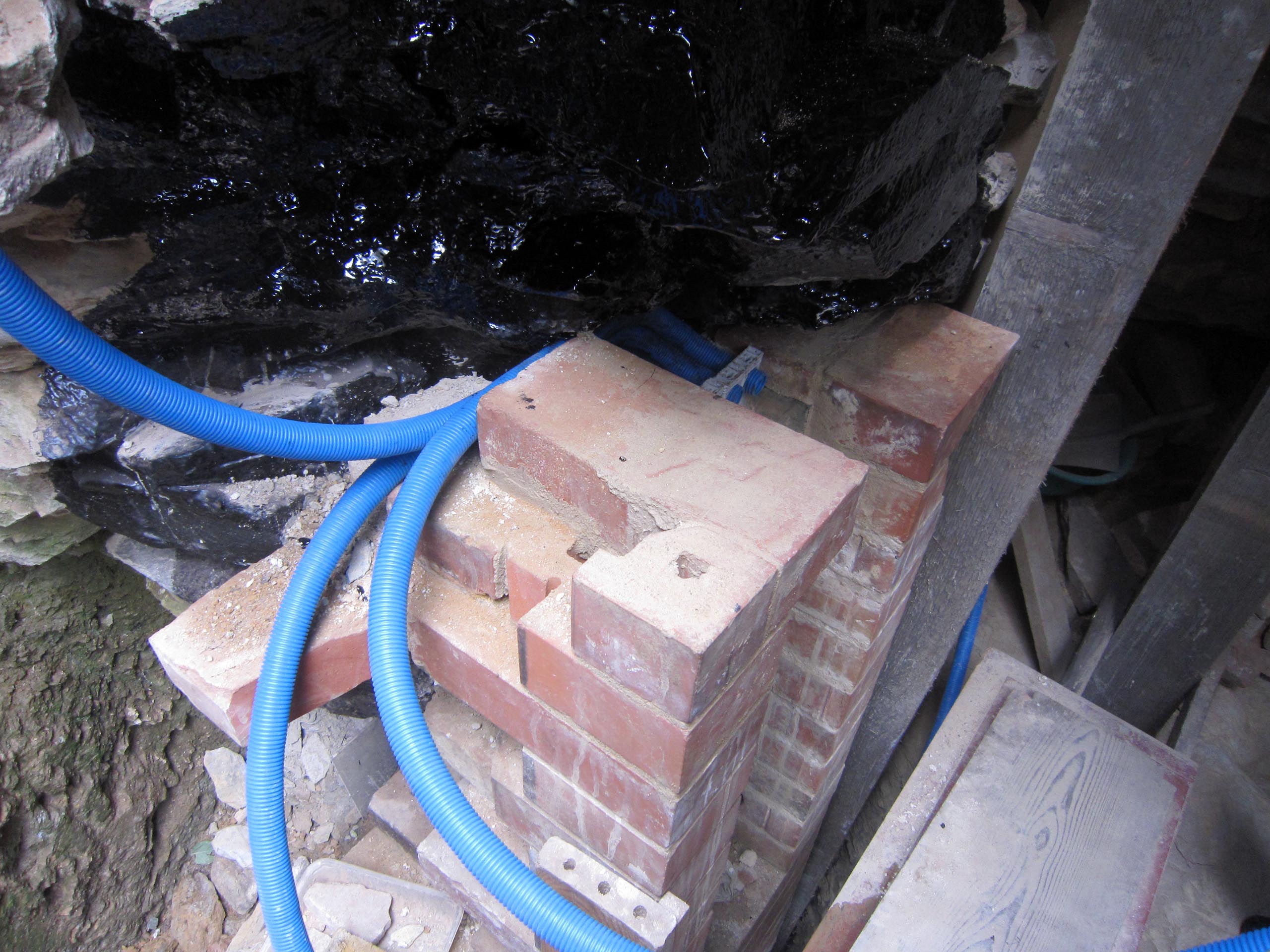
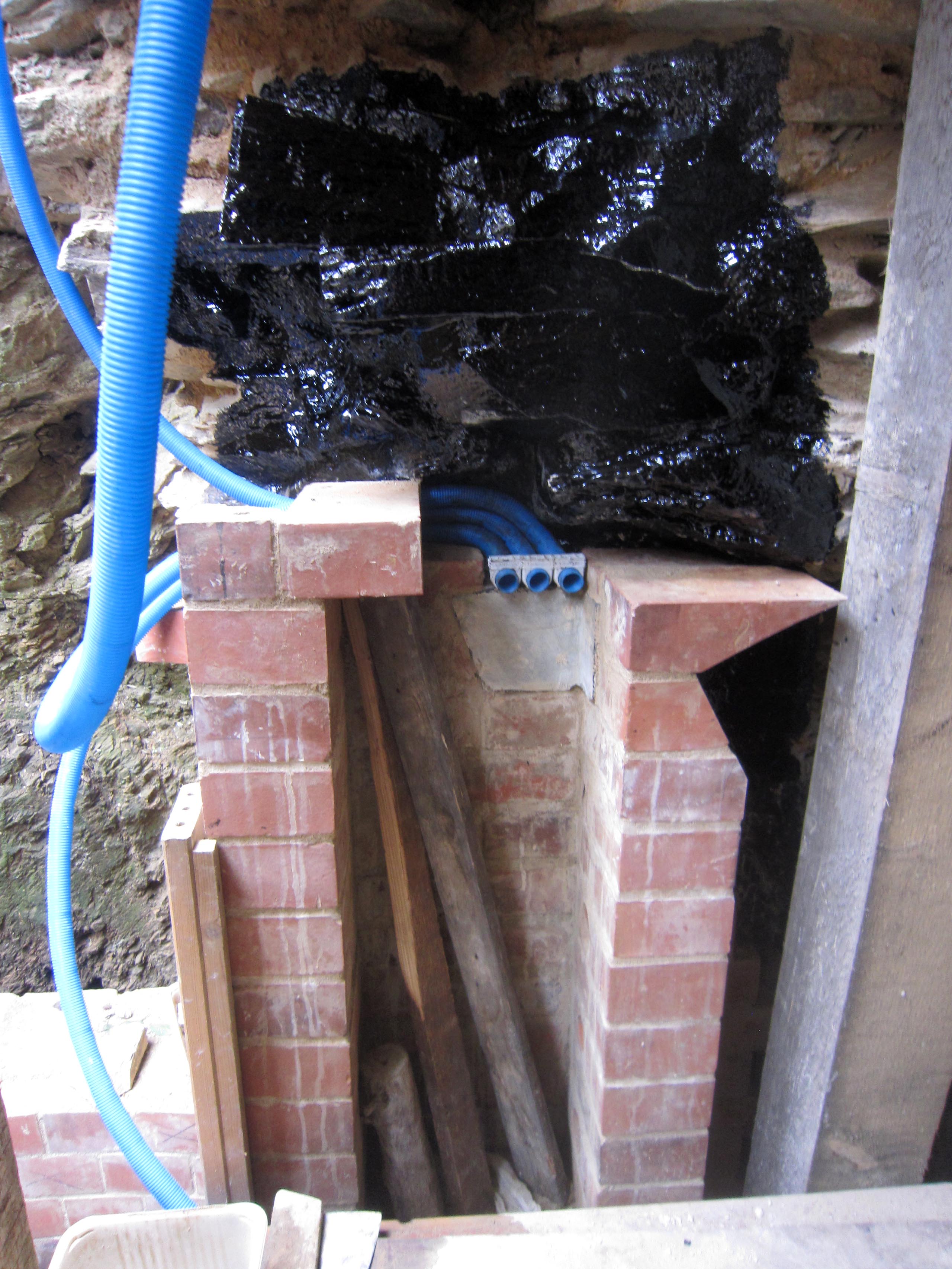
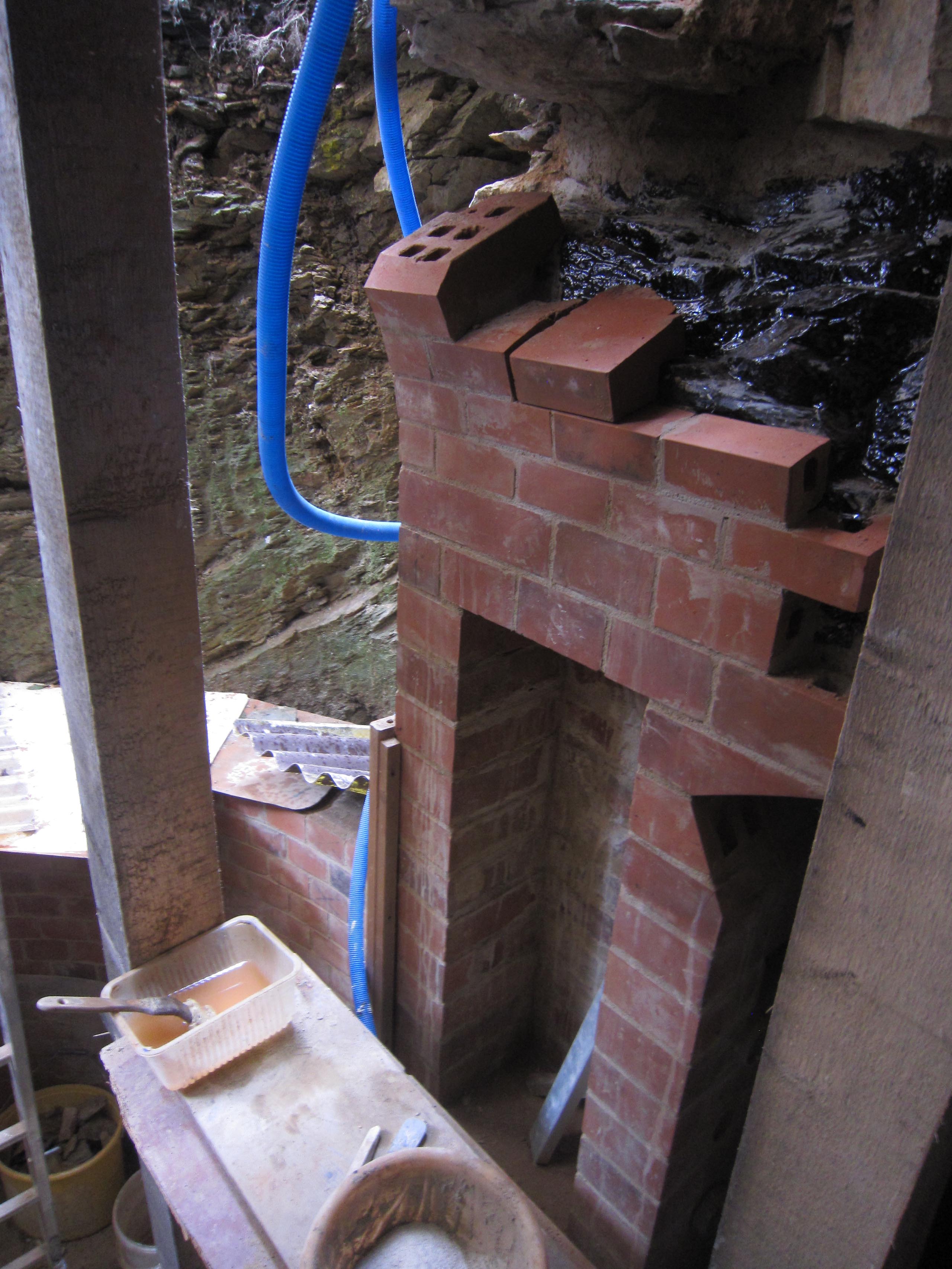
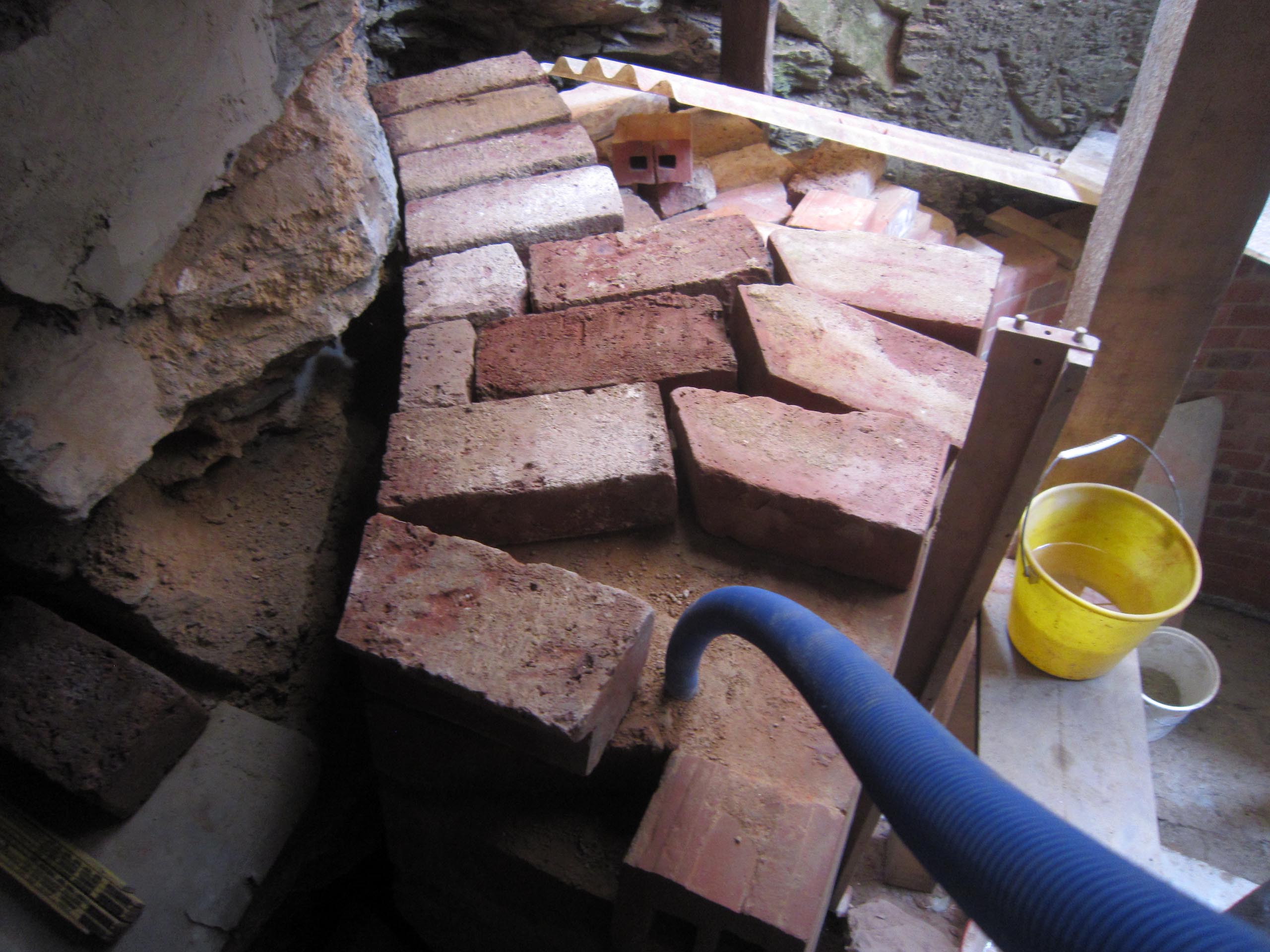
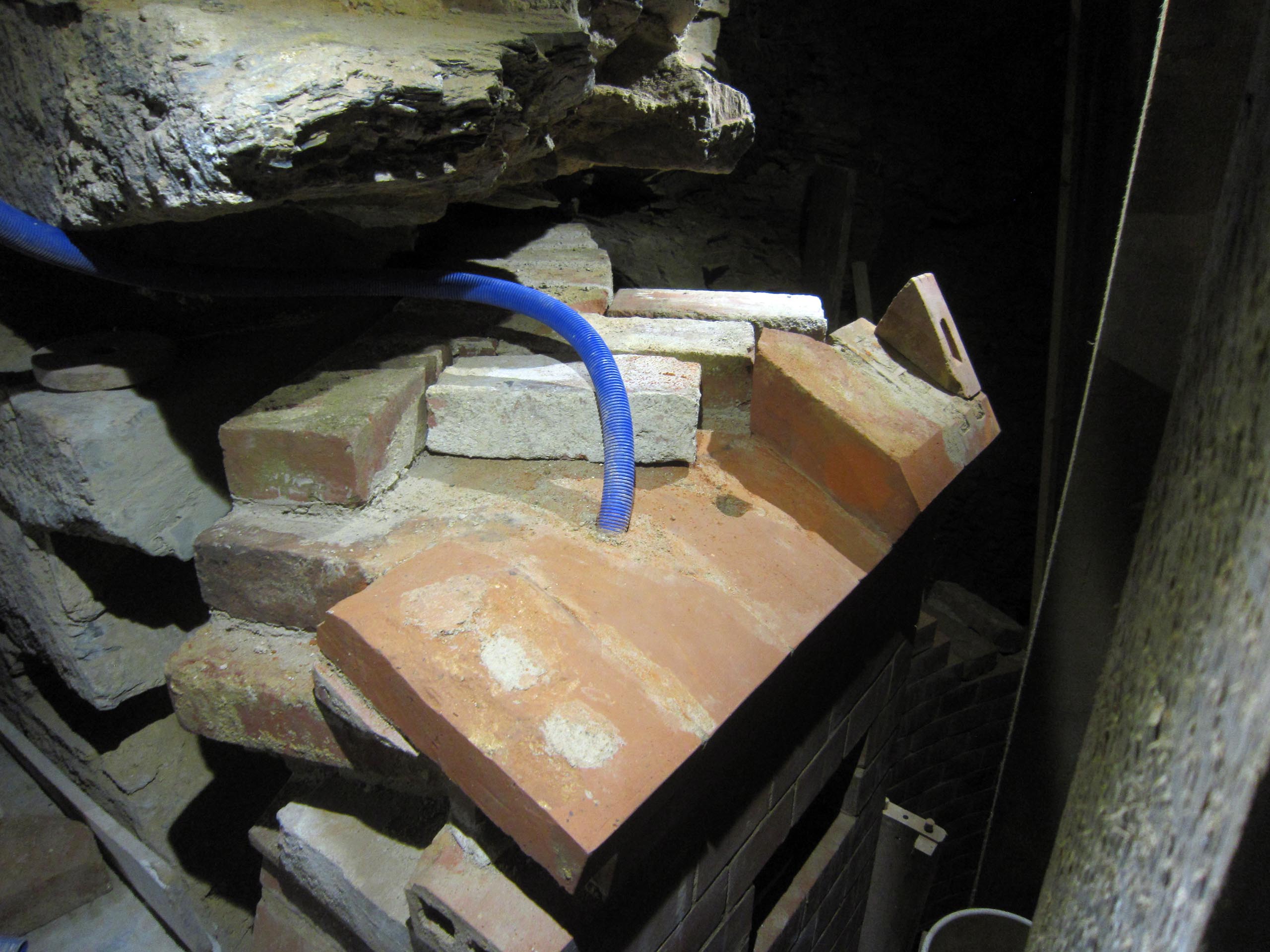
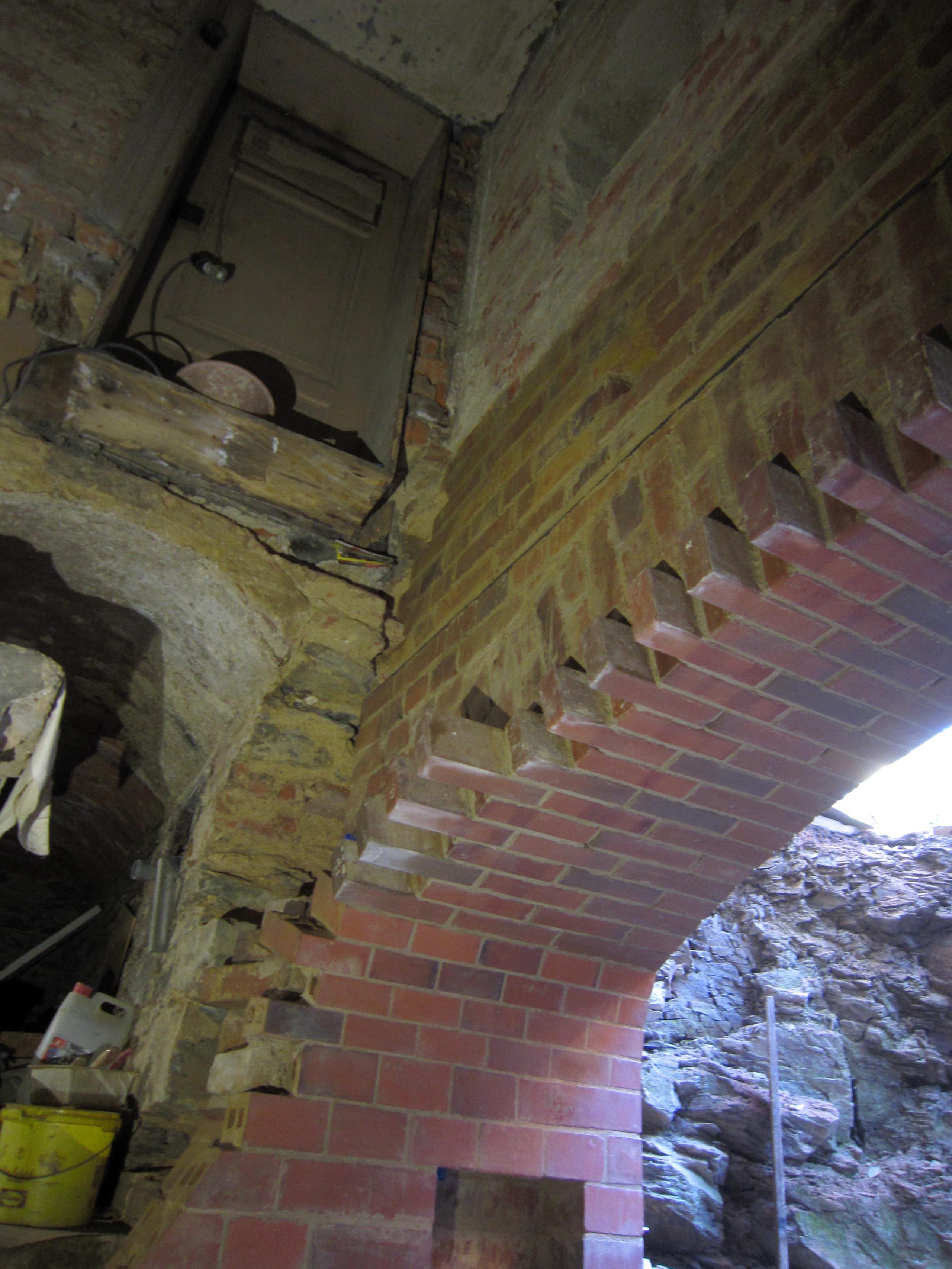
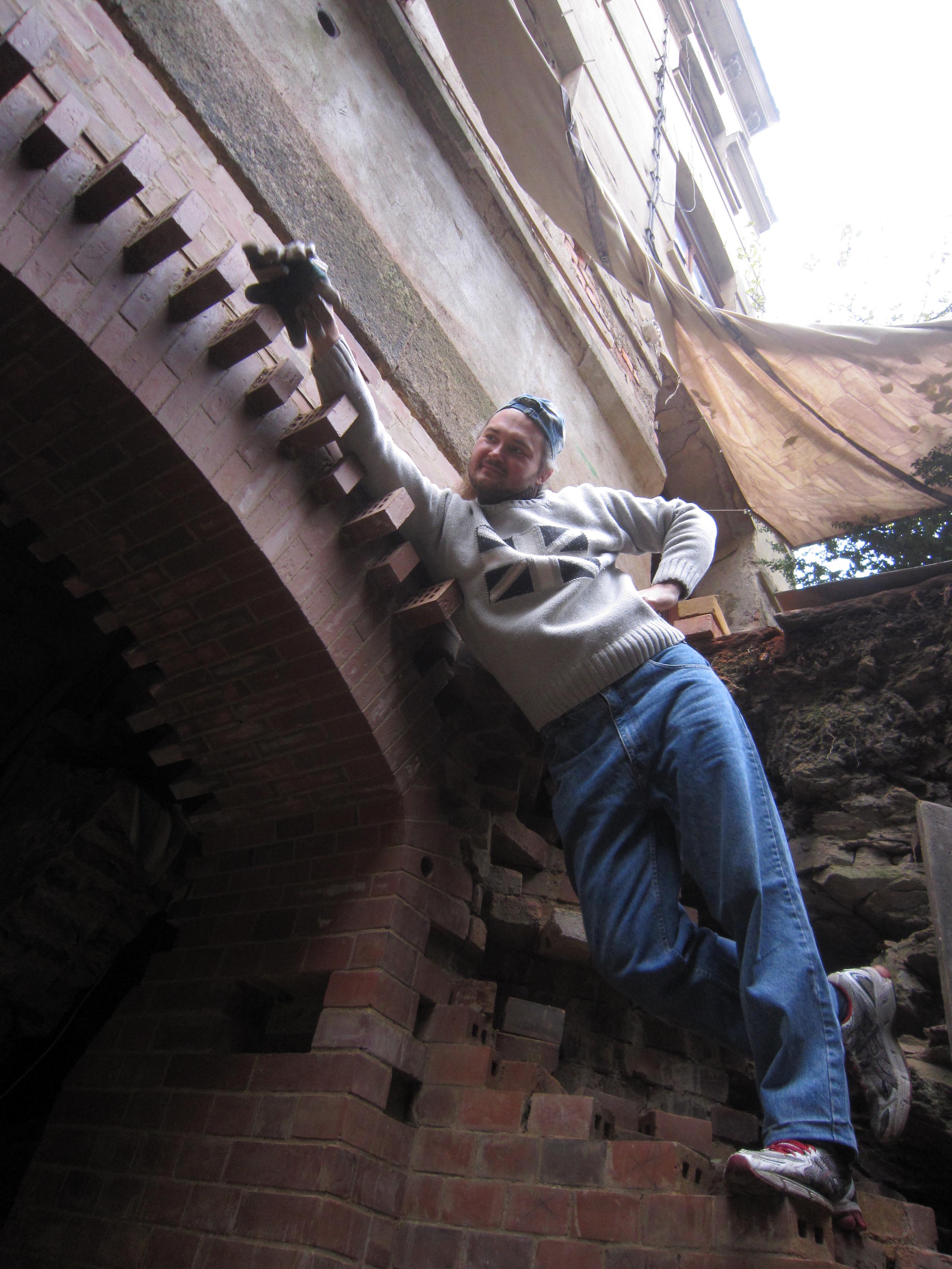
A clinker brick arch was built in place of the former rusted steel supports. The arch opening is 2 metres wide and weighs approximately 500 kg. The prepared formwork for the arch had to support this weight.
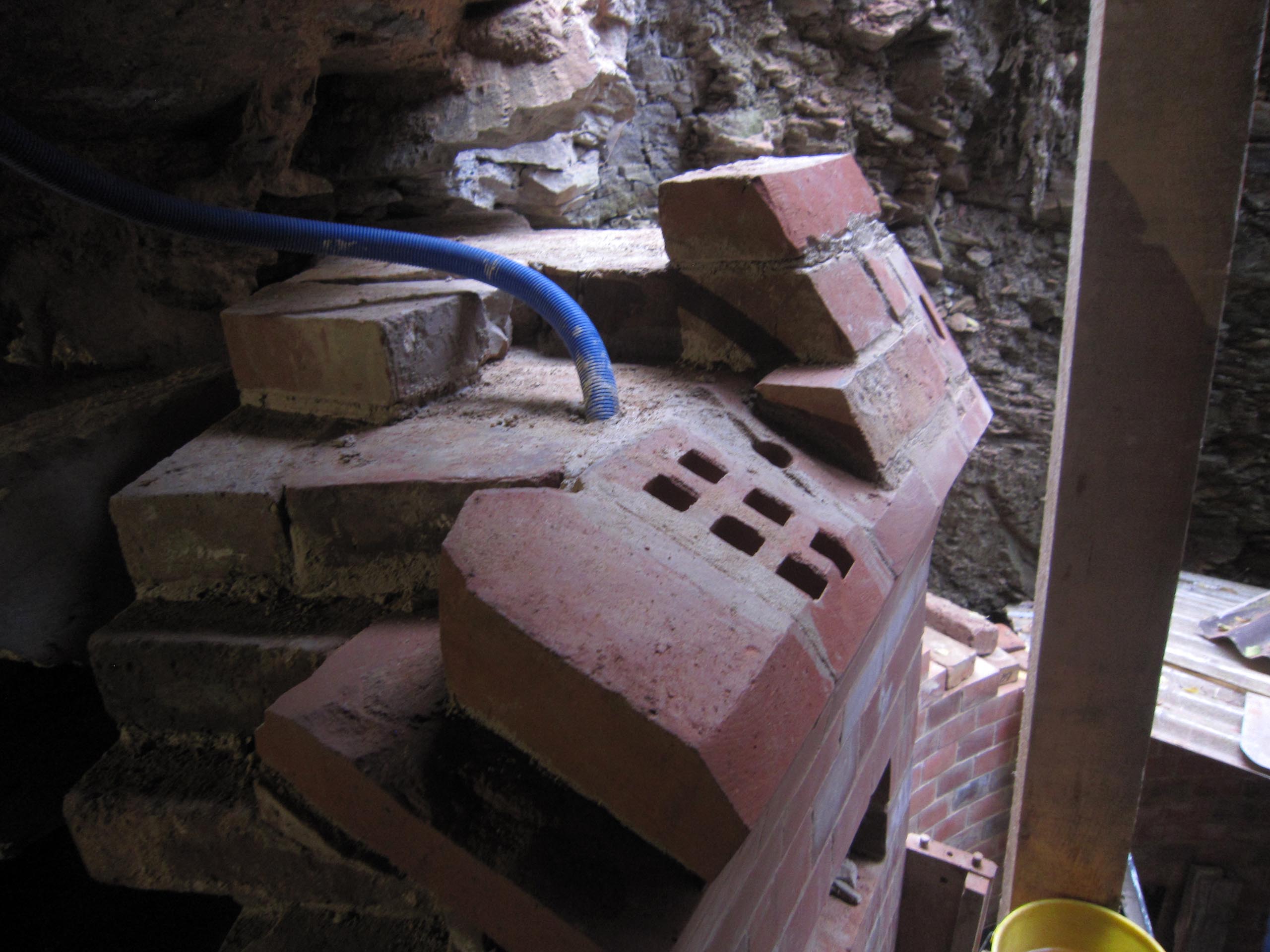
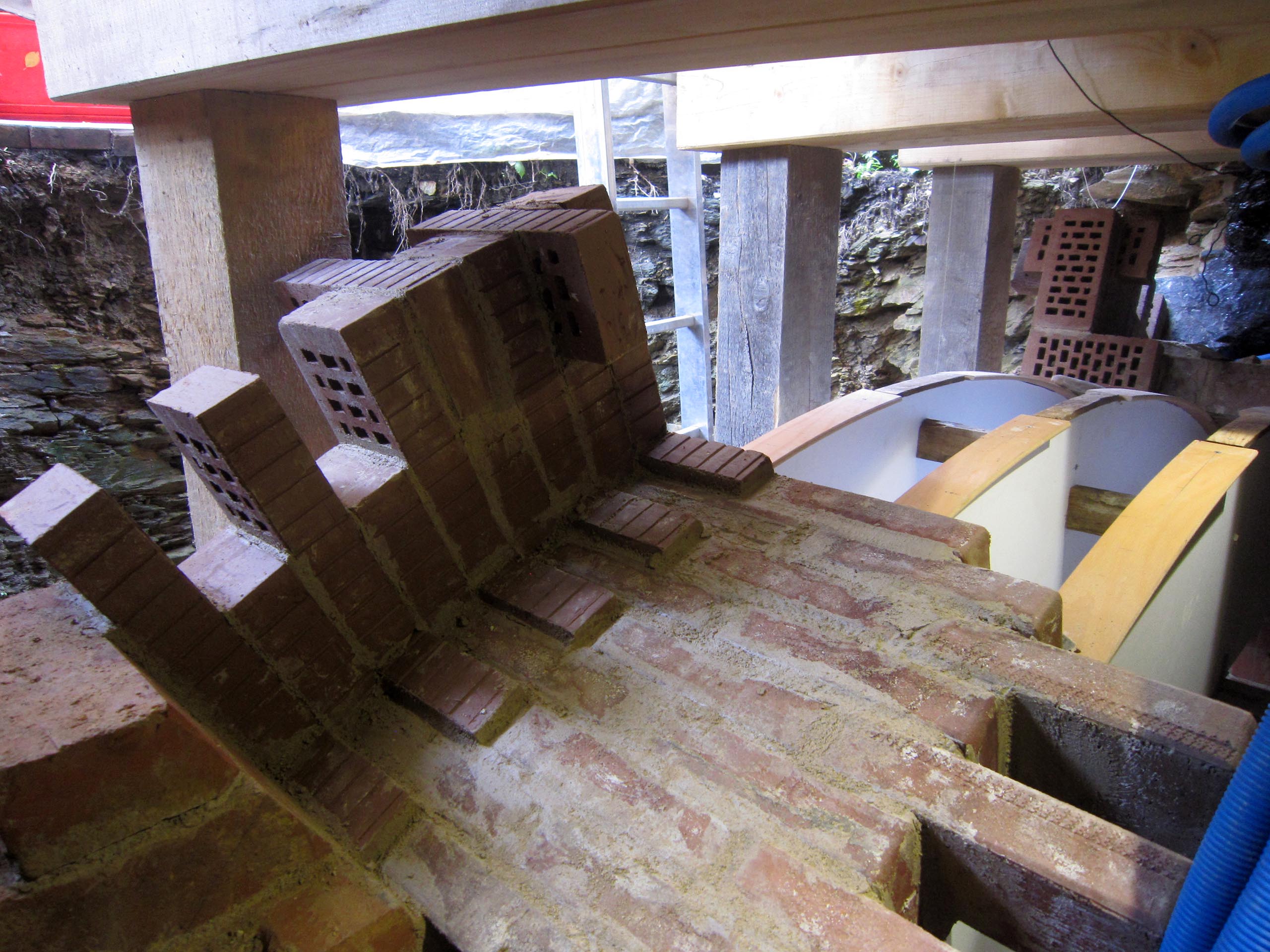
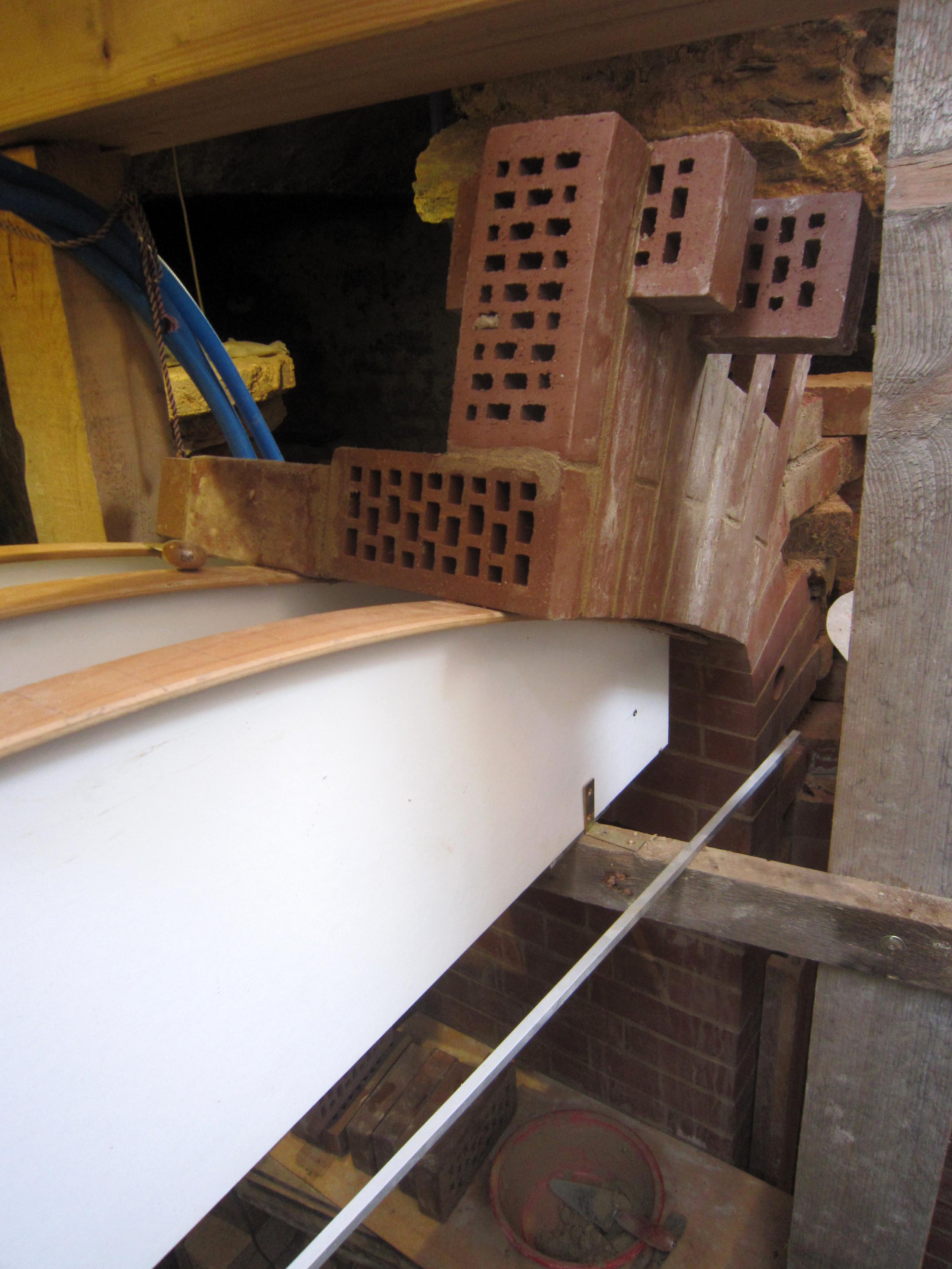
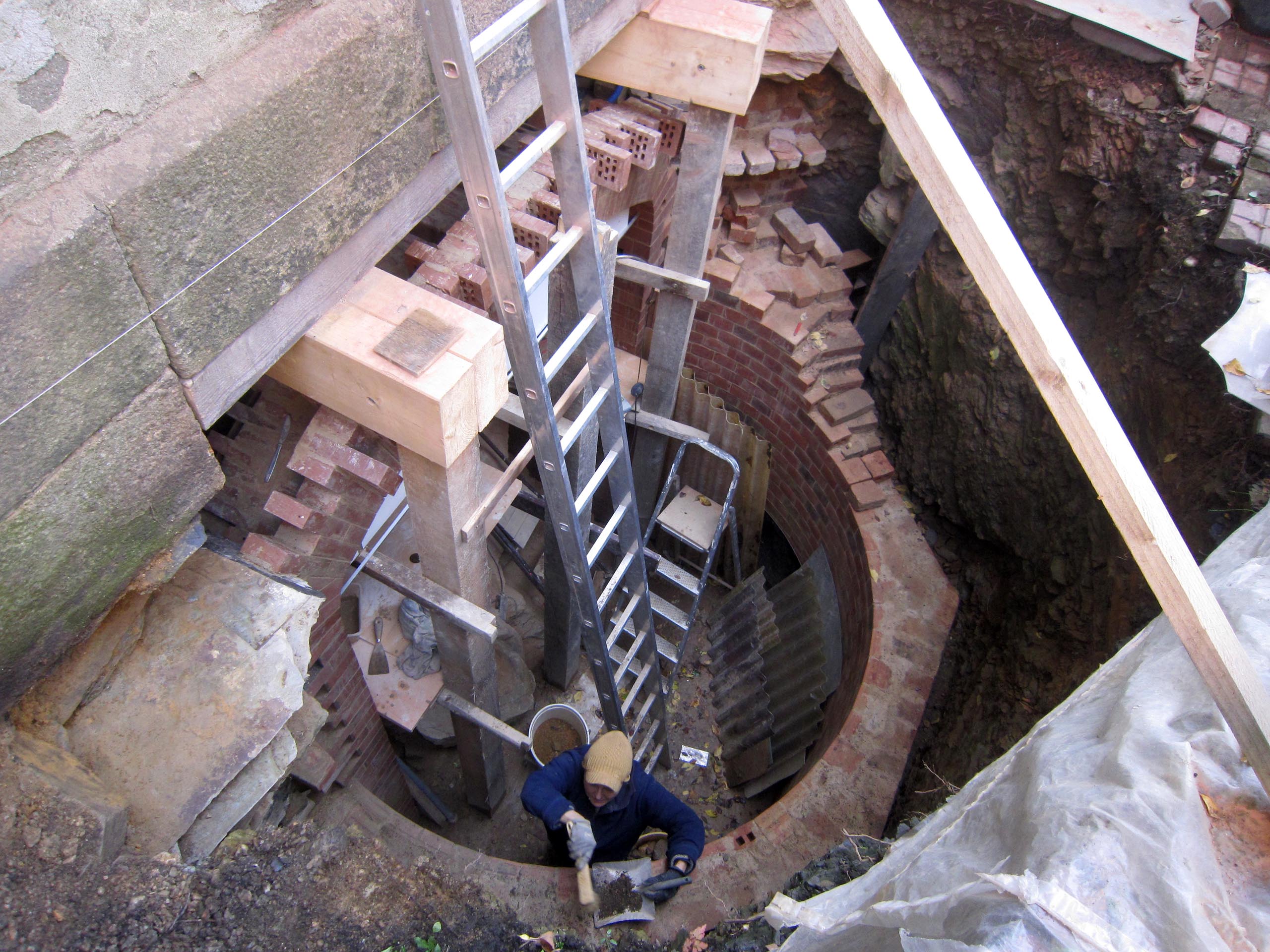
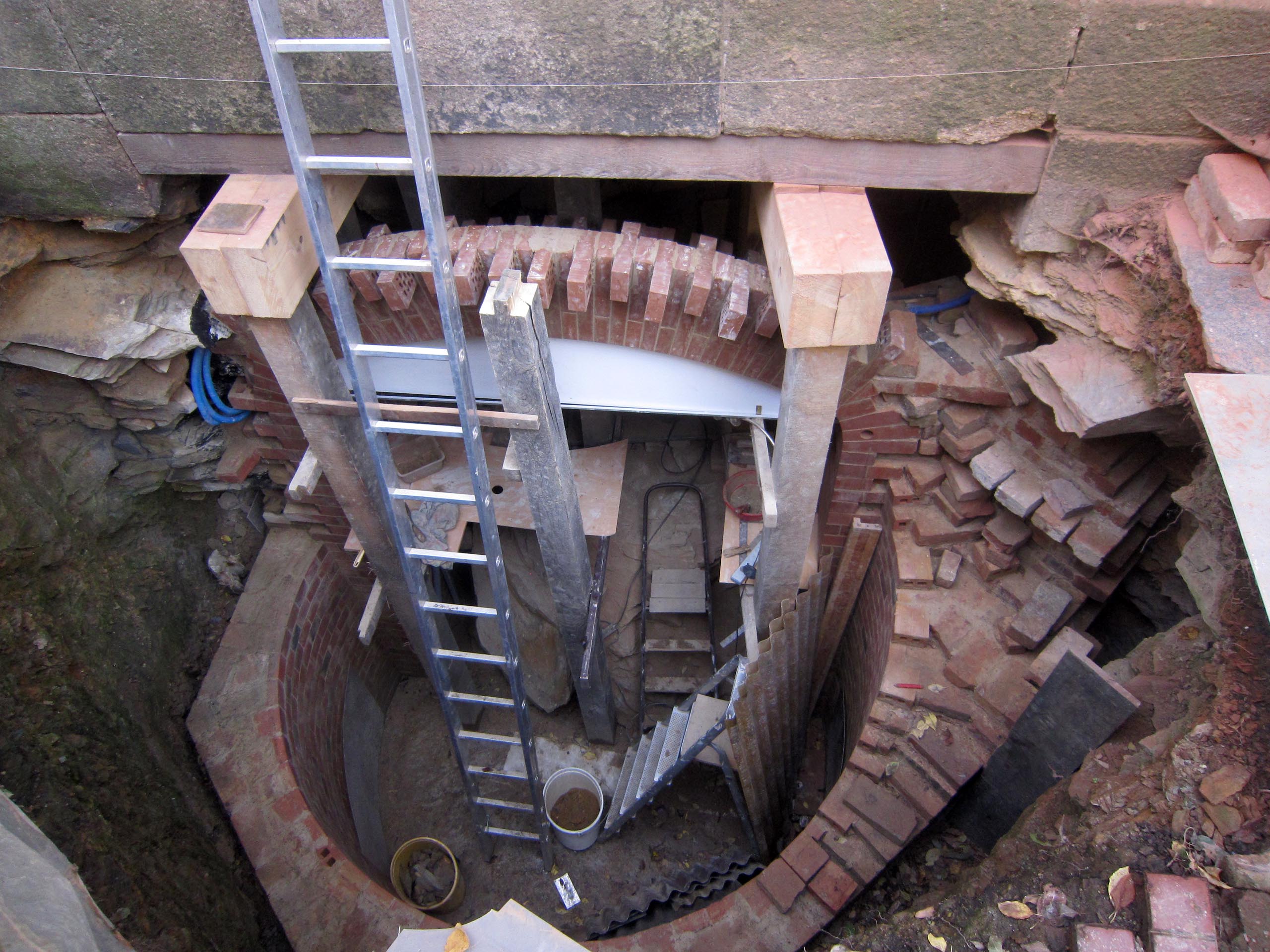
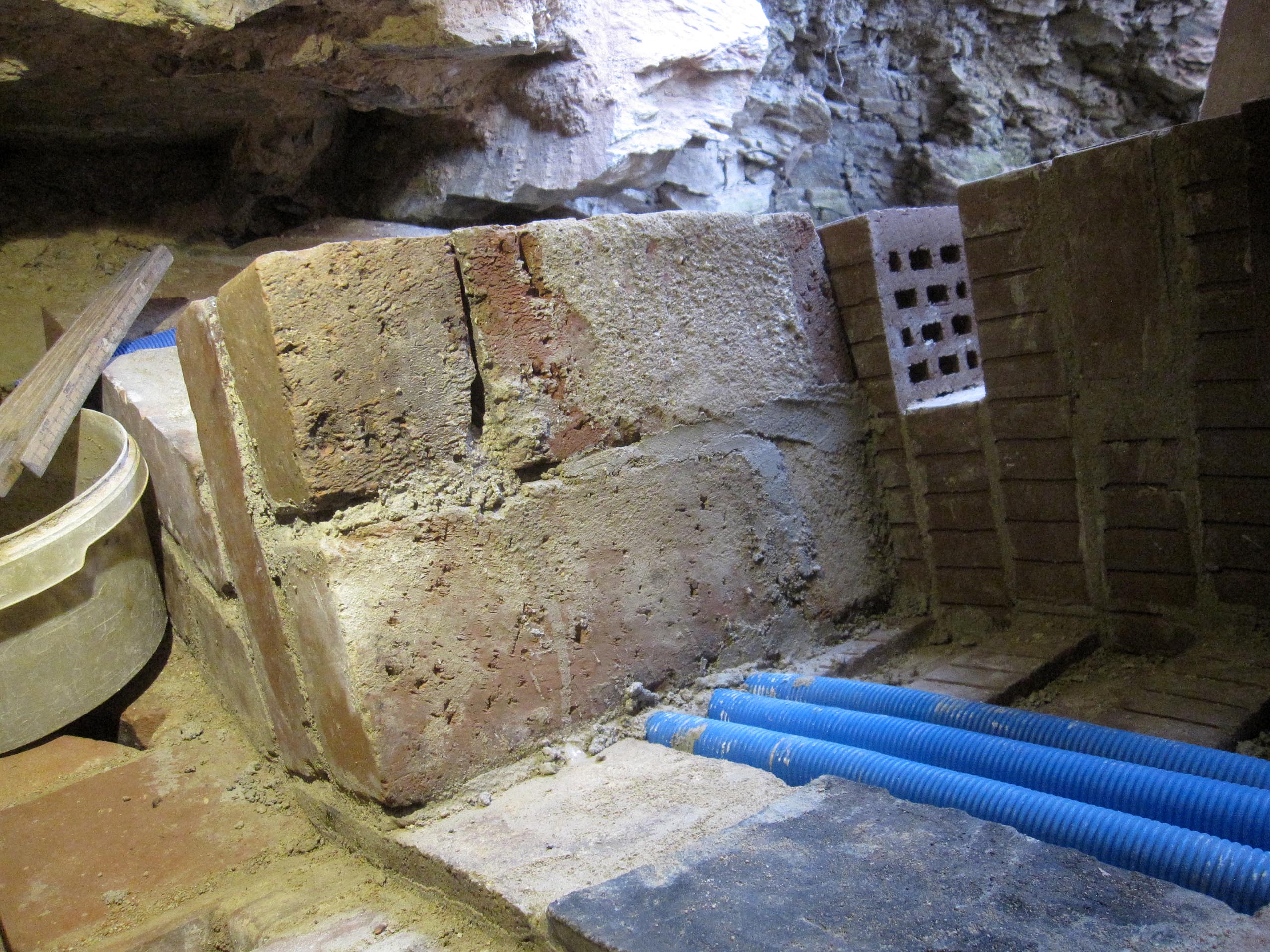
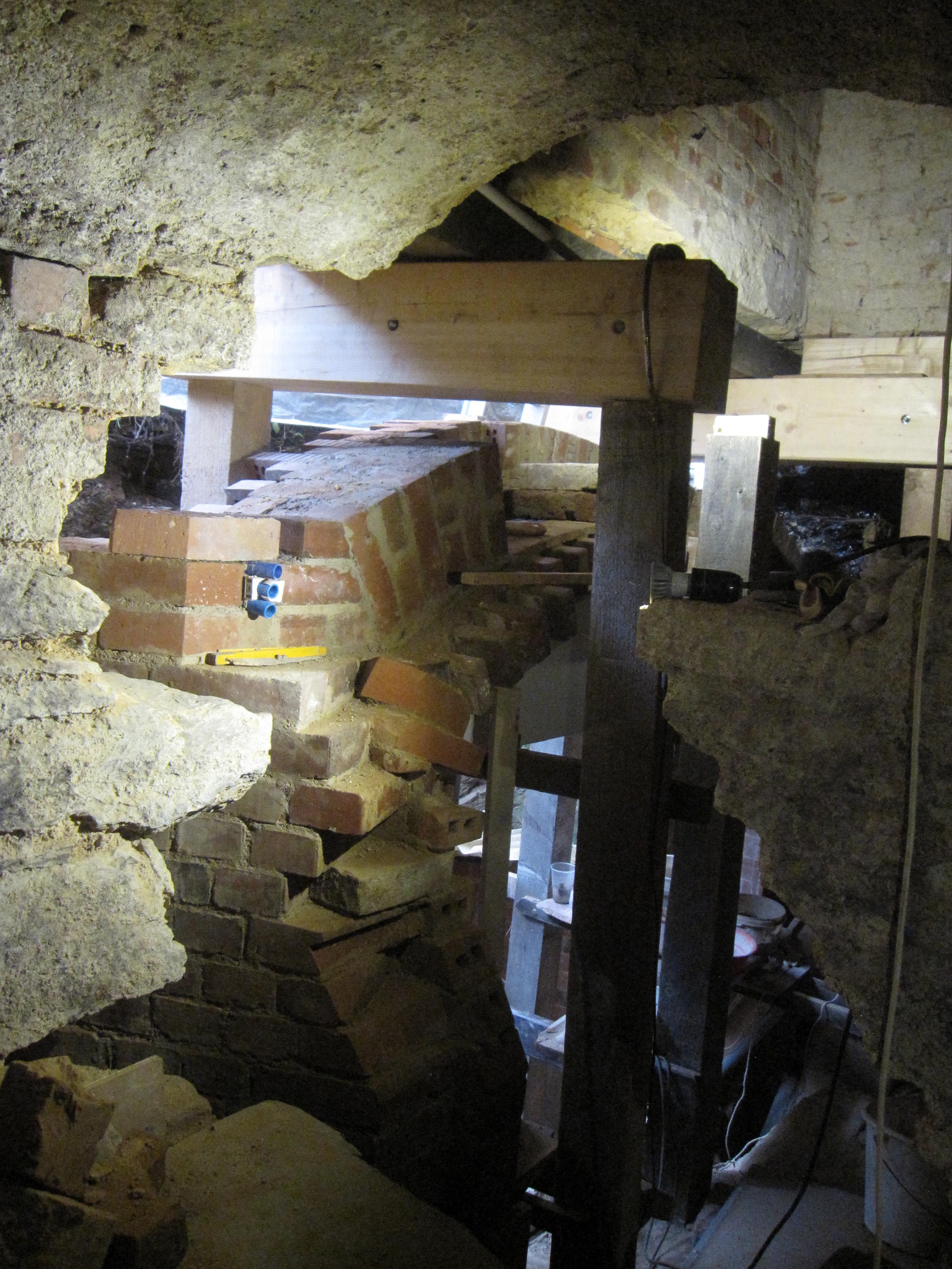
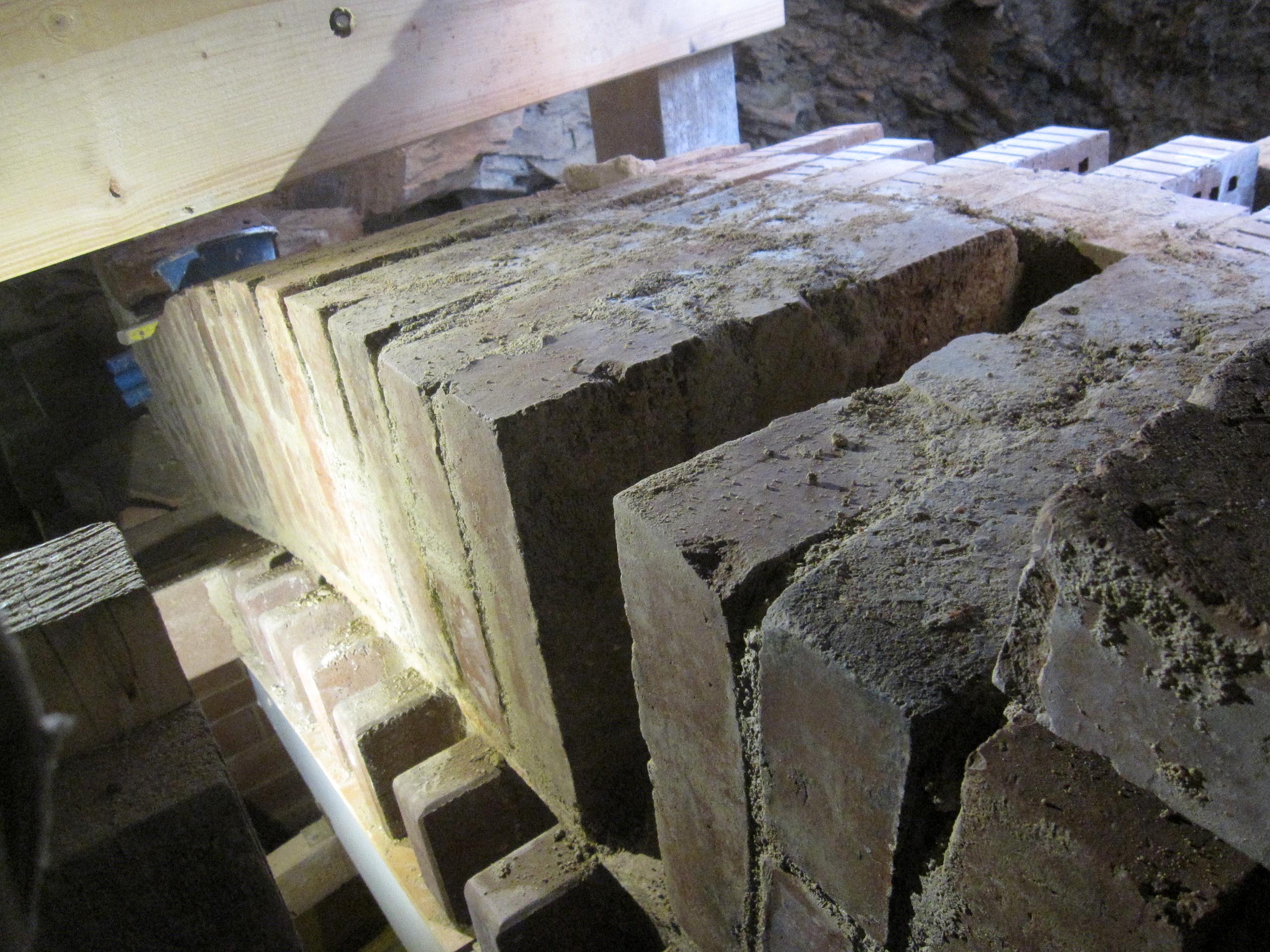
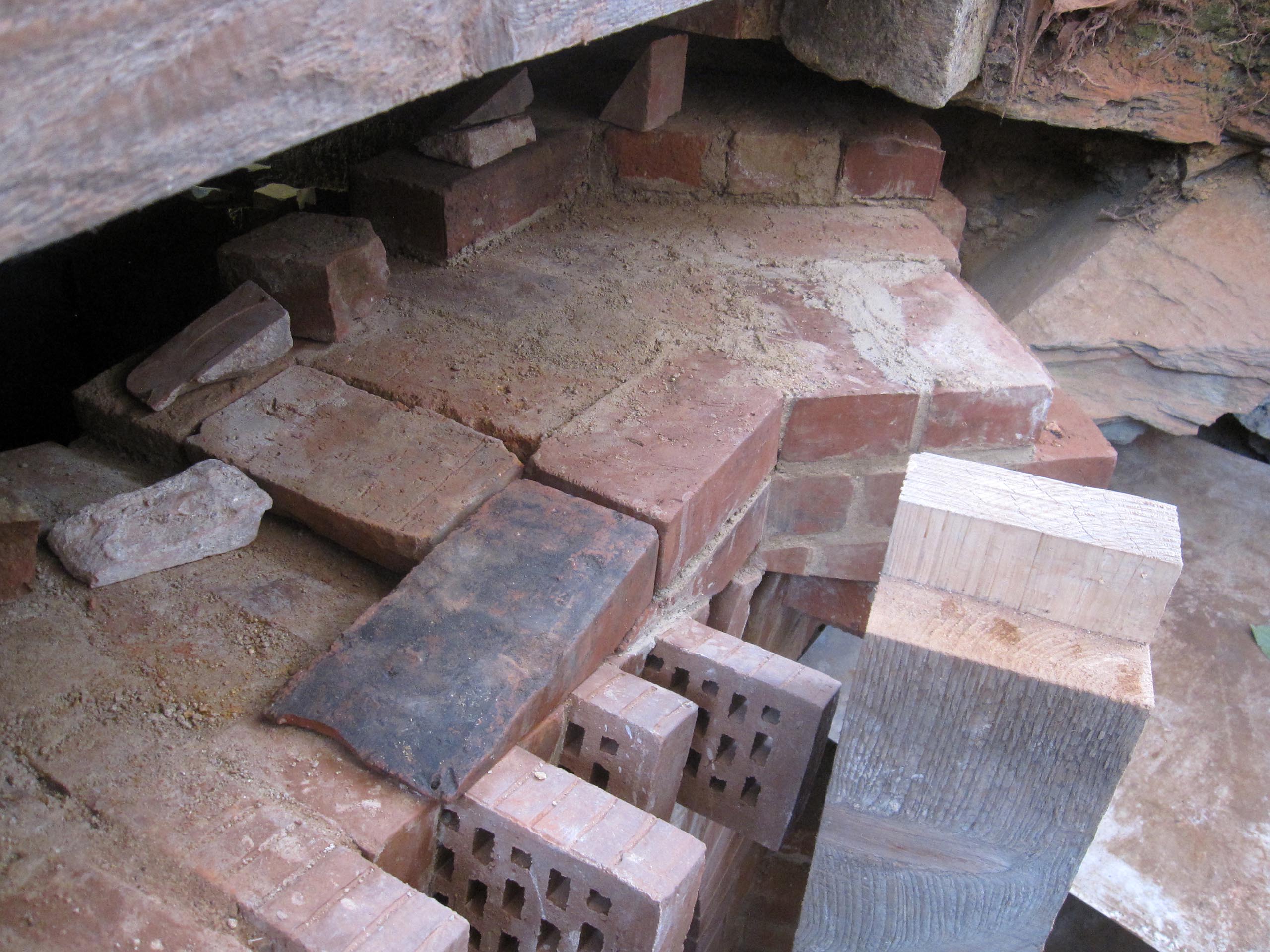
Wooden supports were removed.
Above the already completed arch, the remaining space up to the facade wall was filled with bricks, gradually removing loose bricks from the wall.
For the masonry, bricks without defects were selected—frost-resistant and time-tested (100 years).
When the level of the filled bricks reached the highest point of the arch (i.e., the surface became level), roofing felt was laid under the subsequent rows of bricks. In this way, the arch became protected from the weather influences of the facade wall.
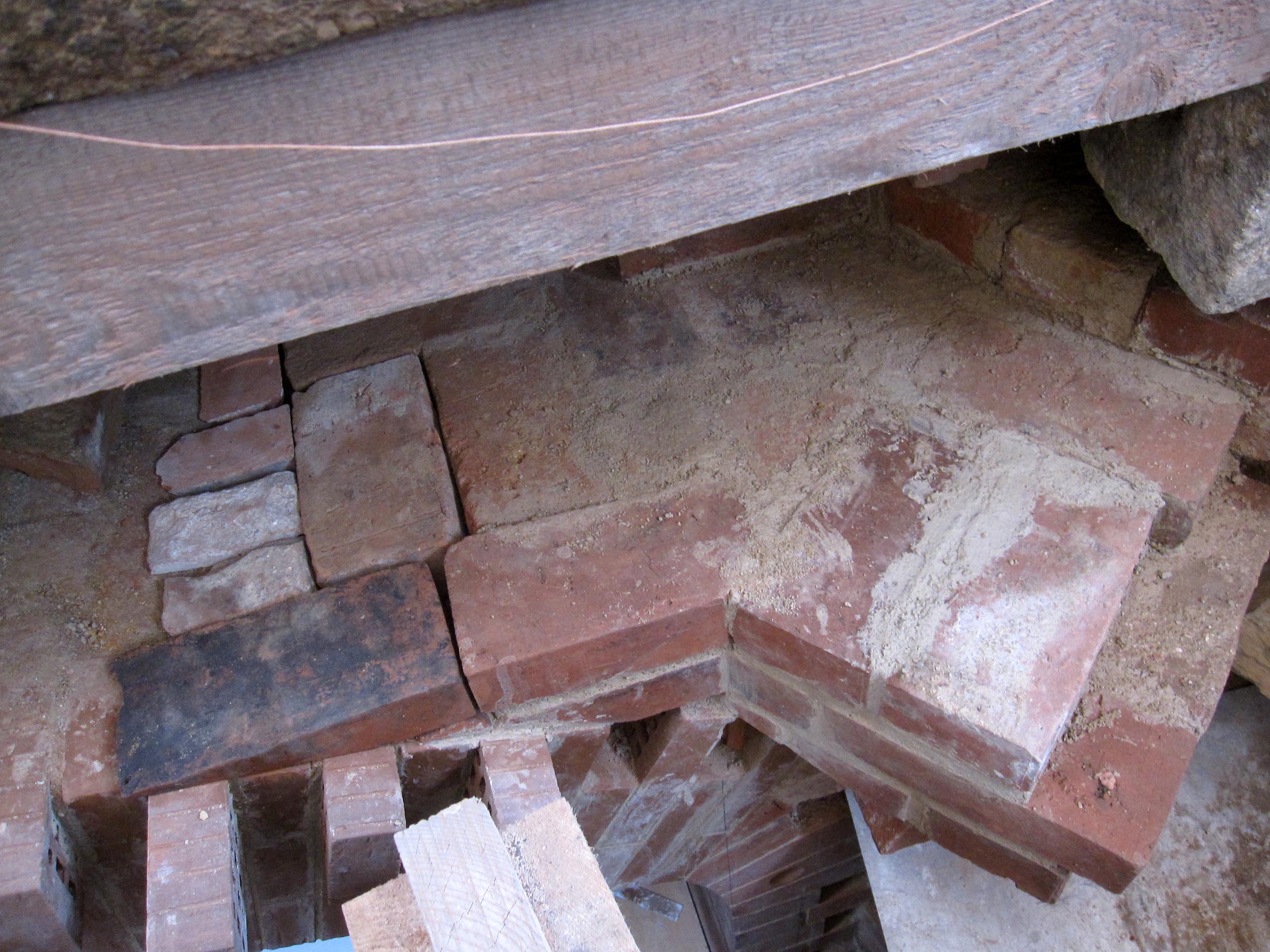
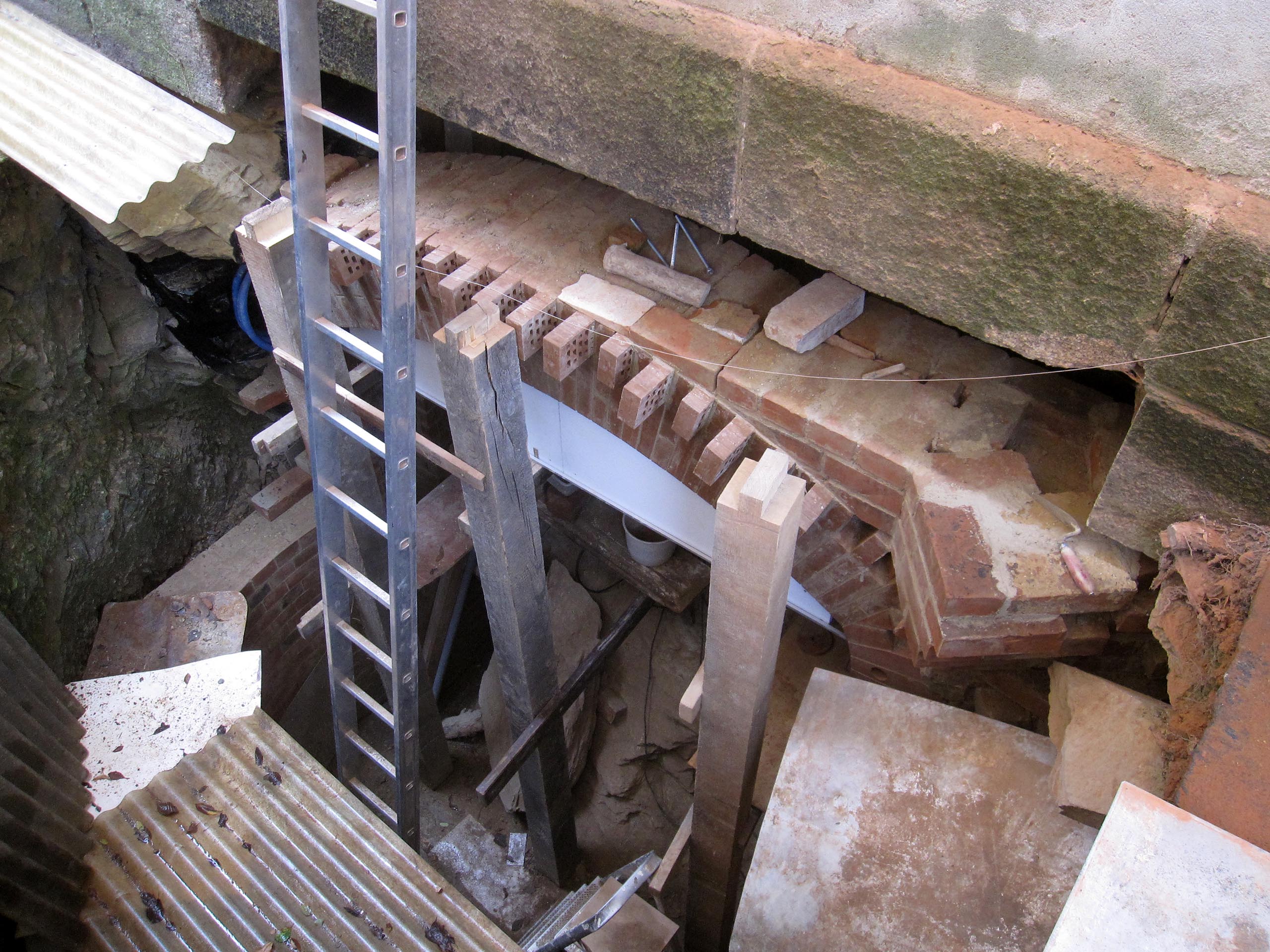
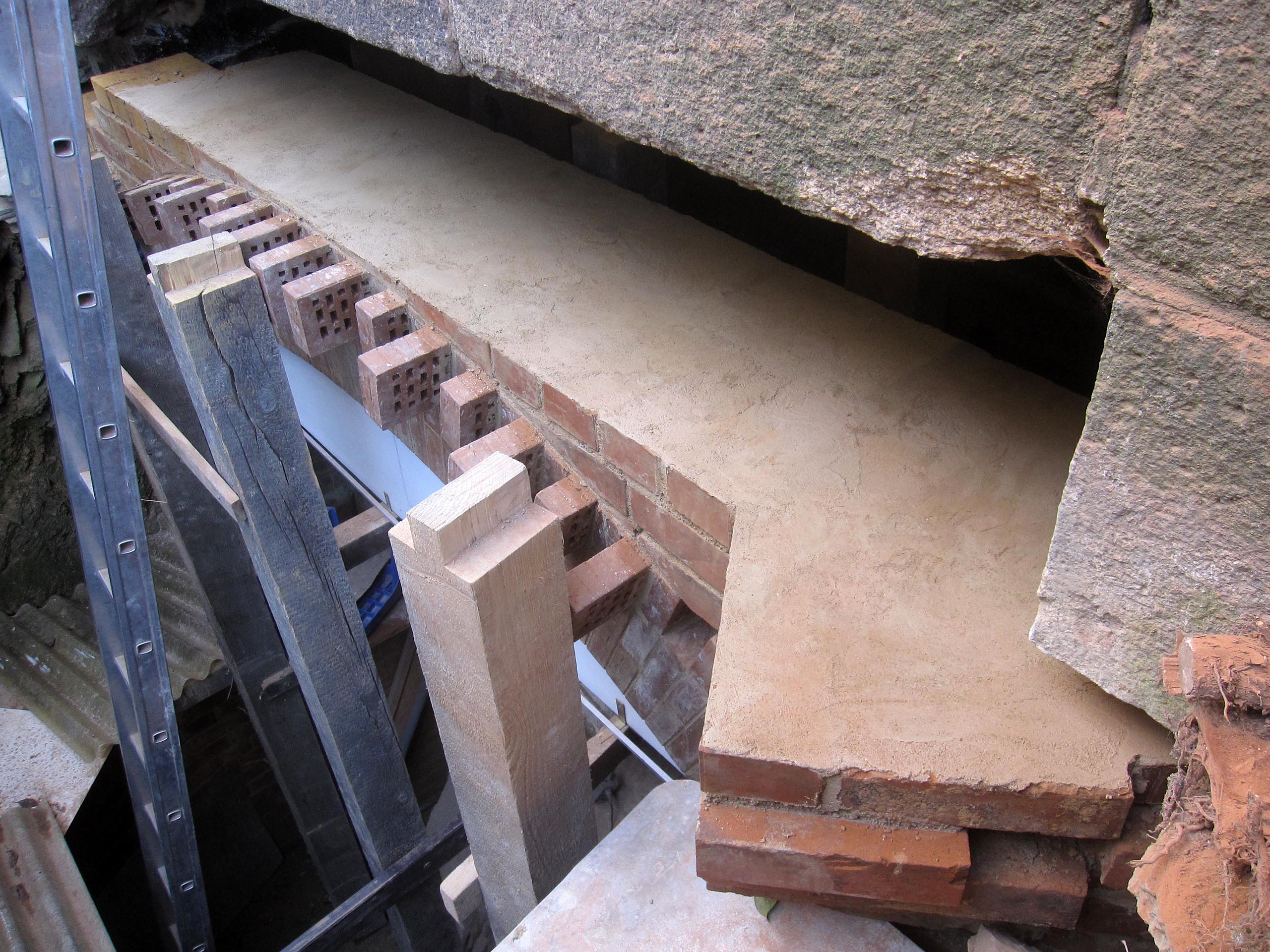
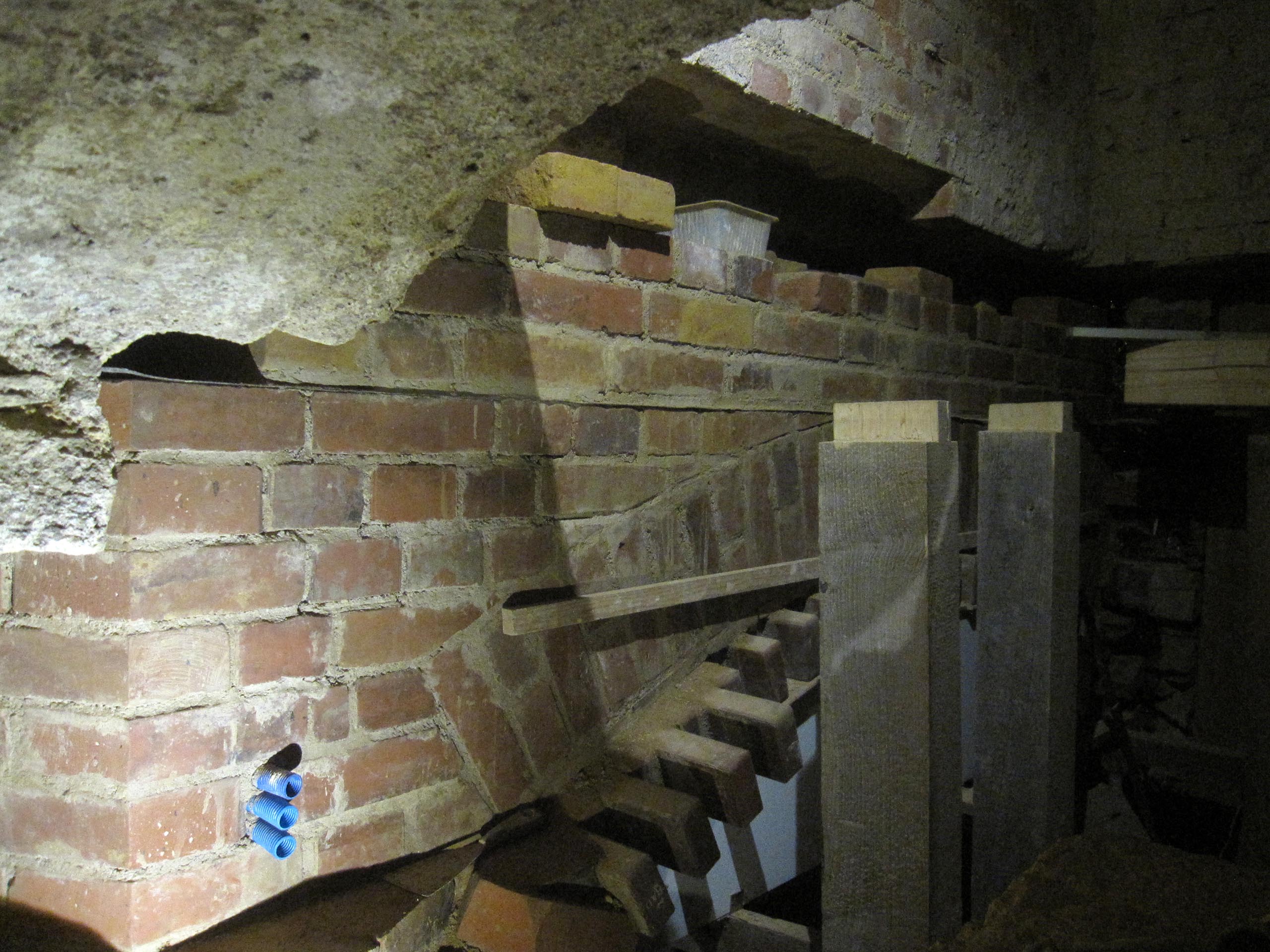
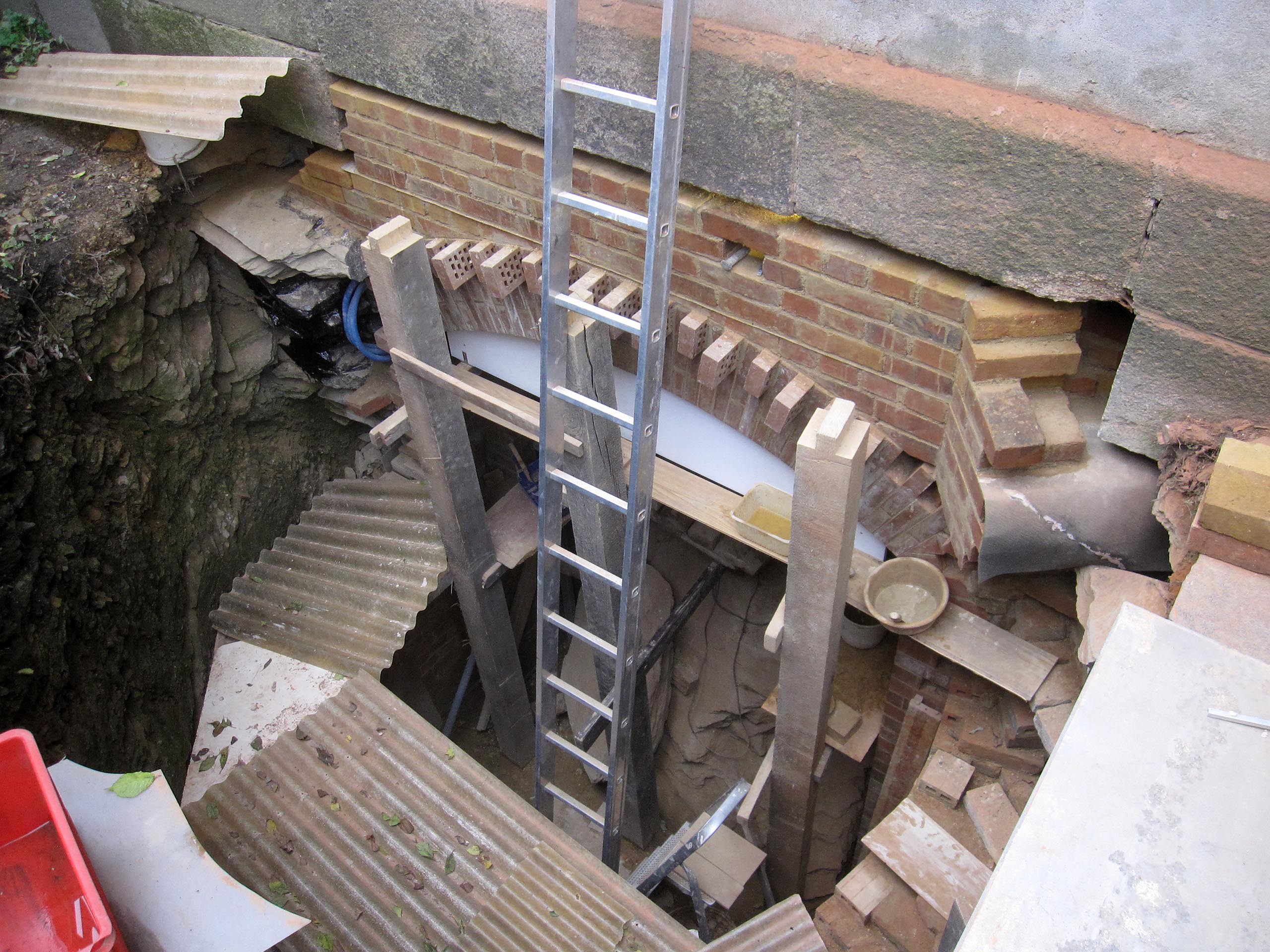
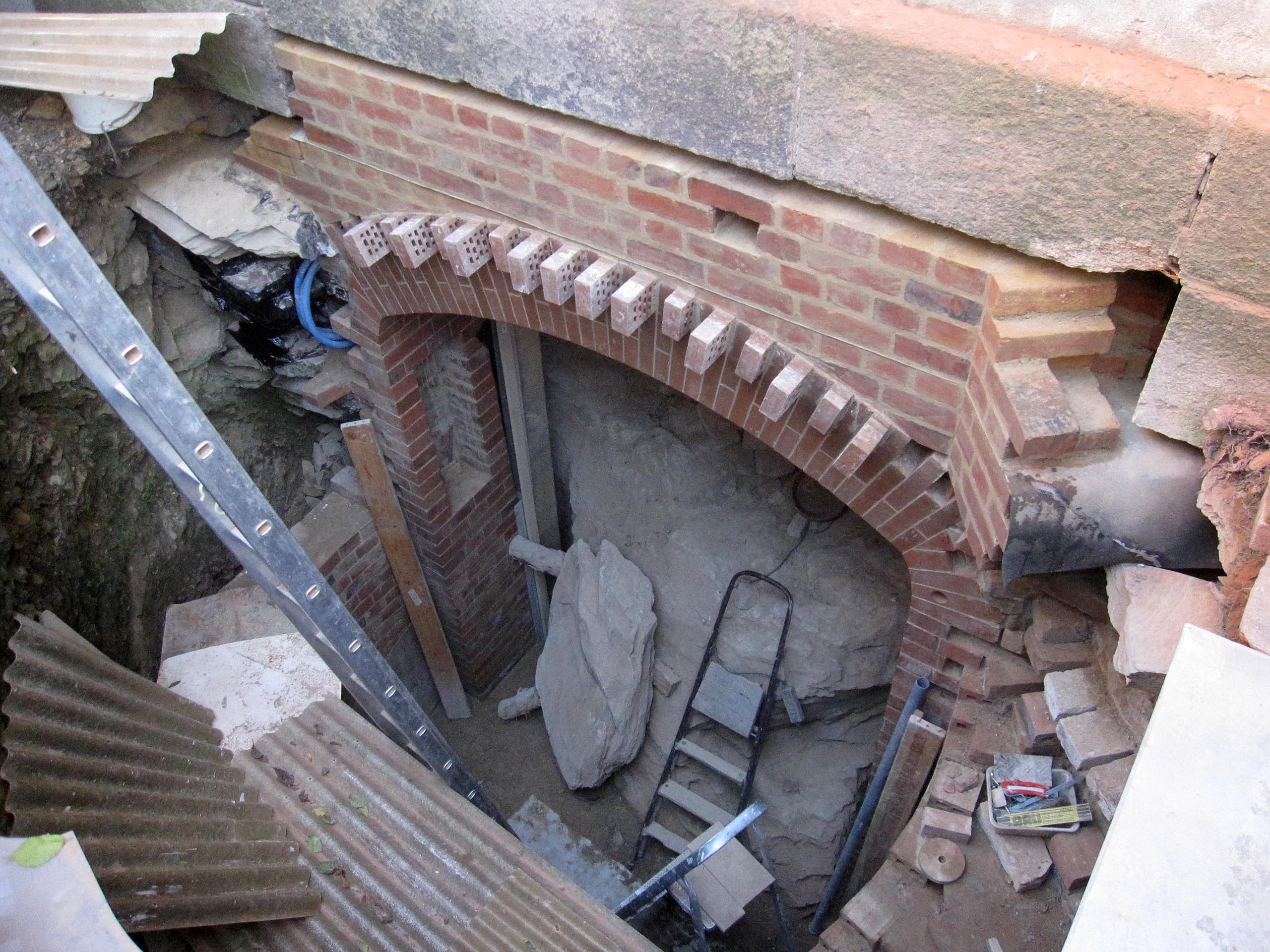
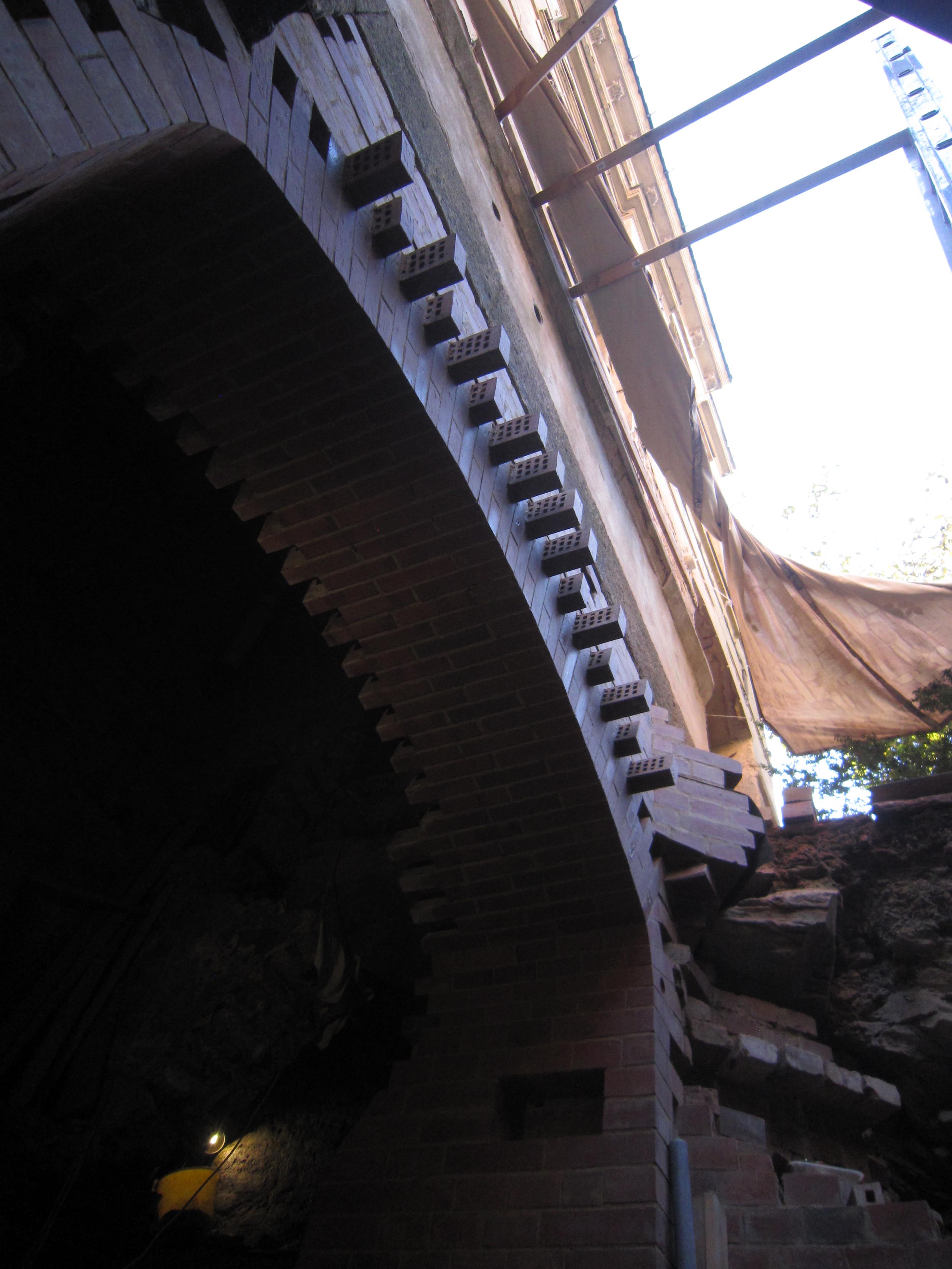
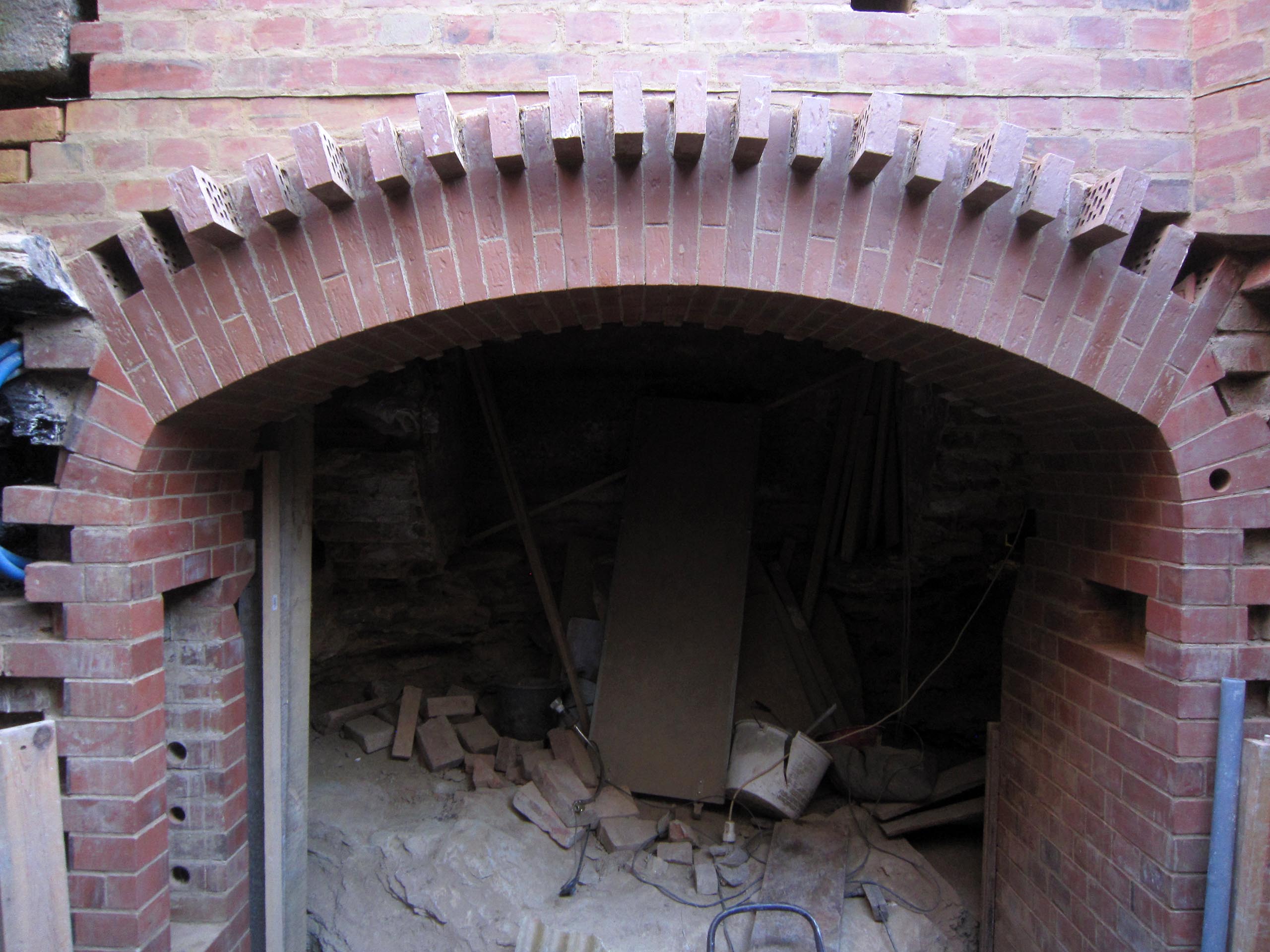
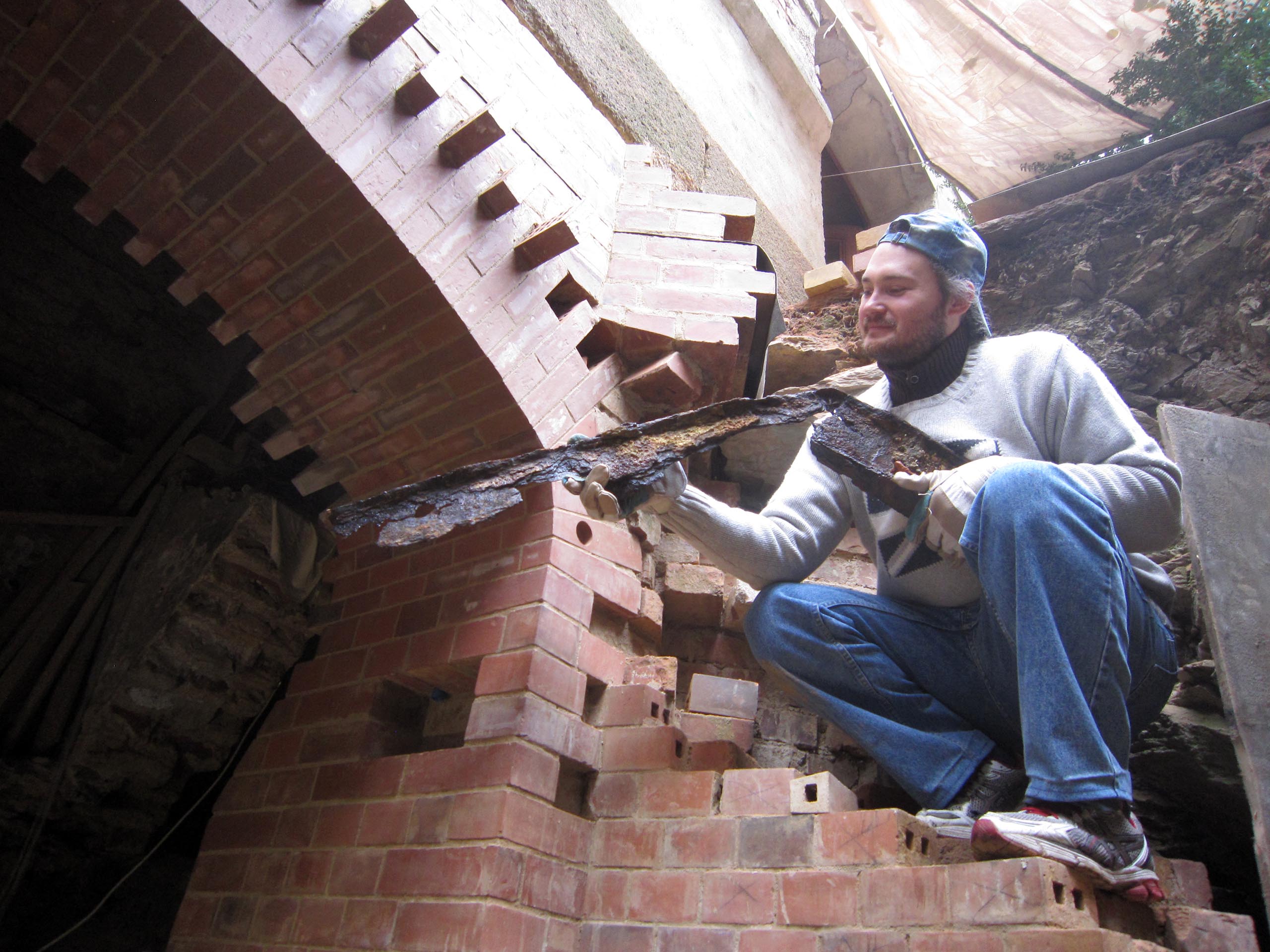
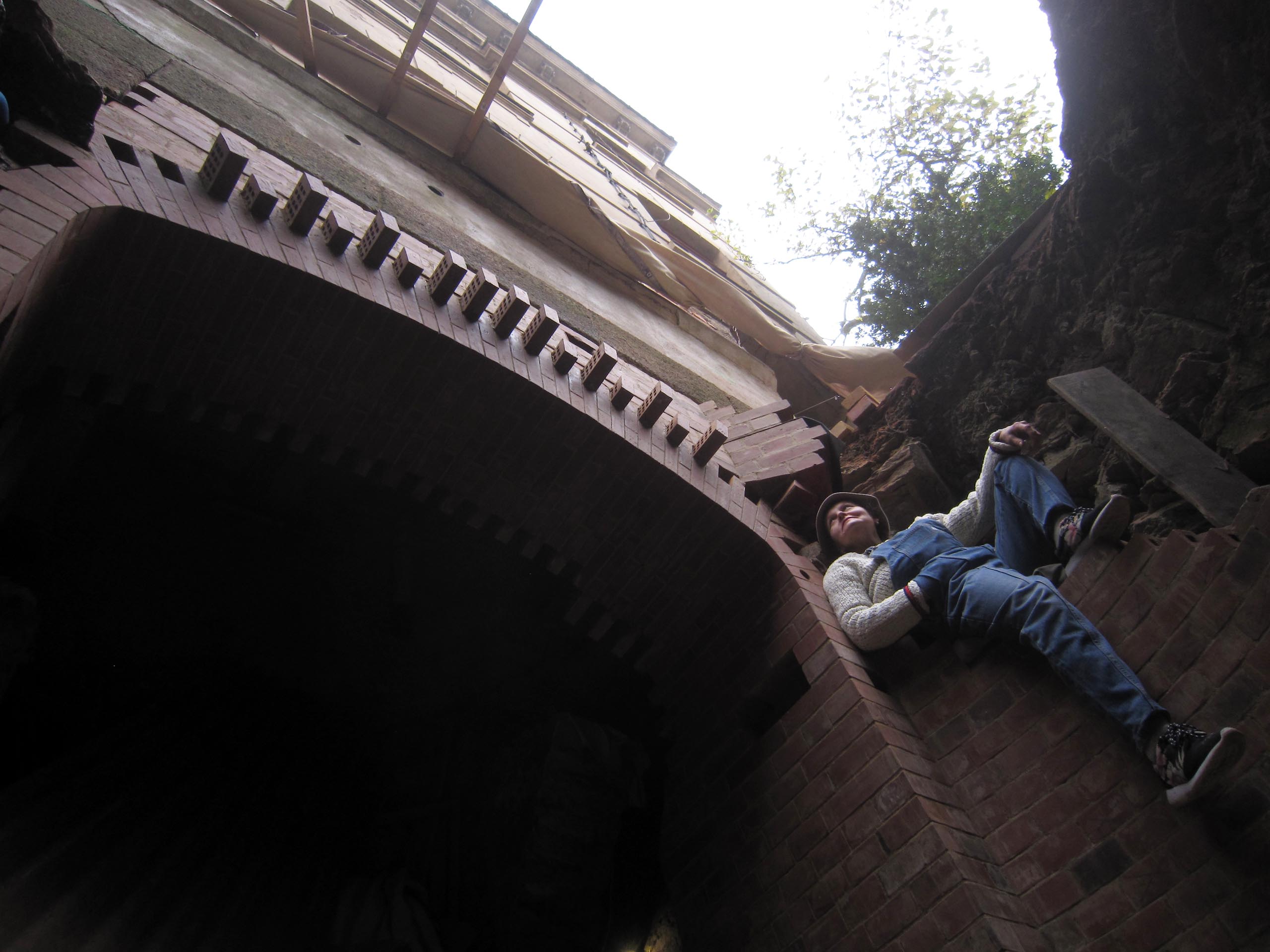
The vault is built from clinker bricks with rounded edges. Condensation collects on the surface of the fired ceramics and drips onto the floor. This process can only be observed during the construction phase and is not to be expected during operation.
The facing brick wall transitions smoothly into a dome made of the same material and connects to the vault in an elliptical shape. Each individual brick is cut at a specific angle.
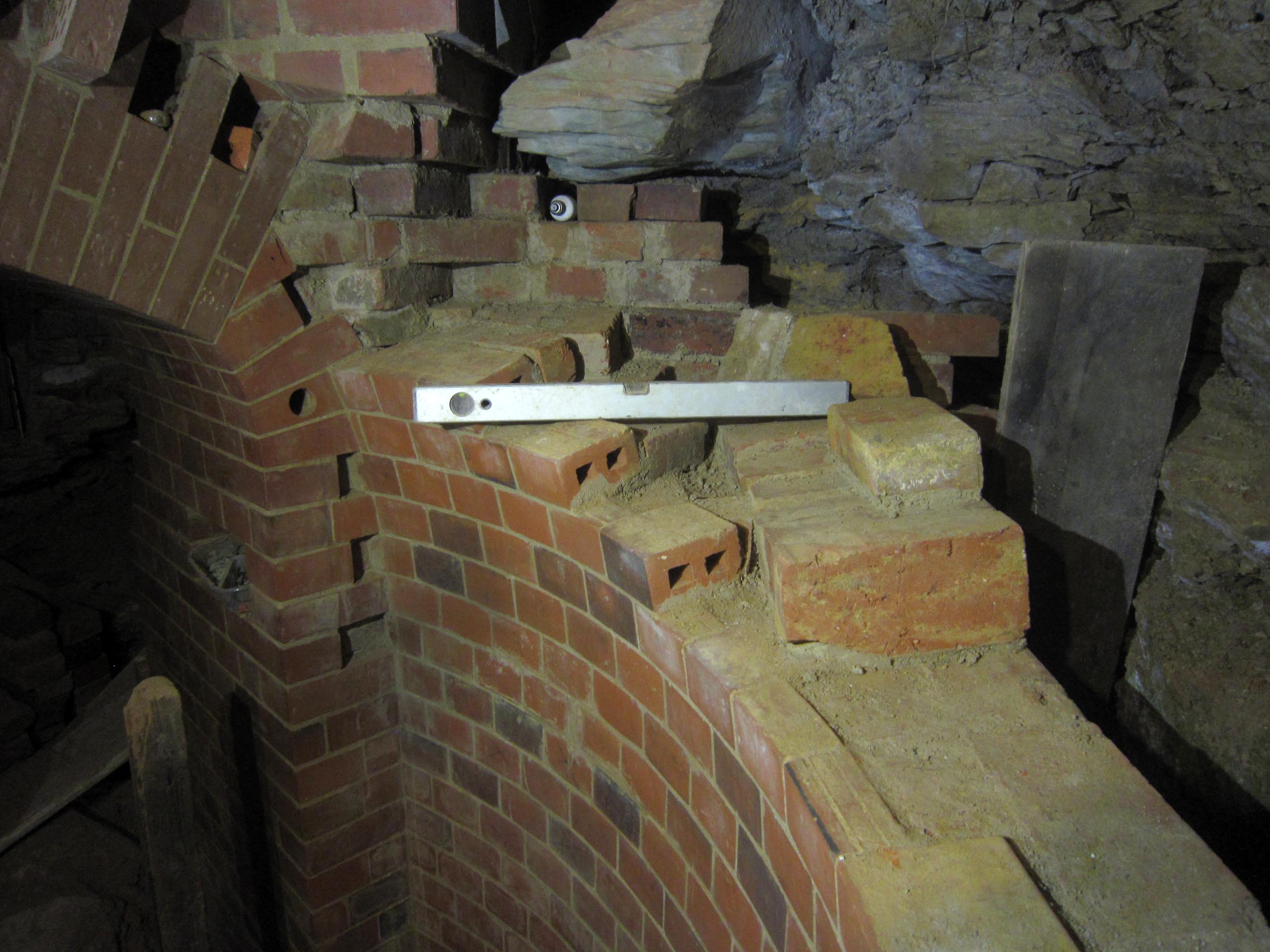
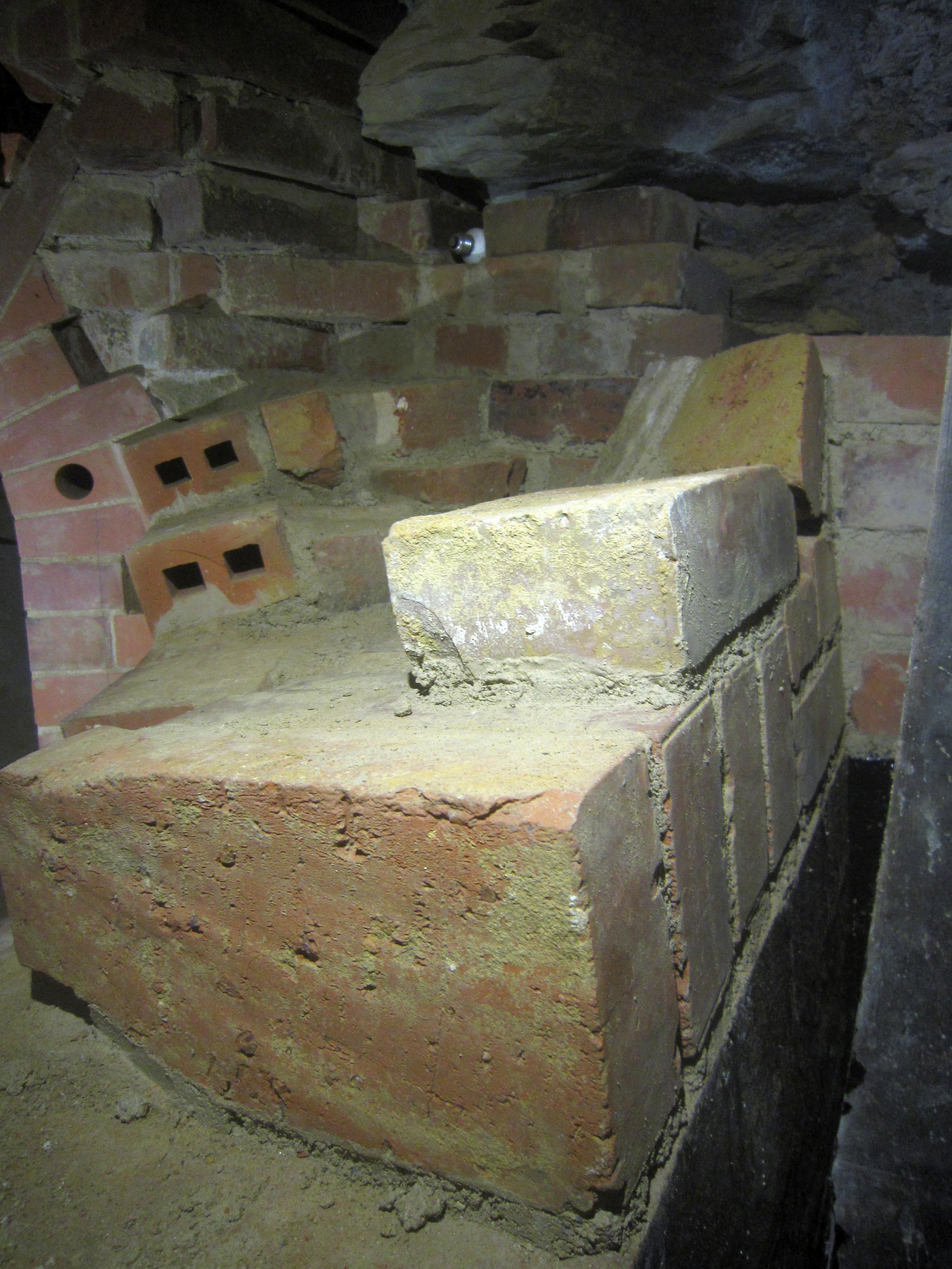
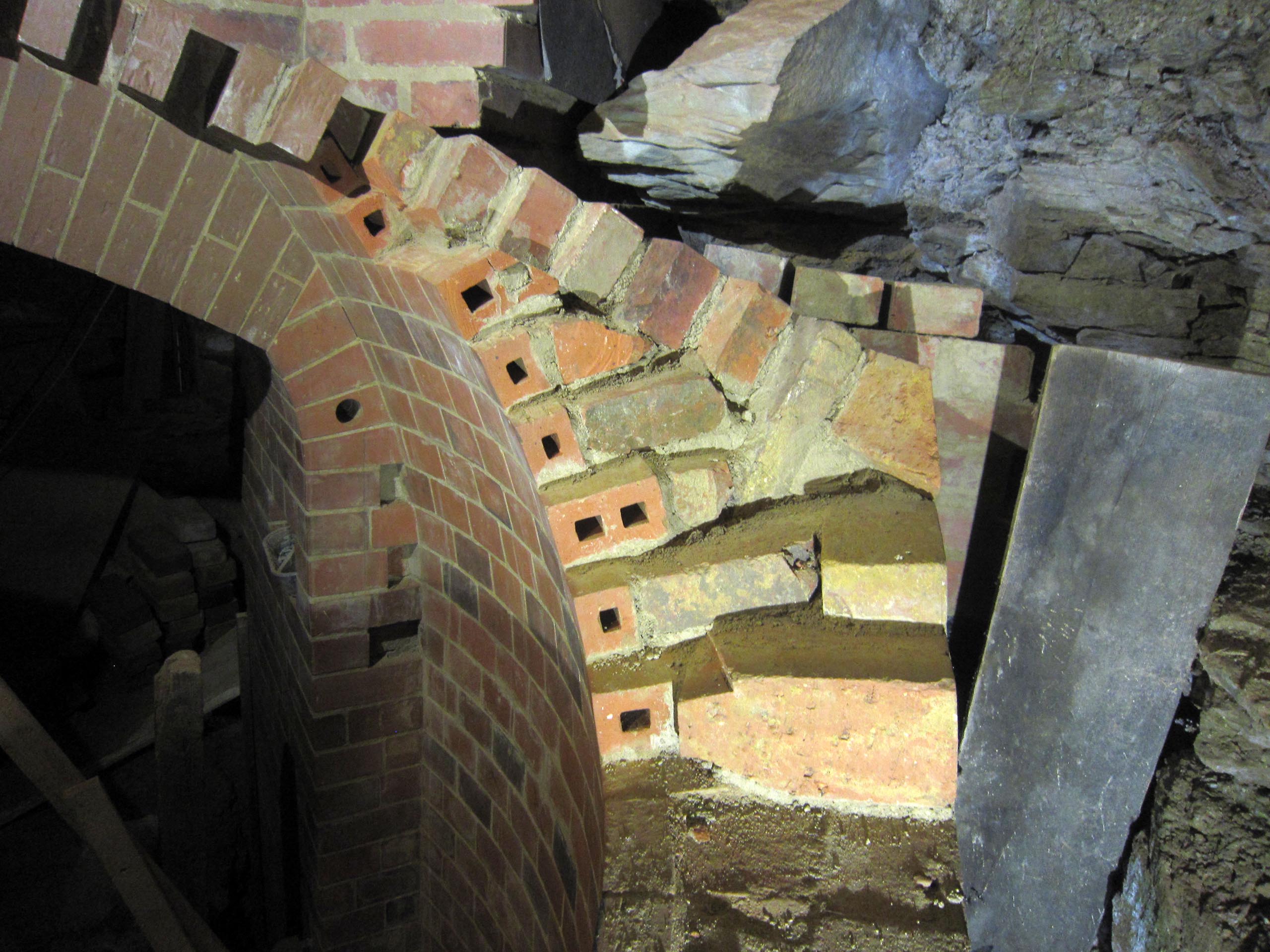
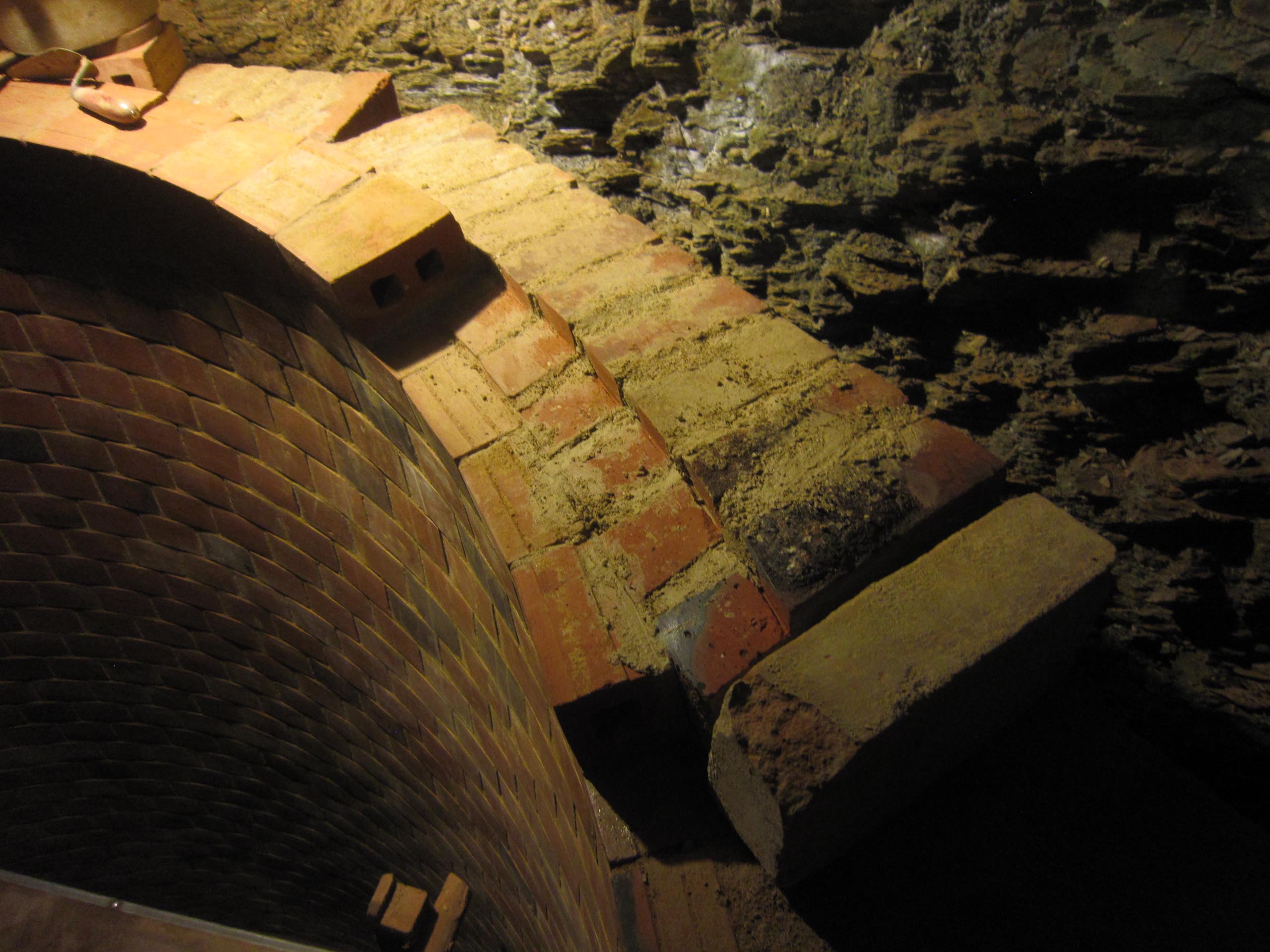
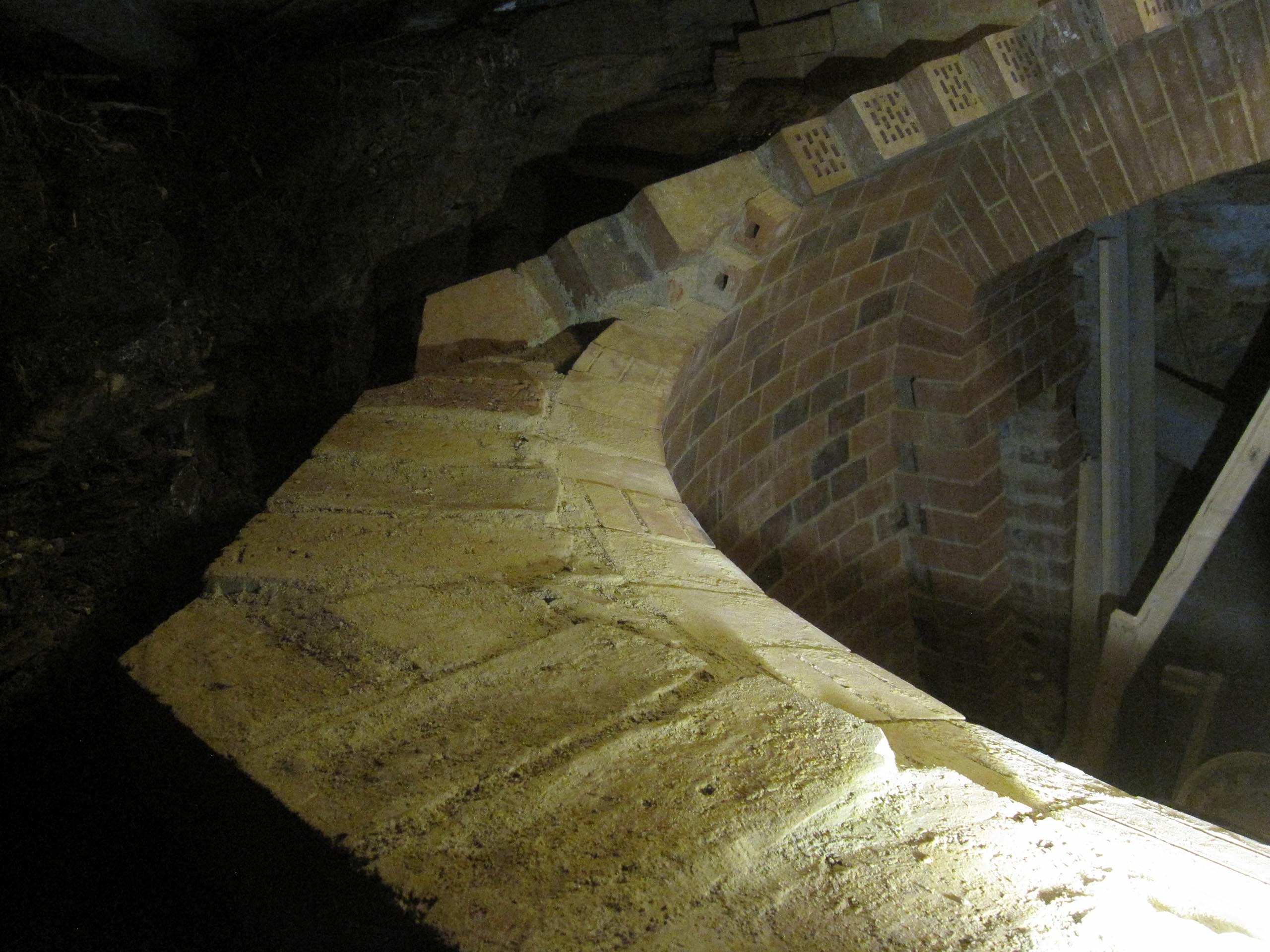
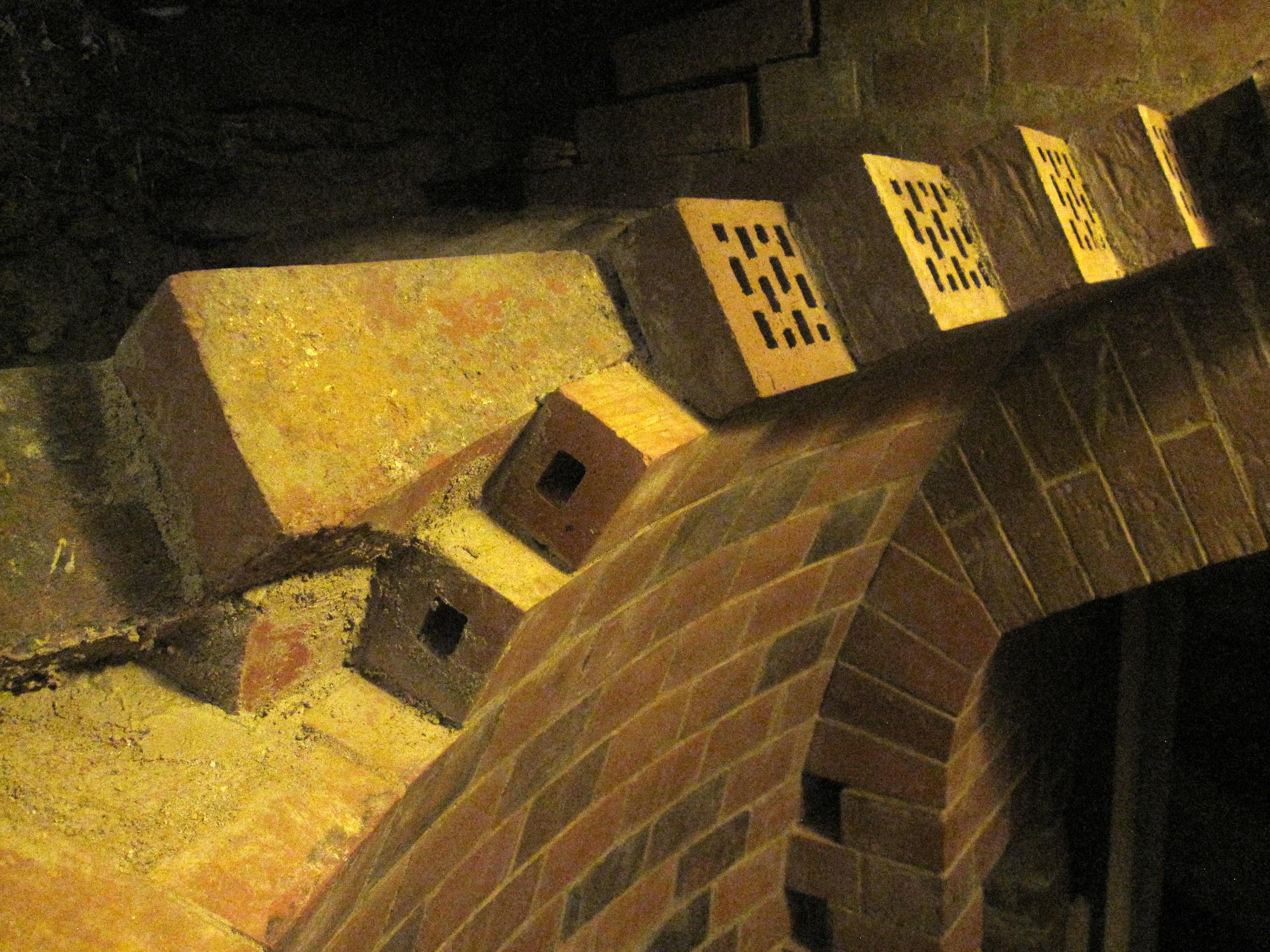
A room has been designed in the area of the former cesspool to install up to six IBC tanks. The design is based on standard IBC tank dimensions. Two IBC tanks are placed in a wall niche. Additional containers can be installed in the room. They are intended for the collection and storage of rainwater.

Istvanplatz in front of the Victor Dietel apartment building in Greiz — a Istvan Sky memorial project.
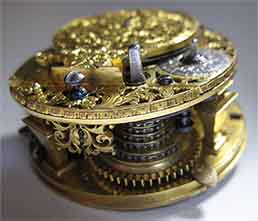
Repair and restoration of bracket clock with a verge escapement, is activated by a fusee (snail) and chain.
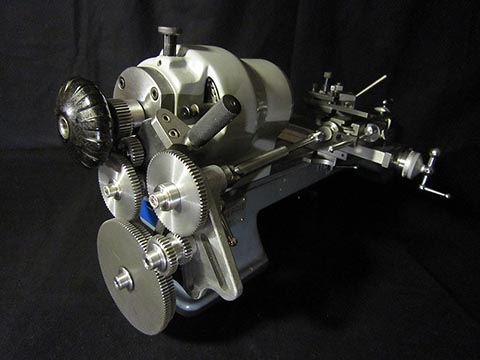
Threading attachment for Schaublin 70 handmade 2016 by Alexander Babel.
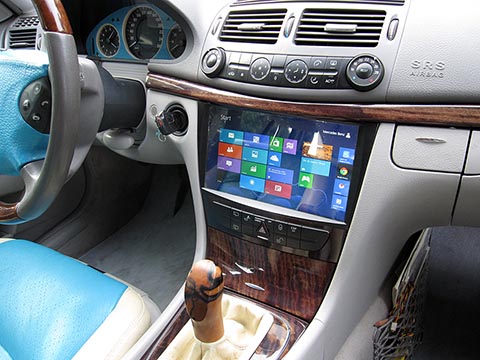
Car-PC for Mercedes Е Klasse W211. Designed and manufactured 2014
Alexander Babel is autodidakt as designer, engineer, precision mechanic, toolmaker, watchmaker and goldsmith.