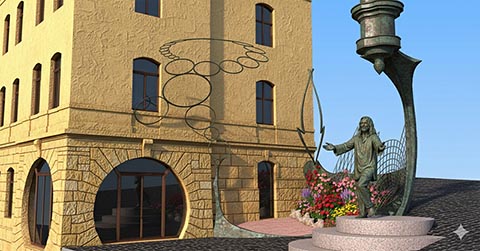
Repeated Reconstruction of the Shop Entrance

Owners changed, times changed, needs changed, the design changed, and the signs above the shop were replaced.

This is the list over the past 130 years:

  • From 1898 to 1908 there was a shop of the company “Gebrüder Dietel”, Wollwarenfabrikations-Geschäft.
  • From 1908 to 1920 there was a shop of the company “Gebrüder Dietel”, Bergwerks- und Hüttenprodukte.
  • In 1924–1926 there was no shop.
  • From 1930 there was a shop of the company “Otto Schneeweiß”, Garne und Baumwollwaren.
  • From 1934 there was a shop of the company “Otto Schneeweiß”, Garn und Baumwollwaren und Lederhandlung.
  • From 1937 there was a shop of the company “Otto Schneeweiß”, Baumwollwaren, Wäsche, Strickwaren, Lederhandlung.
  • In 1948/49 there was no shop anymore.
  • >During the GDR period the premises housed a local police office (ABV – Abschnittsbevollmächtigter der Volkspolizei).

What Changed

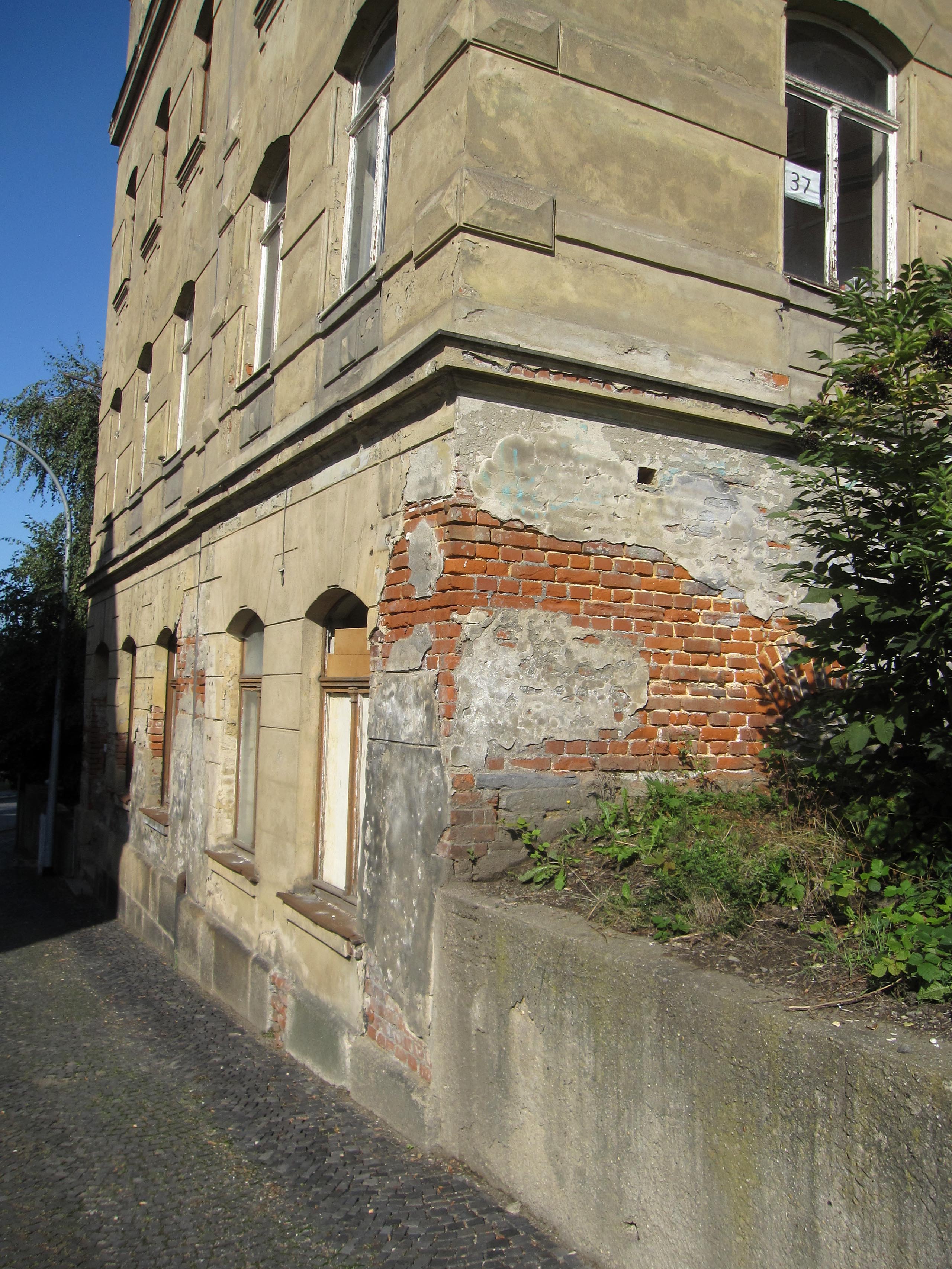
In the tower section of the building on the ground floor there was a shop door and a window, which were rebuilt twice.
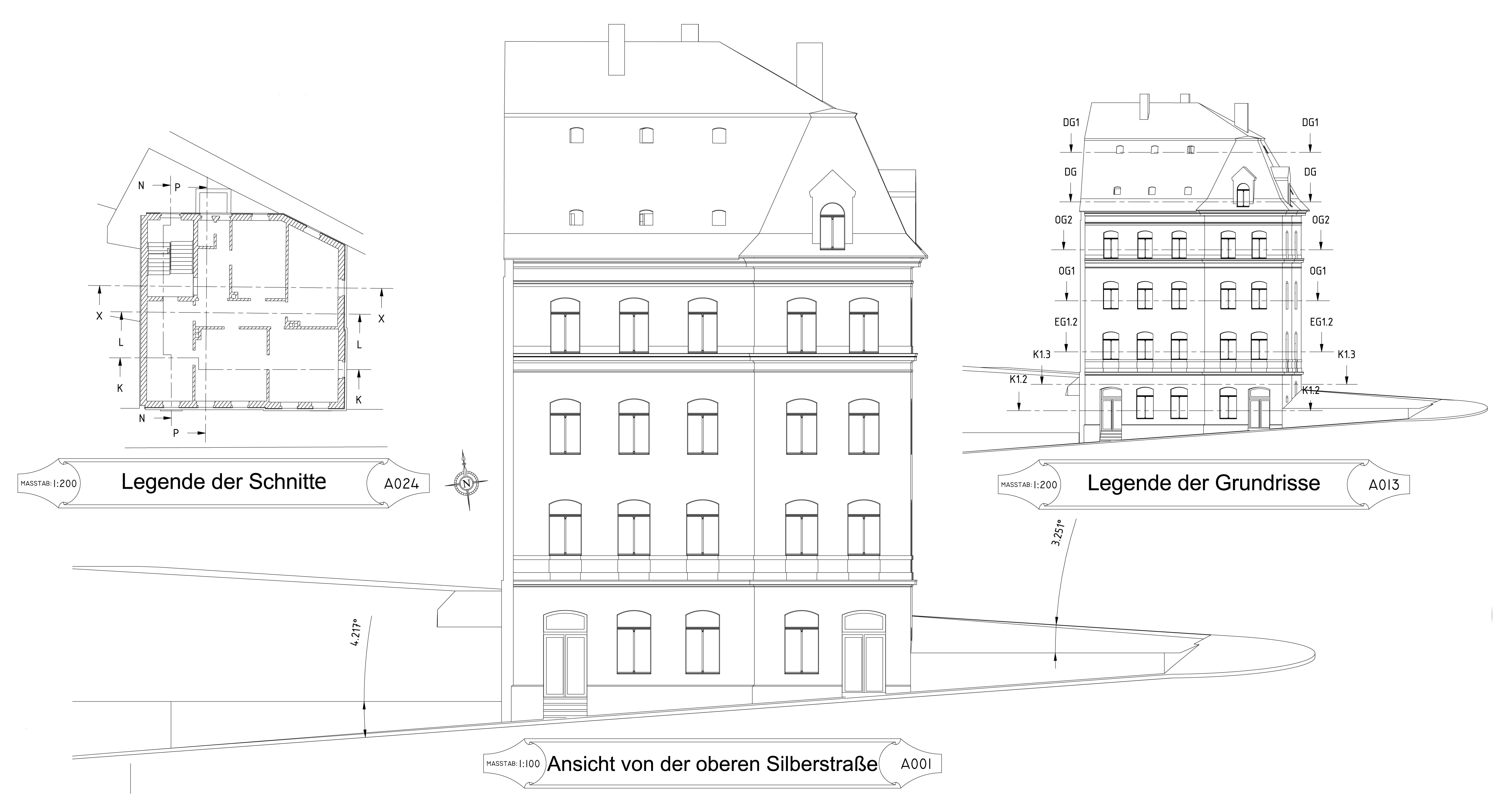
View of Dietel's house from Obere Silberstraße, Greiz.
View of Dietel's house from Obere Silberstraße

In the photo, the previously existing door and window are marked in red. They had the same width as the main entrance (1.4 m). The façade had symmetry: doors on the left and right, and three windows between them.
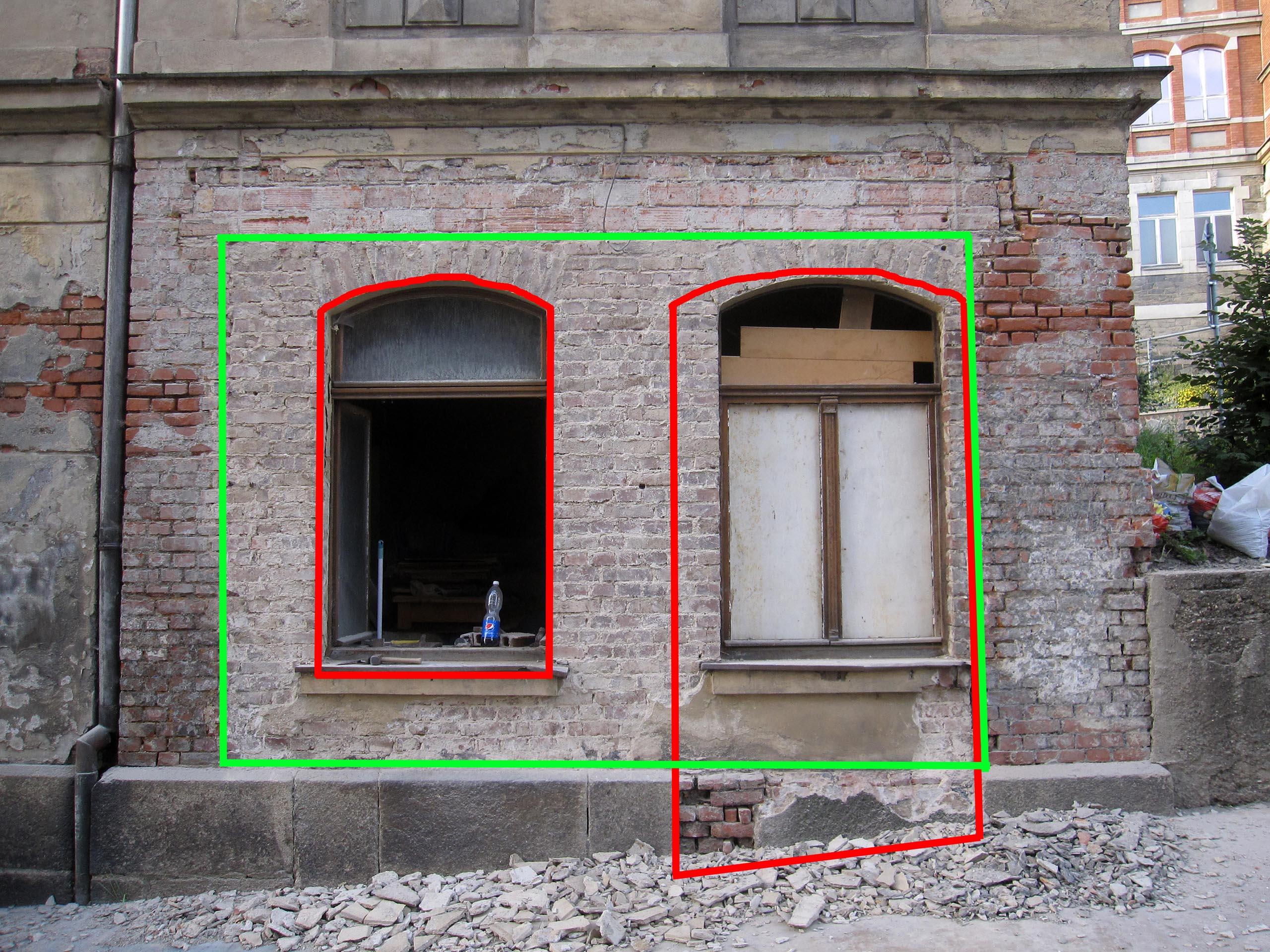
Façade wall in 2023; the previously existing door is marked in red, the former large shop window in green.

The first time, in the 1920s–30s, a wide opening was cleared of bricks and steel beams were installed above it, creating a large shop window 2.6 m high and 3.6 m wide. However, it is difficult to say whether the door remained. This is marked in green.
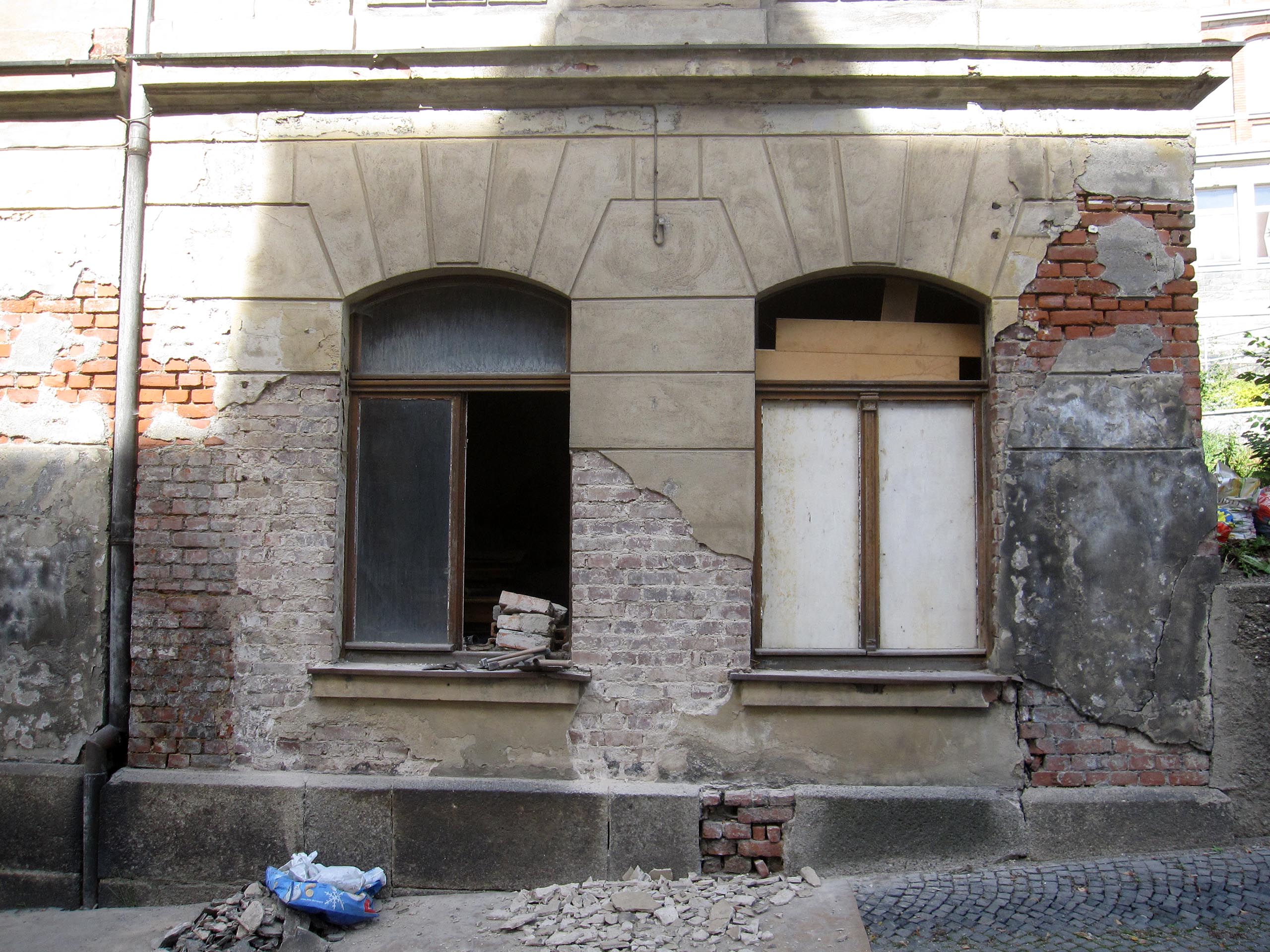
Façade wall in 2023 before the removal of plaster.

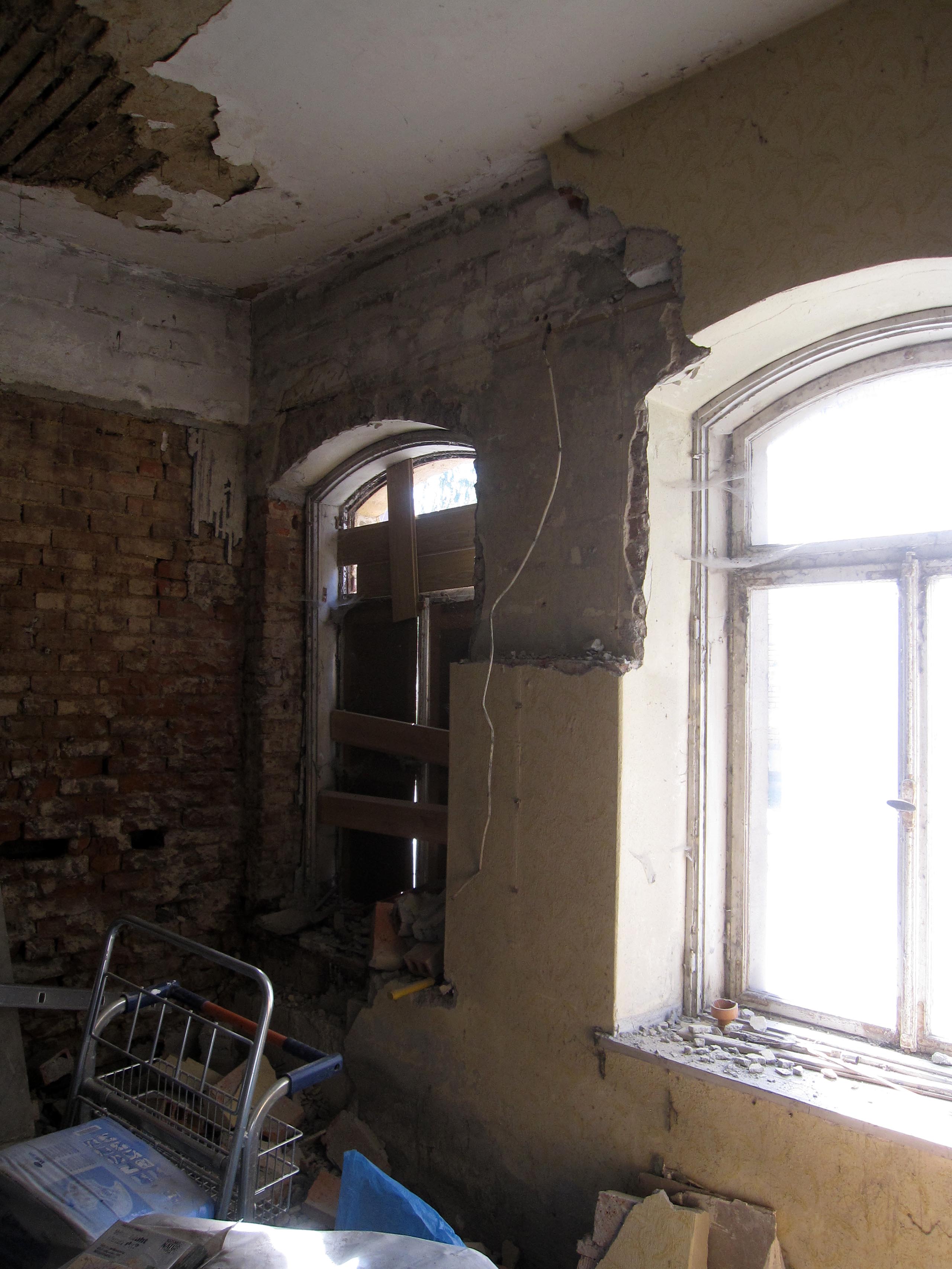
The second time, in the 1960s, the shop window was converted into two windows, but the door was not restored. Apartments or offices were more needed than shops.
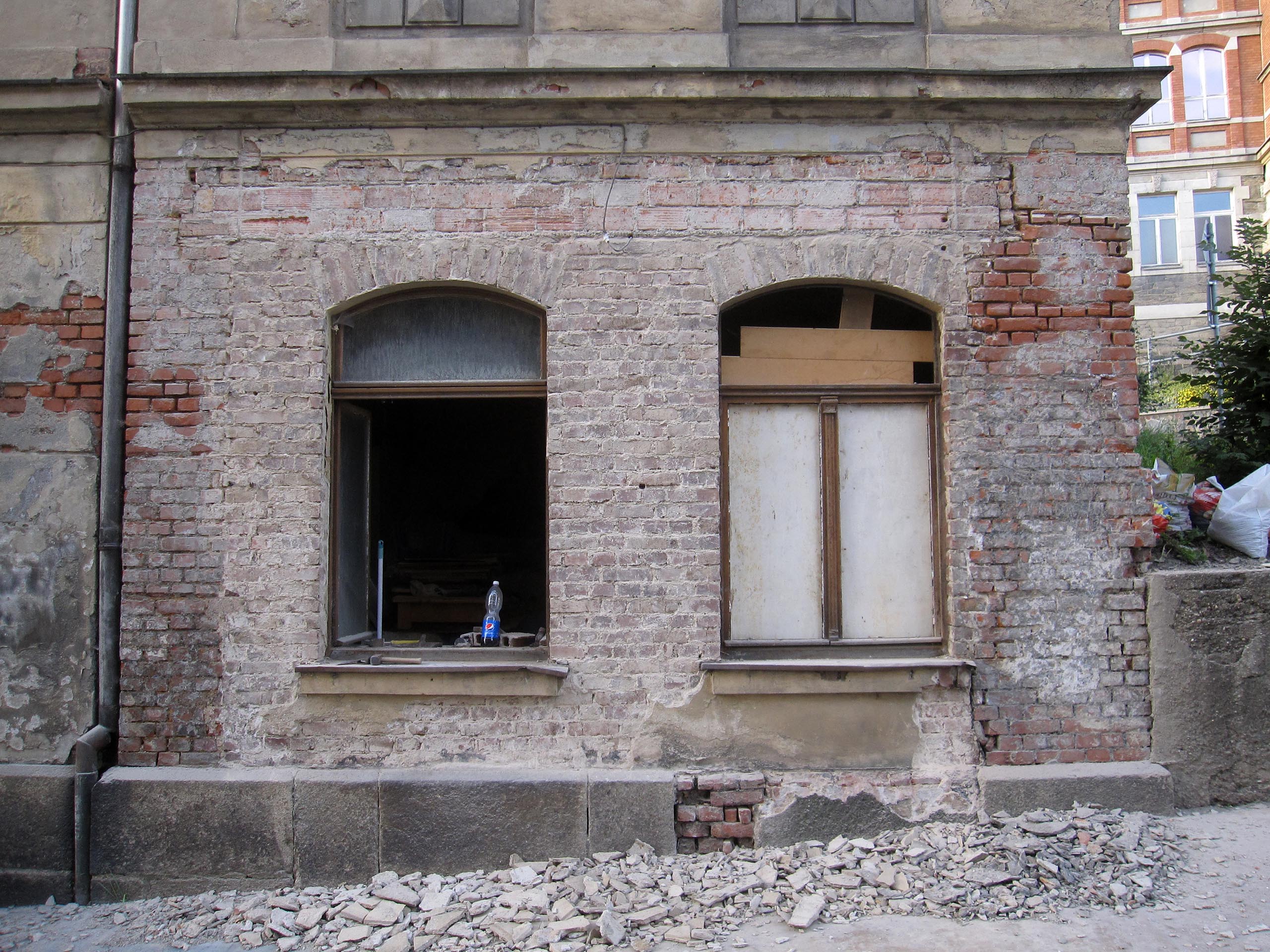
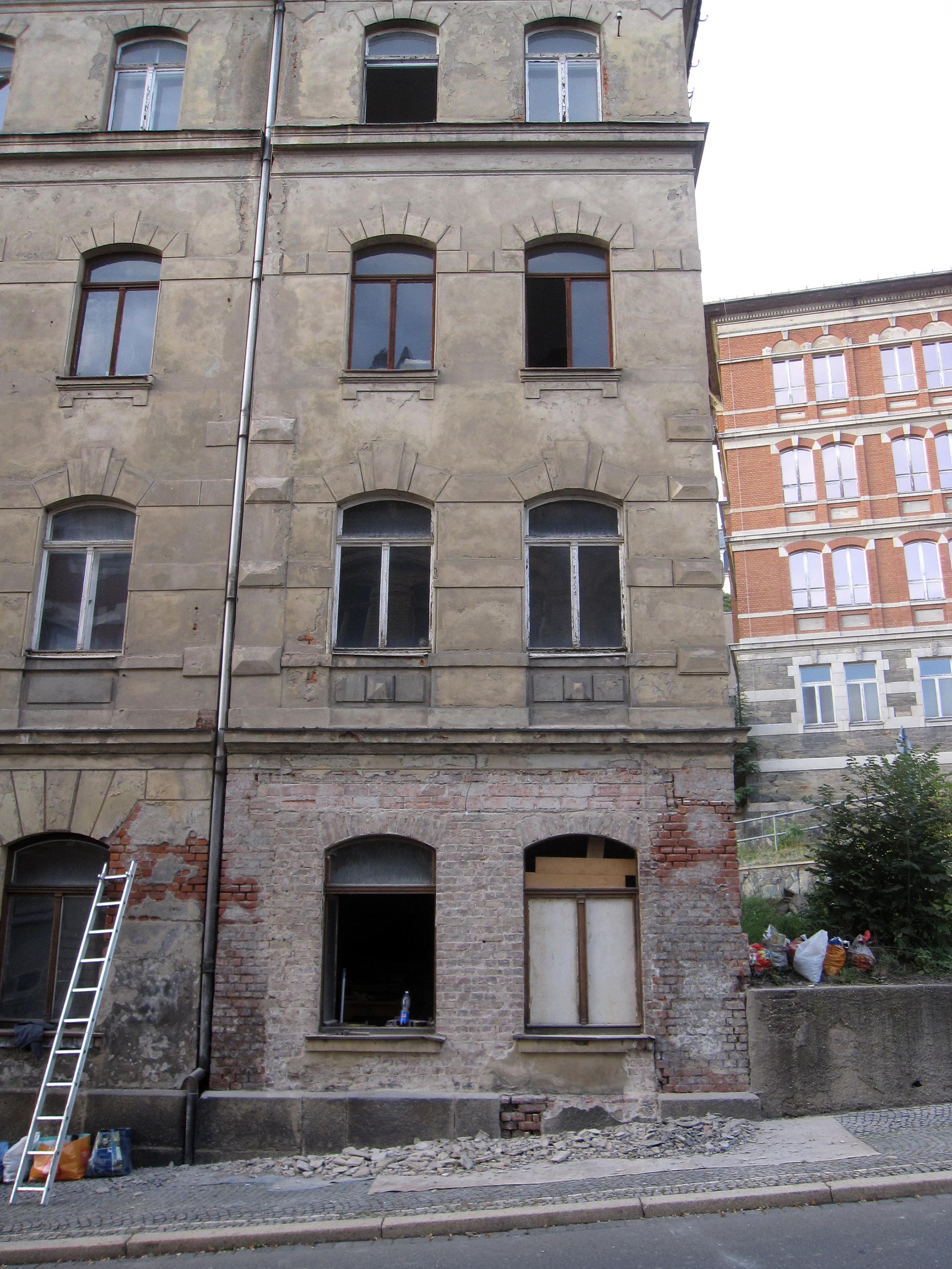
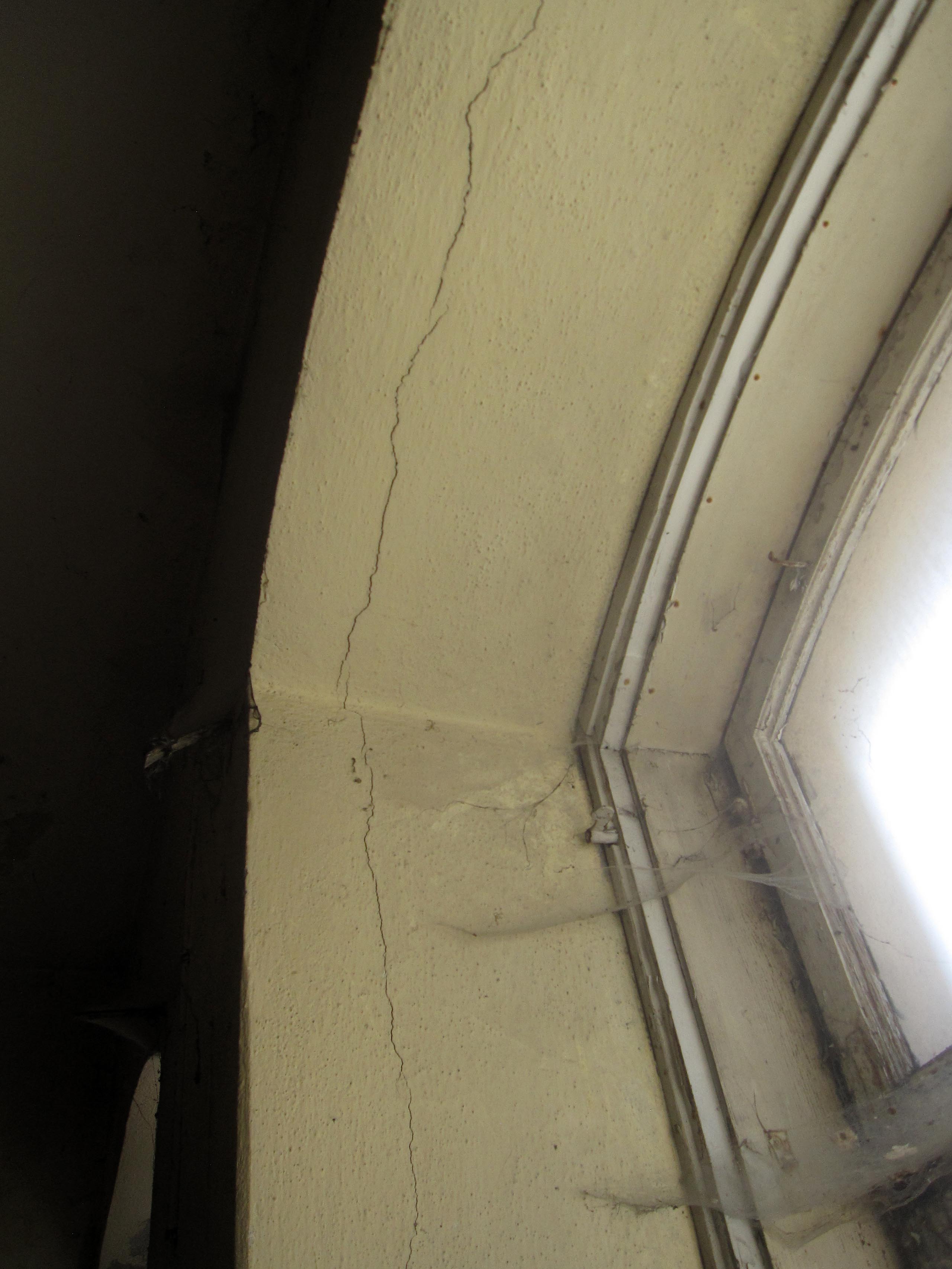
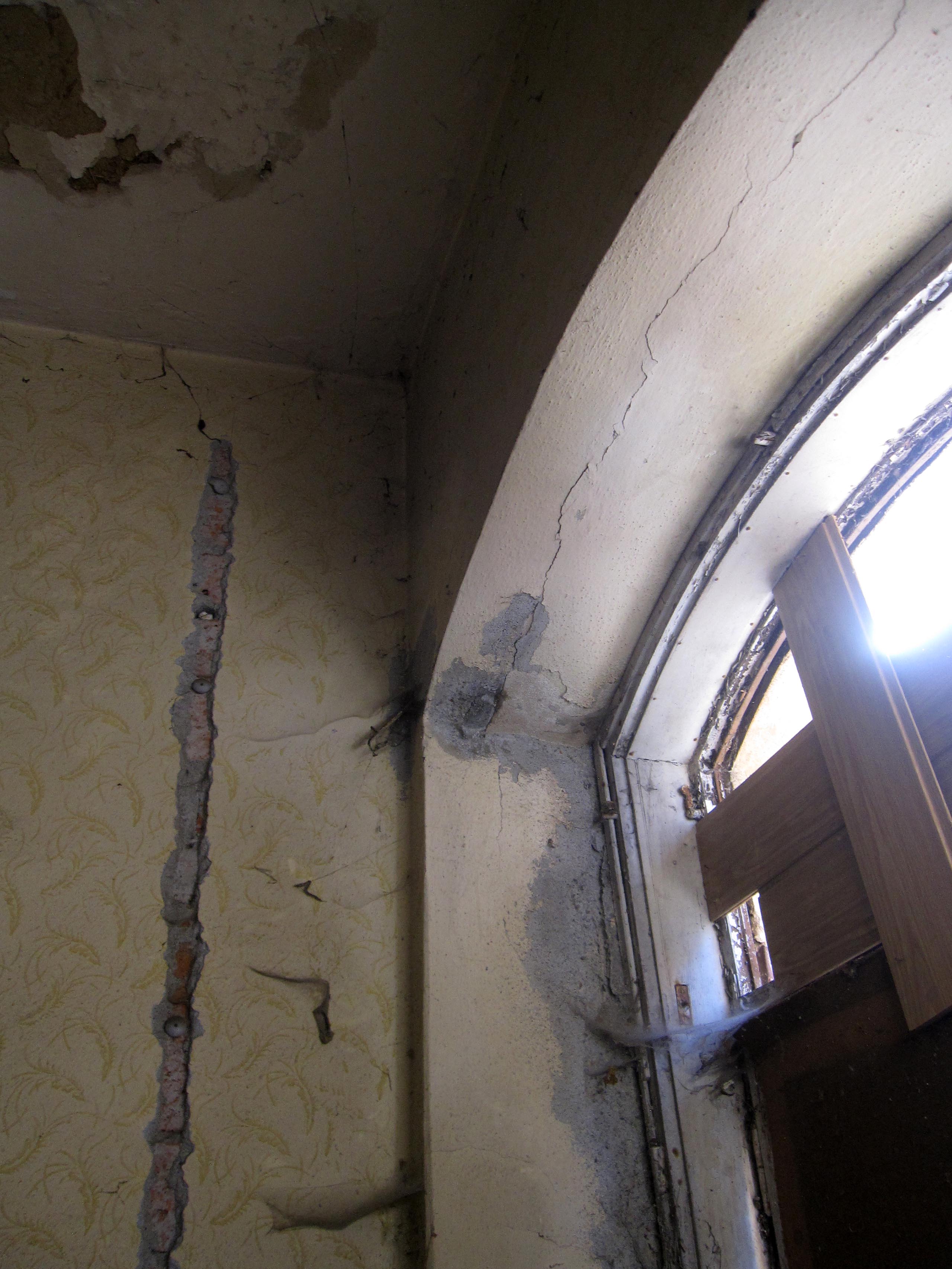
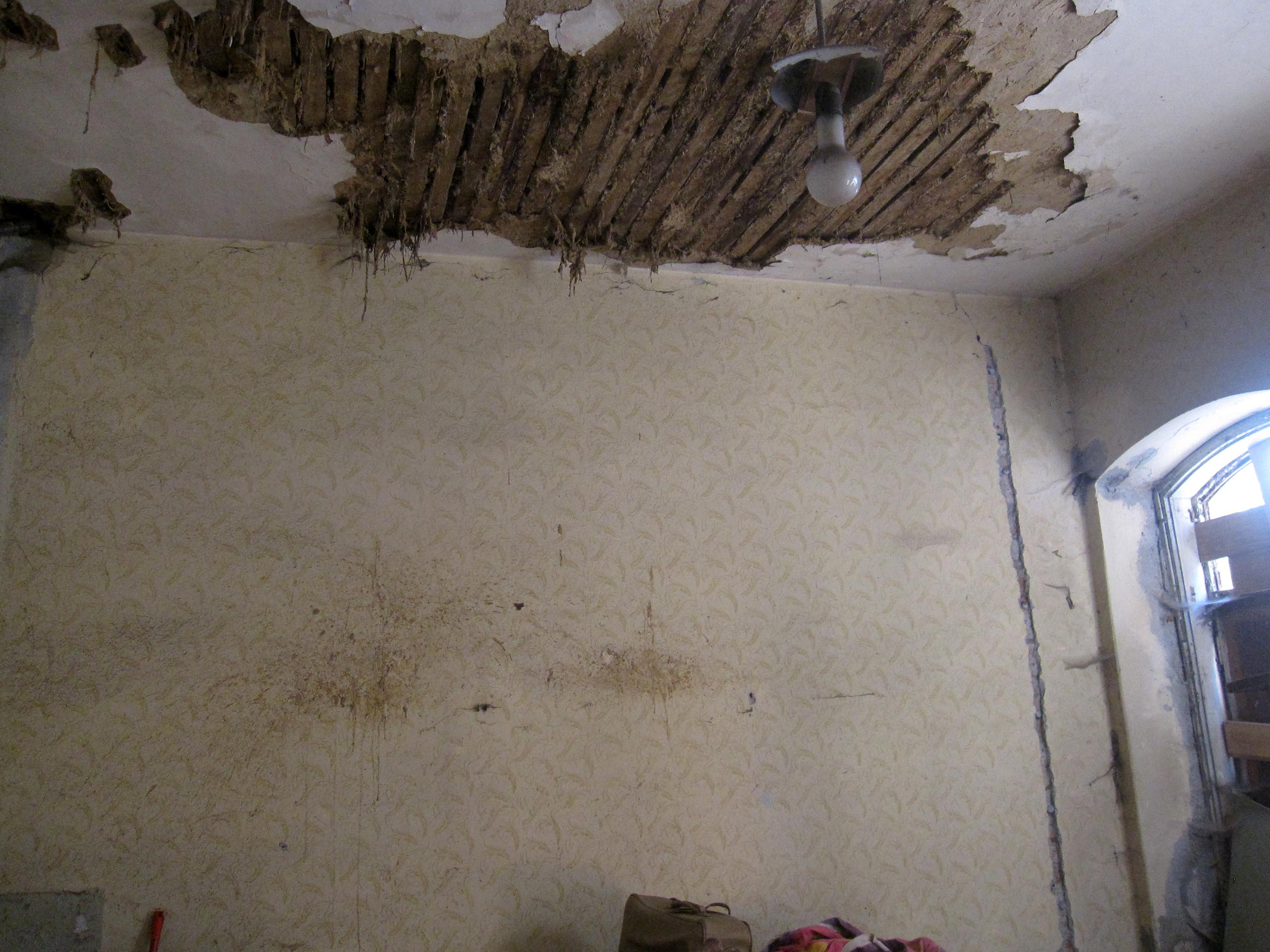
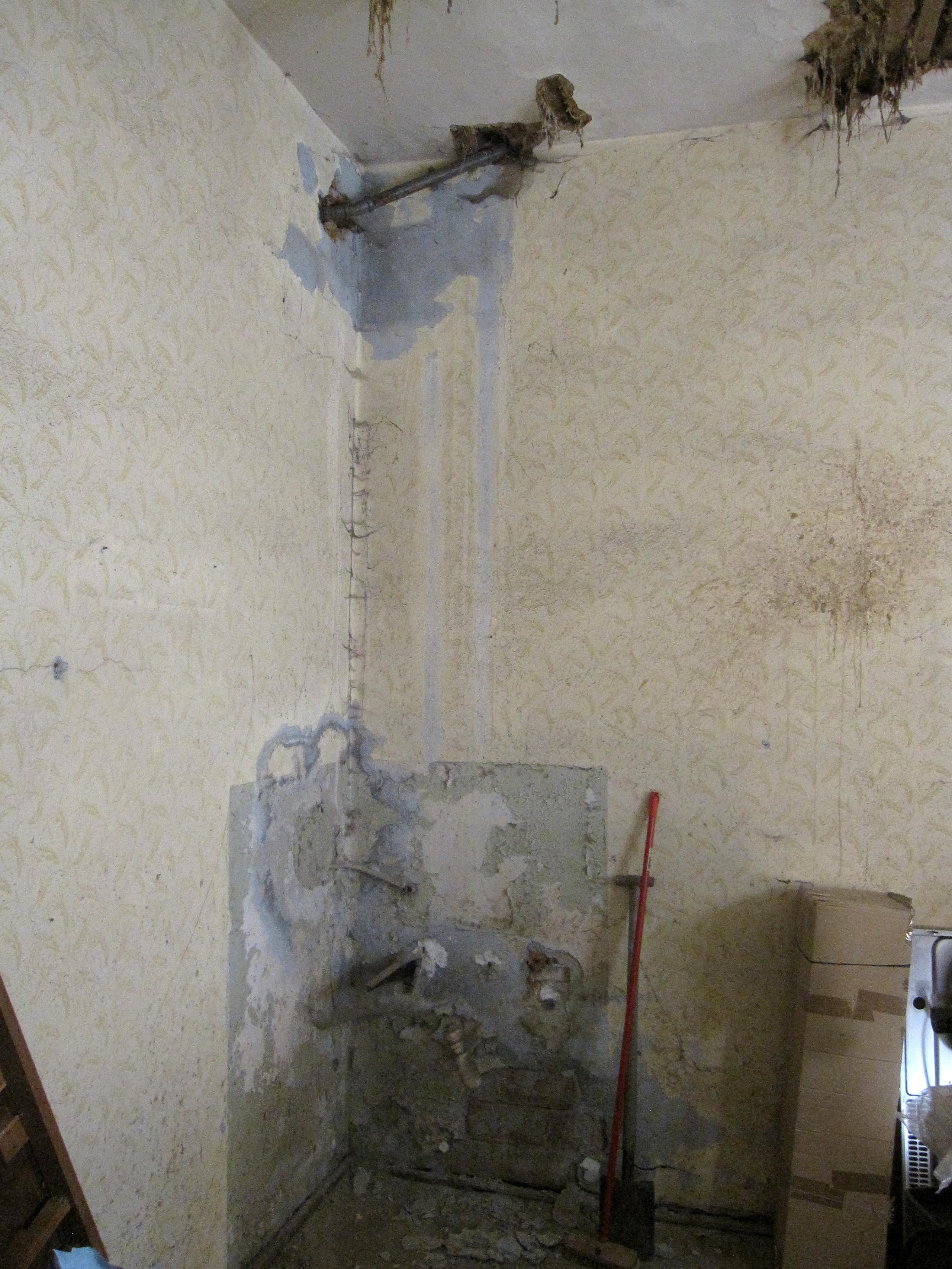
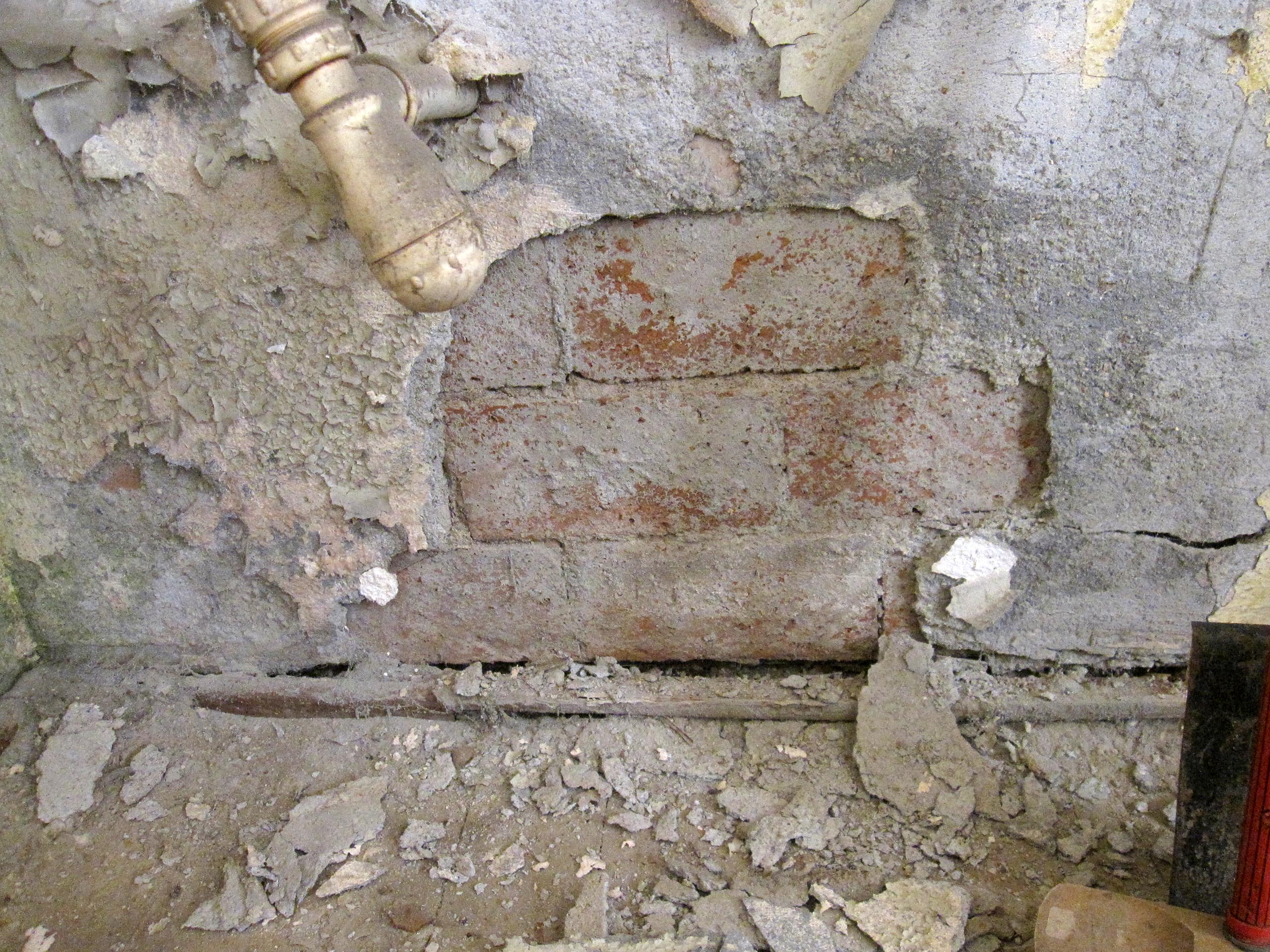
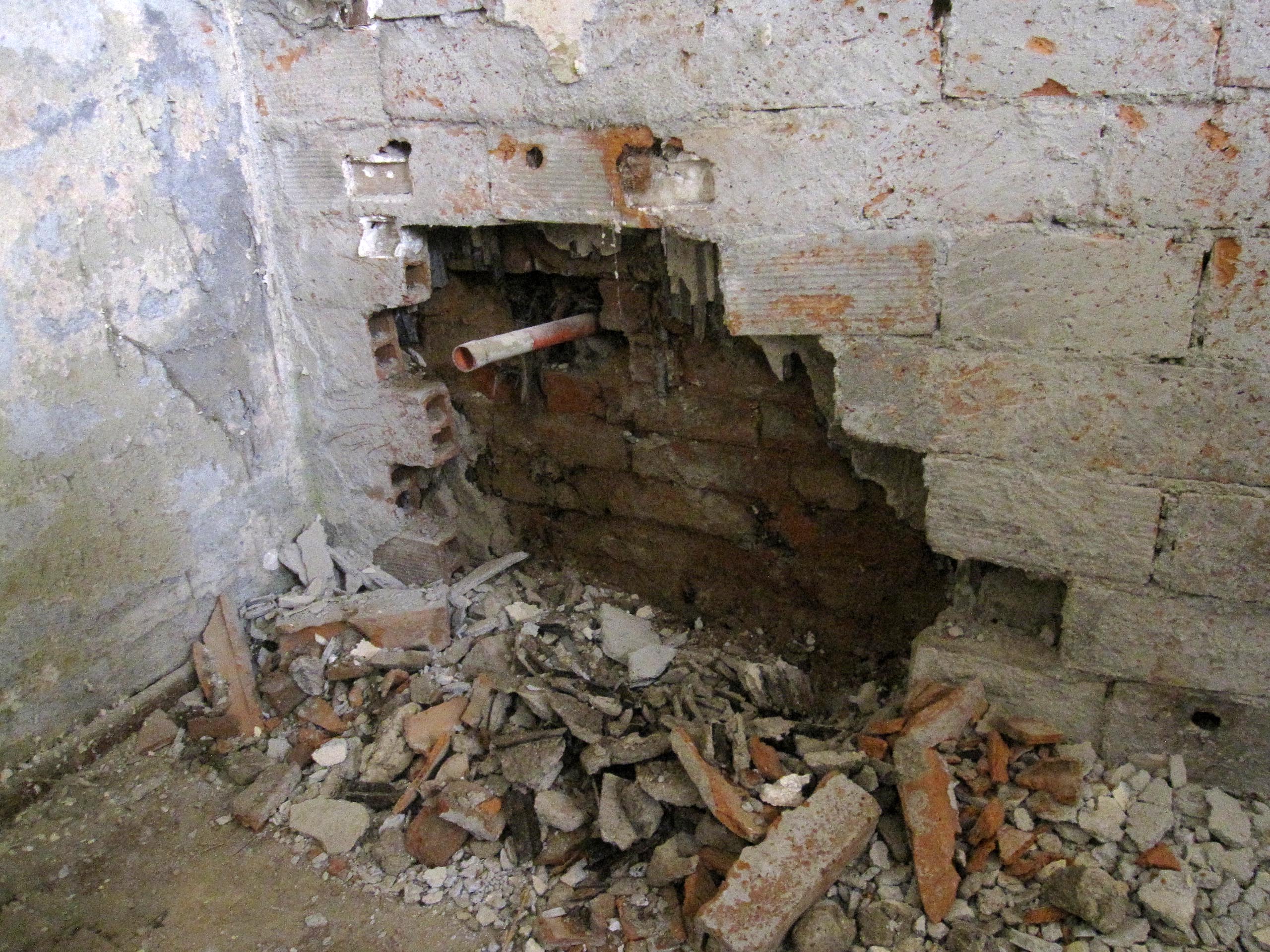
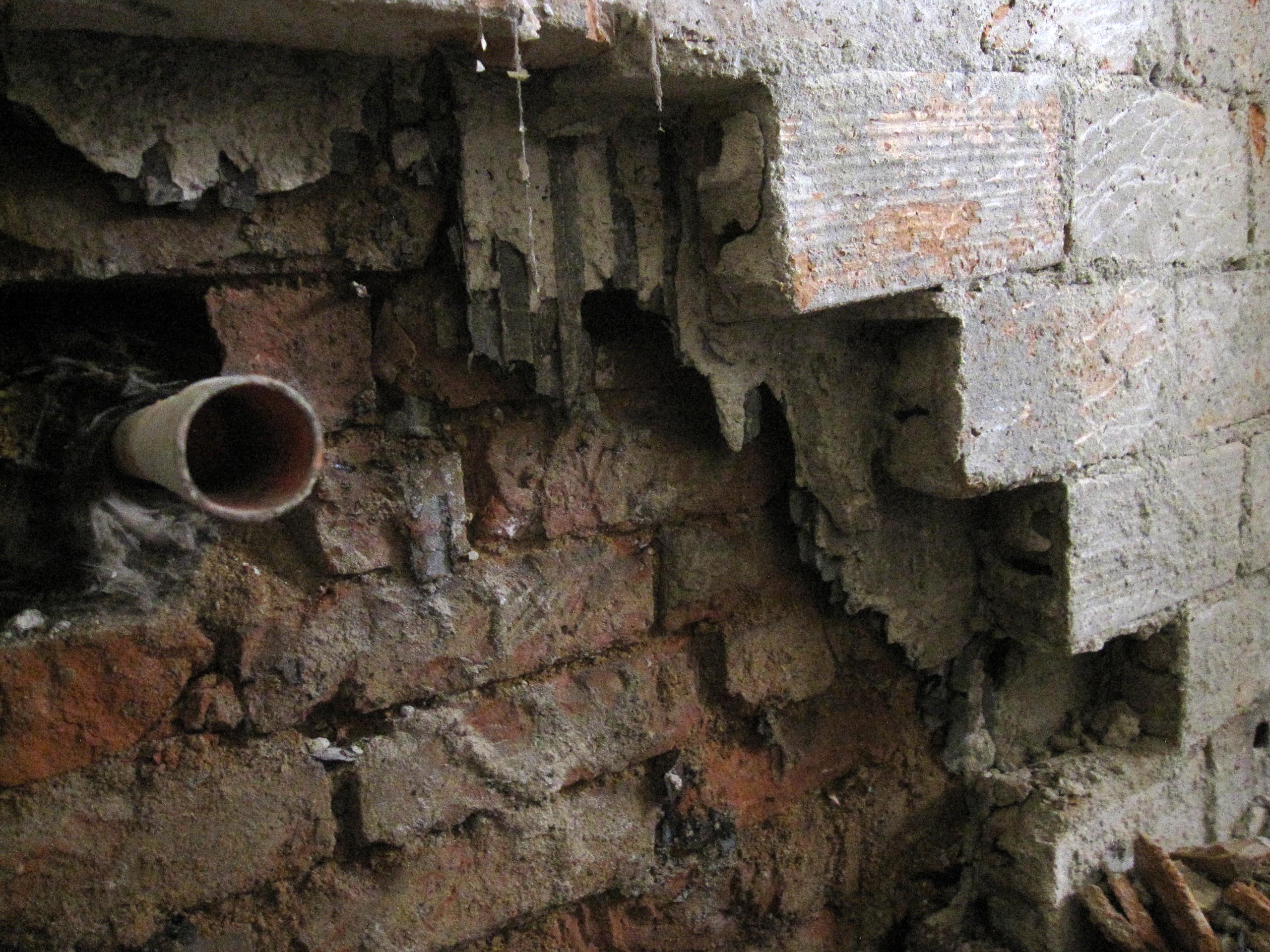
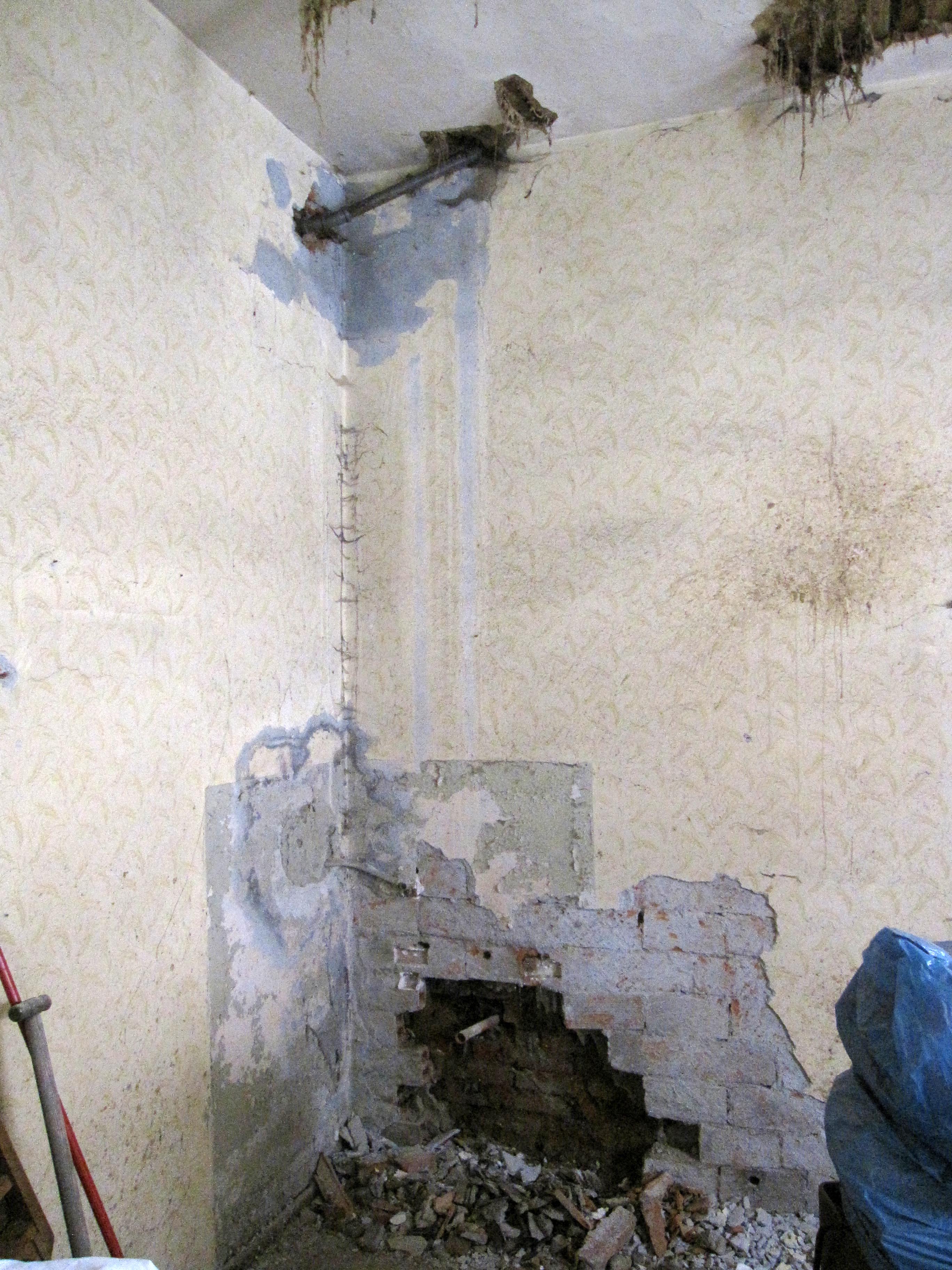
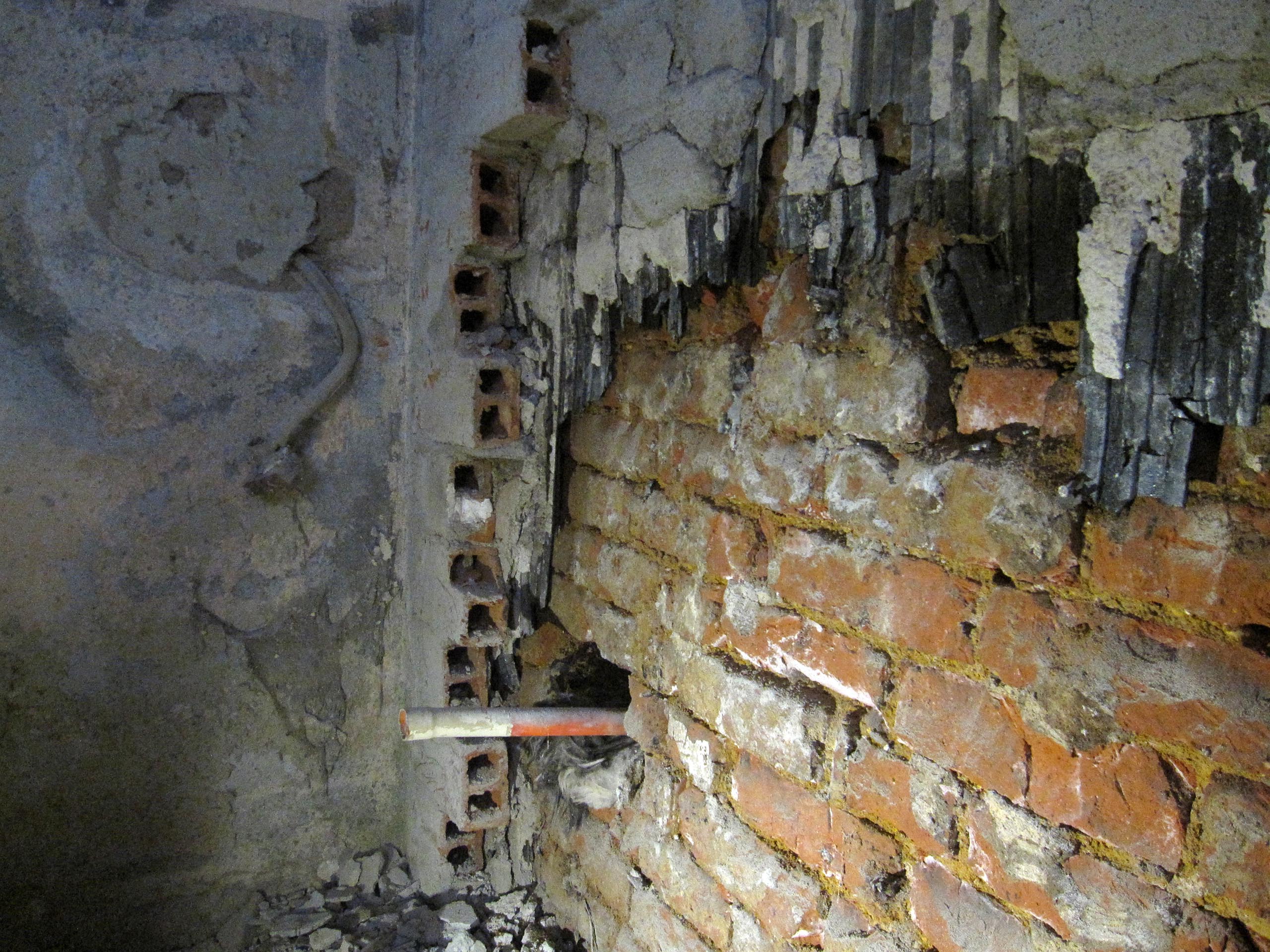
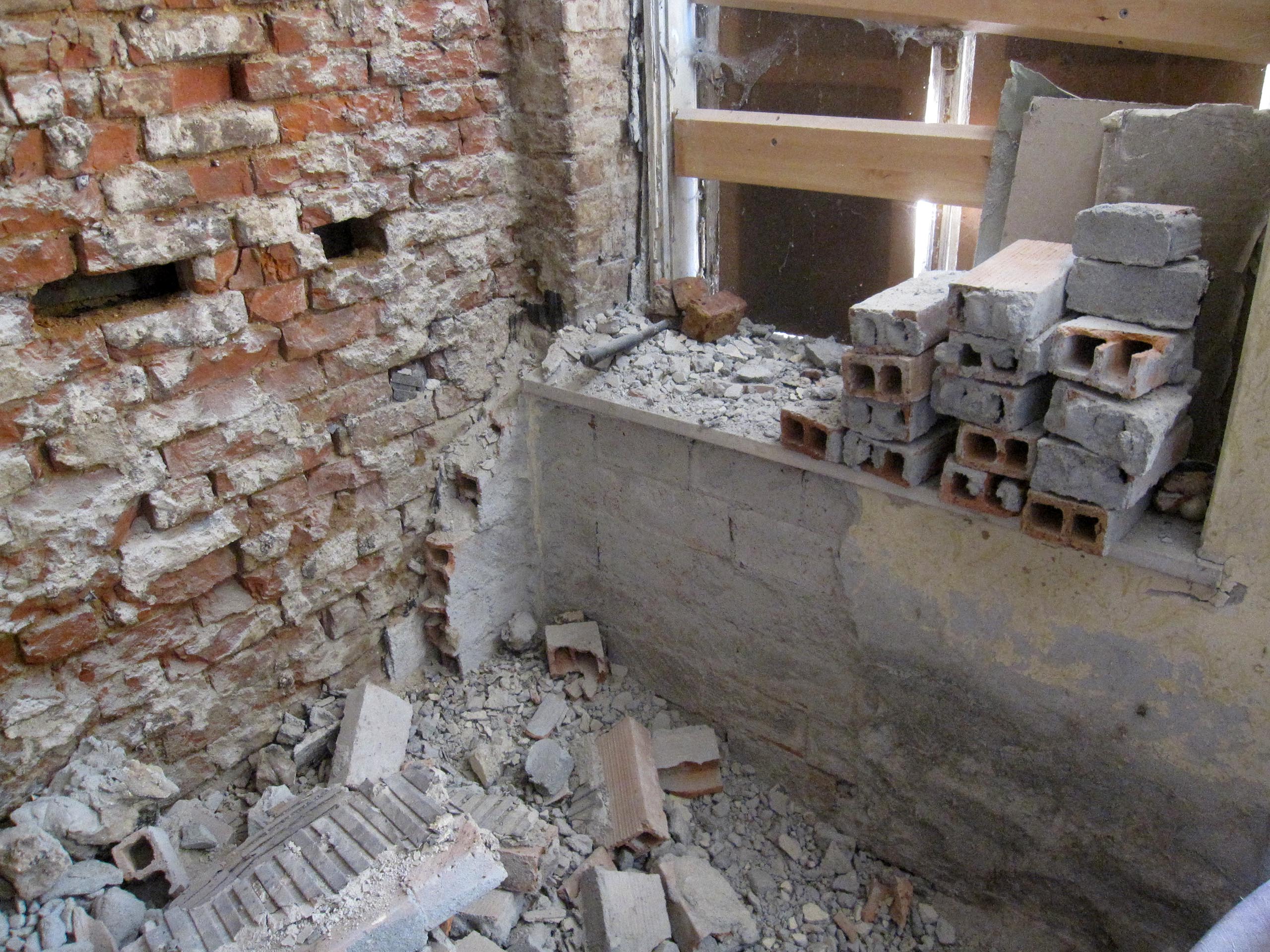
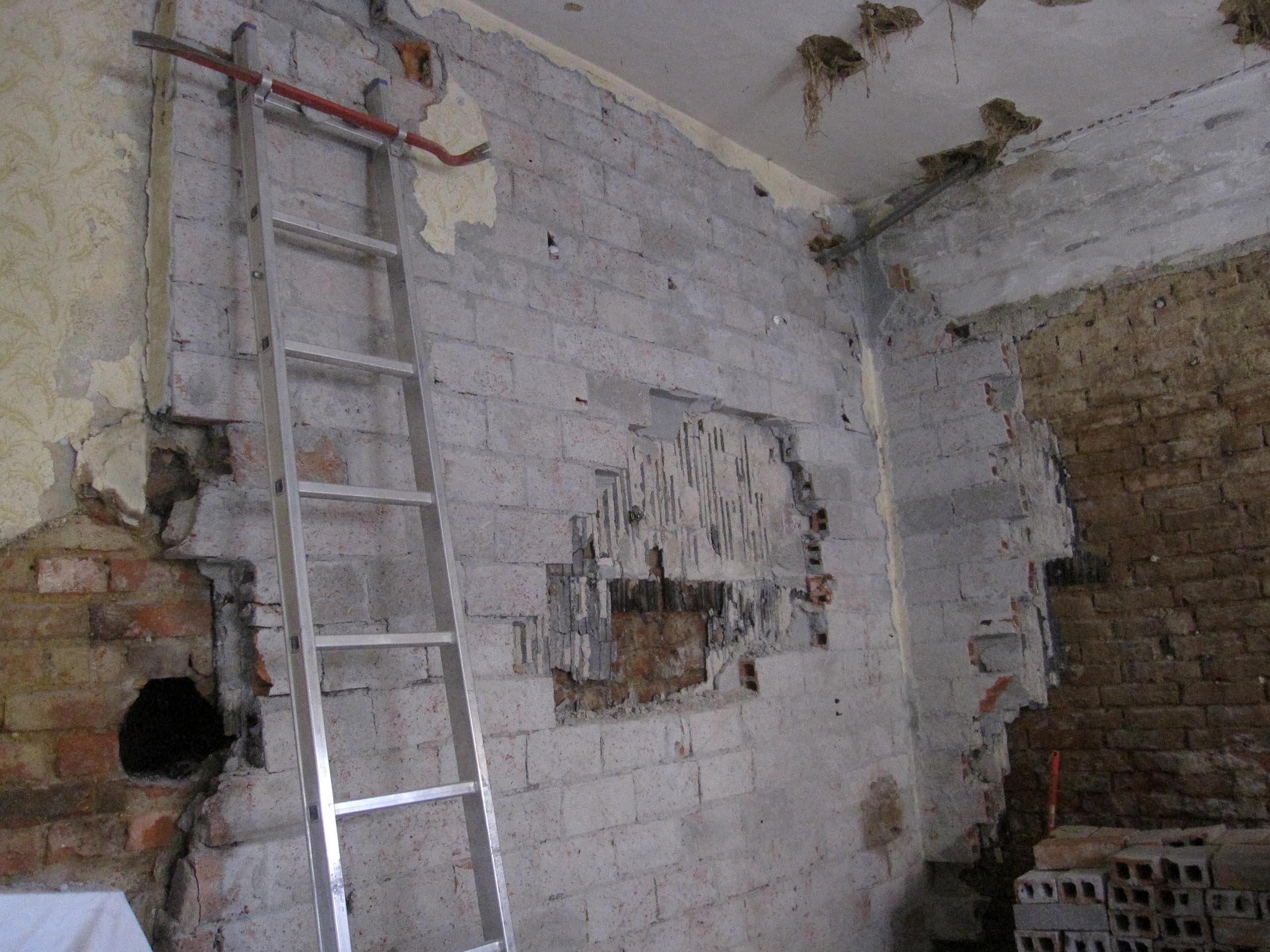
Façade wall in 2023 after the removal of plaster. Façade wall, the symmetry of the windows is visible. Corner of the building. Window opening with a crack. Corner and window opening with a crack. Wall before dismantling. At the bottom and top of the corner are sewage pipes. A wall deteriorating from moisture was simply laid on the floor. The constantly damp wall under the plaster was insulated with roofing felt. Wall after removing the quarter hollow-brick wall and roofing felt sheet. In front of the damp wall another quarter hollow-brick wall was first built and covered with roofing felt. Corner of the room after removing the hollow-brick wall.